Source: Wikimedia Commons
Pizarro Golofa Beetle
IntermediateGolofa pizarro
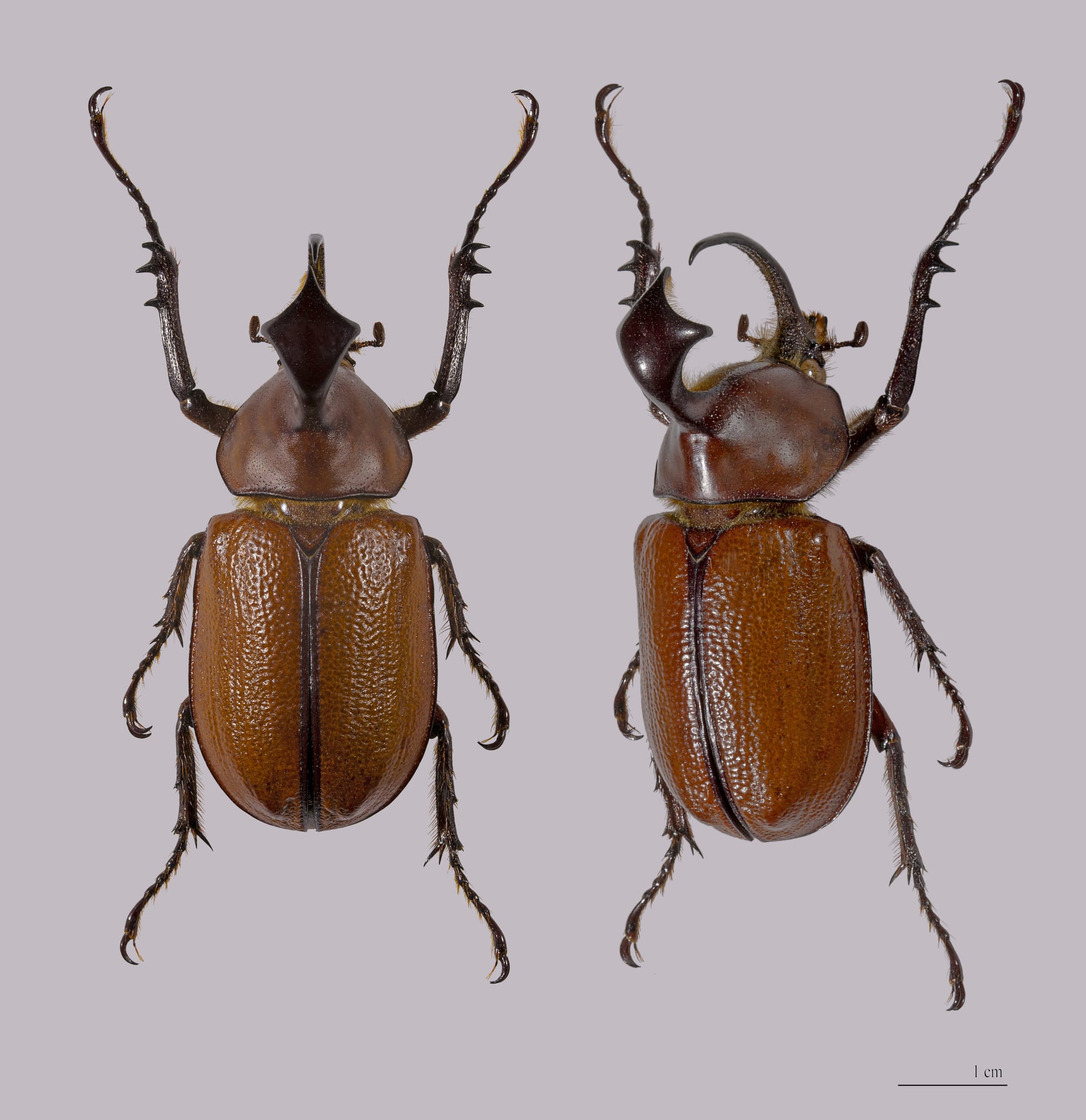
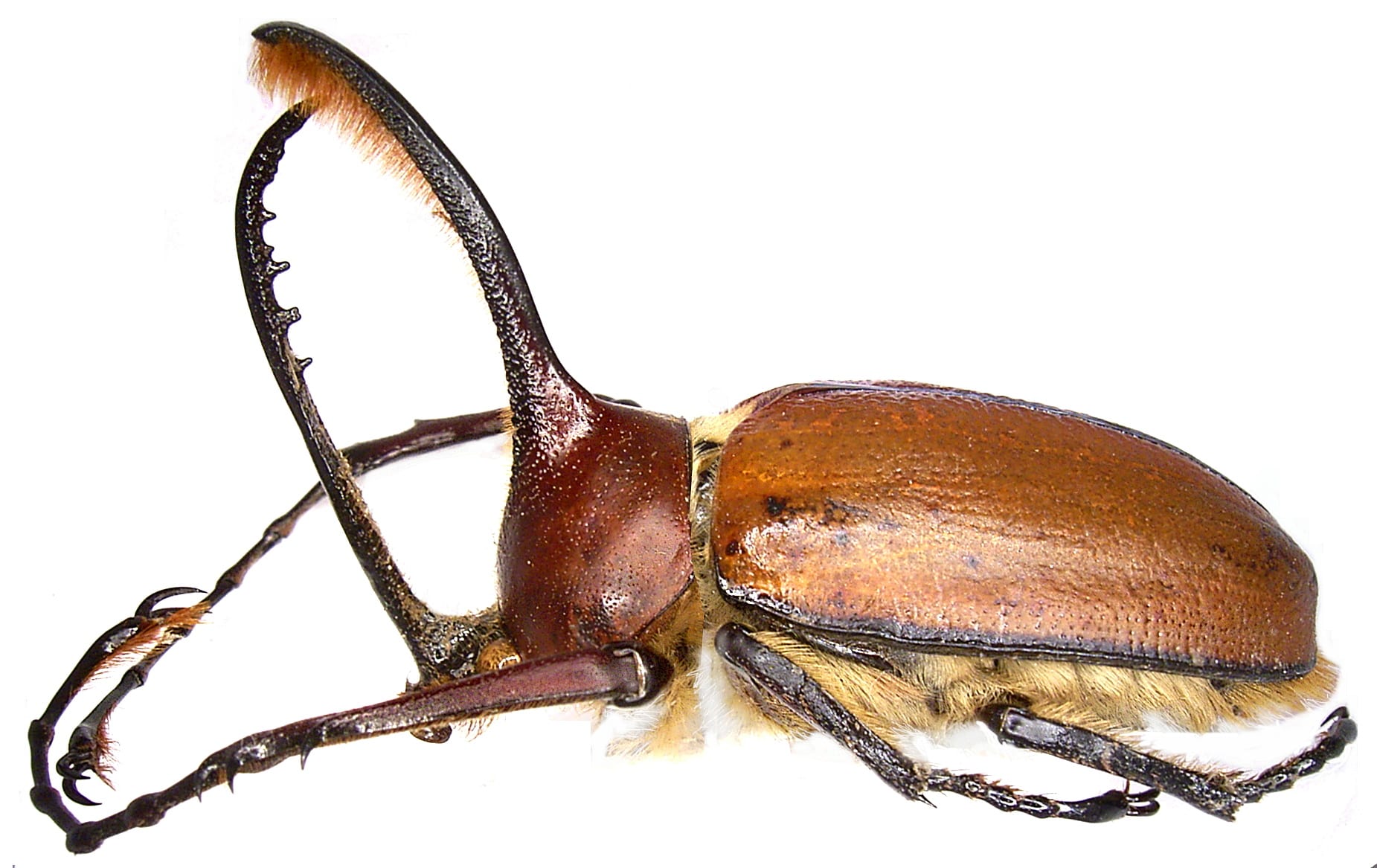
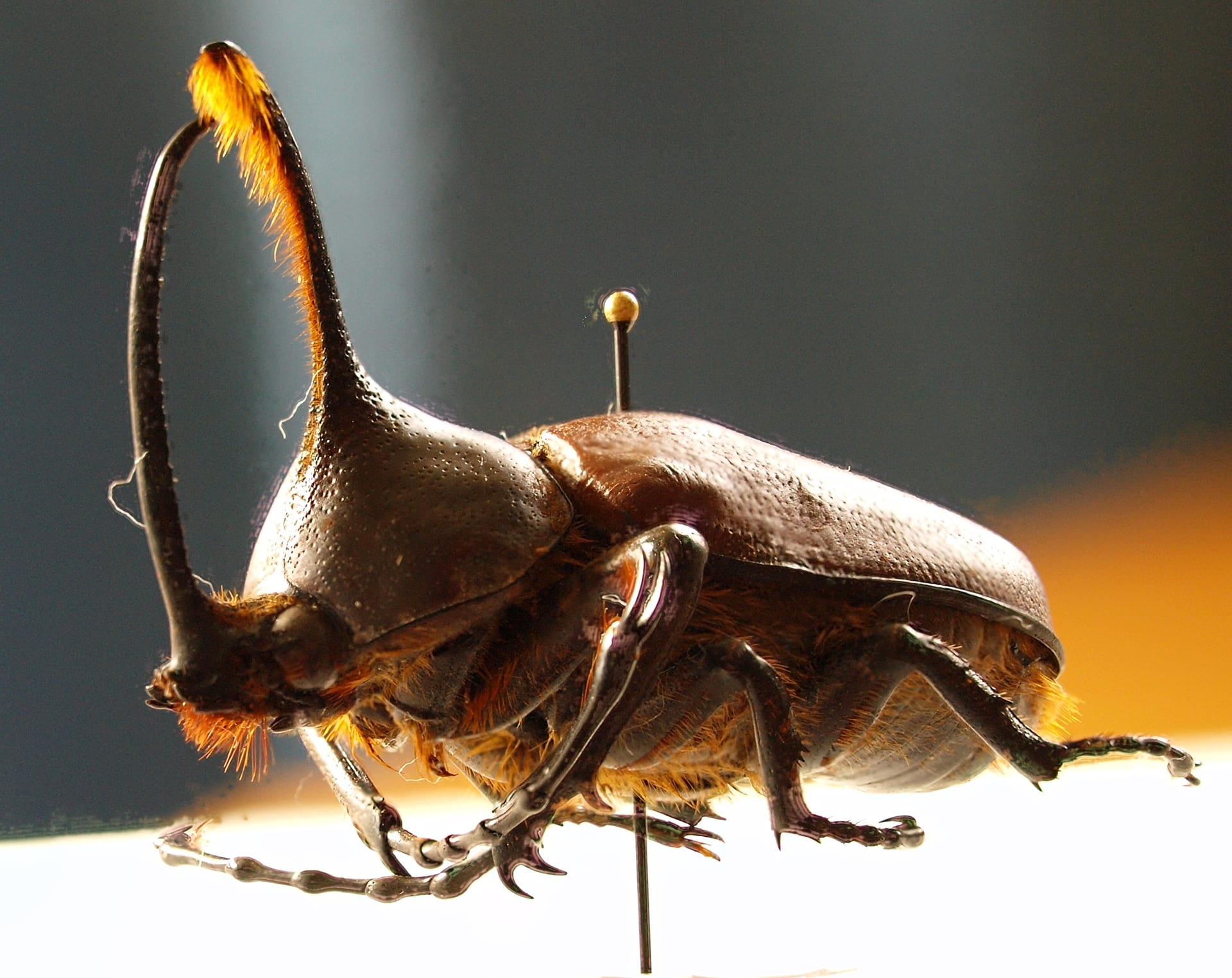
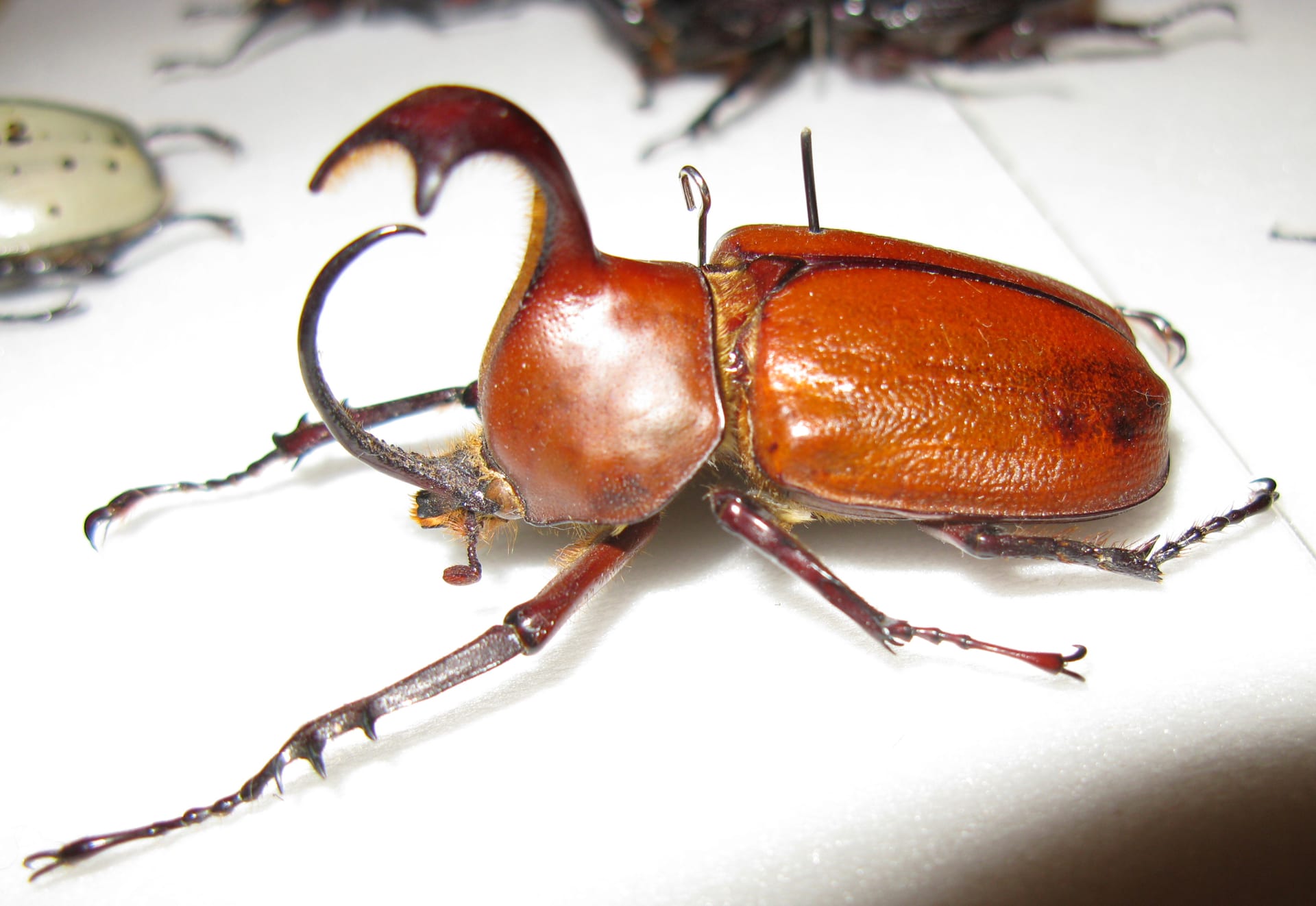
A Golofa ranging from Mexico through Central America. Males are ochre with a long thoracic horn. It sits at the northern end of the genus and carries a tangled list of synonyms.
Difficulty
Intermediate
Temperature
20〜28℃
Lifespan
Adults 3-5 months
Humidity
60〜80%
Diet
Beetle jelly; tree sap
About
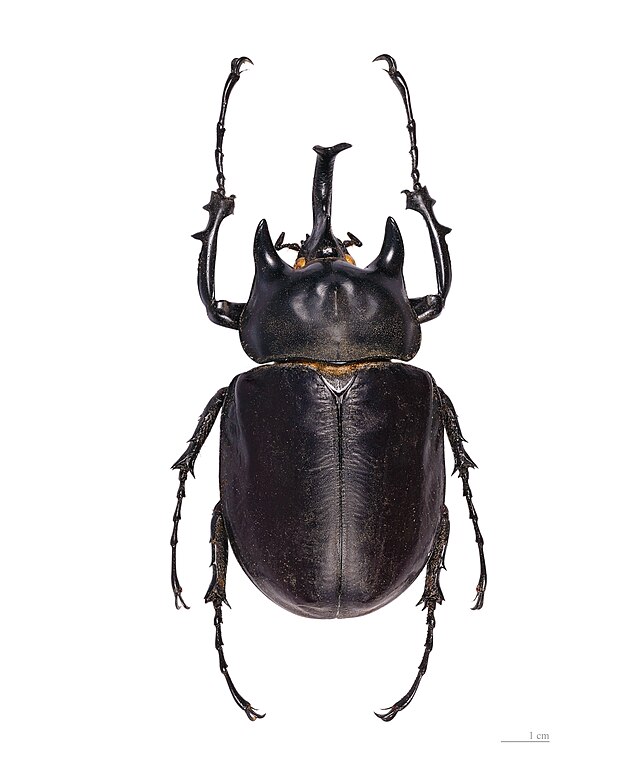
Golofa pizarro was described by Hope in 1837. It is regarded as native to Mexico, and GBIF holds far more records from Mexico than anywhere else, followed by Nicaragua, Guatemala and Honduras. The genus is spread across Latin America, but this species occupies its northern end. GBIF lists Golofa castaneus, G. clavicornis, G. hastatus, G. imperialis, G. sallei and G. tricolor among its synonyms, a sign of how tangled its nomenclatural history is. The male carries a horn on the head and another on the prothorax, curving toward each other in the manner of the genus. The BE-KUWA FY2025 edition carries no captive record for it in the Golofa section.
Source: Wikipedia (CC BY-SA 4.0)
Lifespan of the Pizarro Golofa Beetle
The Pizarro Golofa Beetle lives Adults 3-5 months.
Basic Info
Origin
Mexico and Central America (Nicaragua, Guatemala and Honduras)
Lifespan
Adults 3-5 months
Temperature
20〜28℃
Humidity
60〜80%
Diet
Beetle jelly; tree sap
Care Guide
Care Specifications
Solitary
Sources: Golofa pizarro - Wikipedia (FR; native to Mexico, synonym list from GBIF) / GBIF species page for Golofa pizarro (distribution and occurrence records by country) / Golofa - Wikipedia (JA; Neotropical range, thoracic horn, the long forelegs behind the alternative Japanese name) / Golofa - Wikipedia (EN; species list; the male head and thoracic horns curving toward each other) / Takuneko blog - Golofa claviger (rearing at 23-25C, size, lifespan, egg-laying set, larval period, bottle size, JA)
References & Sources
Edited & verified by: BreederDirect editorial team
The taxonomic, regulatory, and husbandry data on this page are compiled and verified against the authoritative primary sources below.
Primary sources
- Wikipedia
- Ministry of the Environment, Invasive Species Act: "Guidance for Those Importing Live Insects in Scarabaeoidea"
- CITES Appendix (checklist.cites.org)
- GBIF species page for Golofa pizarro (distribution and occurrence records by country)
- Golofa - Wikipedia (JA; Neotropical range, thoracic horn, the long forelegs behind the alternative Japanese name)
- Golofa - Wikipedia (EN; species list; the male head and thoracic horns curving toward each other)
- Takuneko blog - Golofa claviger (rearing at 23-25C, size, lifespan, egg-laying set, larval period, bottle size, JA)
Taxonomy & Authority
Accepted name: Golofa pizarro Hope, 1837
Synonyms: Golofa castaneus Voirin, 1994, Golofa clavicornis Thomson, 1860, Golofa hastatus Burmeister, 1847, Golofa imperialis Thomson, 1858, Golofa sallei Thomson, 1860, Golofa tricolor Voirin, 1994
Authority databases: GBIF
Nomenclature follows global taxonomic authority databases.
Regulations & Conservation Status
Not CITES-listed
Plant Protection Act: When importing live specimens of Scarabaeoidea (including rhinoceros beetles, stag beetles, flower beetles, etc.), a species identification certificate issued by the exporting country government agency or equivalent must be attached in accordance with the Invasive Species Act (import ports are limited to Narita, Chubu, Kansai, Fukuoka, and Kagoshima airports). This species itself is not a designated invasive species, and import is possible upon submission of the certificate.
Sources: Ministry of the Environment, Invasive Species Act: "Guidance for Those Importing Live Insects in Scarabaeoidea" / CITES Appendix (checklist.cites.org)
Regulations may change. Always verify the latest information with the relevant authorities.
Pizarro Golofa Beetle Listings
Loading latest listingsFind listings for this species