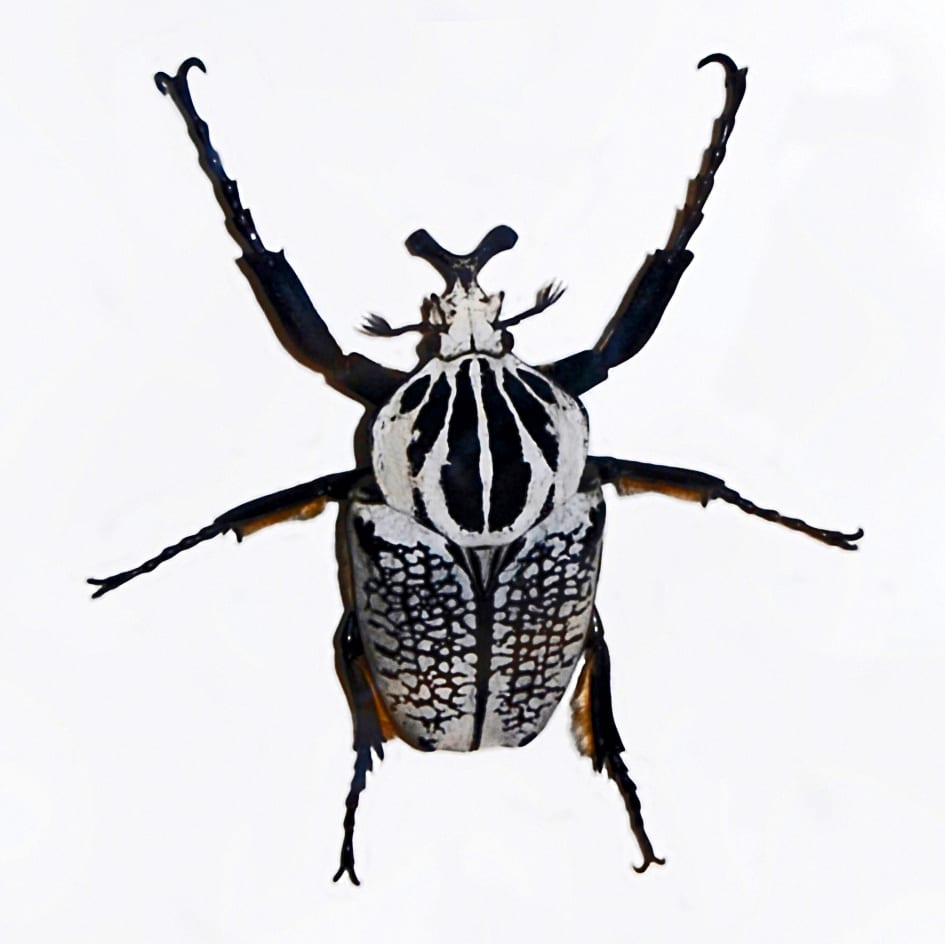
 © Hectonichus / CC BY-SA 3.0
Oriental Goliath Beetle
The Oriental Goliath Beetle is one of Africa's largest flower beetles, known for its striking white elytra marked with bold black ring patterns. Males carry a distinctive black Y-shaped horn on the head, which they use to spar with rival males. Adults reach an impressive 50–100mm in males and 50–65mm in females, giving them a truly commanding presence. Despite their sturdy appearance as adults, the larvae are known to cannibalize one another, so careful individual rearing is essential. This gap between a robust adult stage and a delicate larval stage makes it a beetle best suited to experienced keepers who enjoy a hands-on challenge.
View Oriental Goliath Beetle encyclopedia →0% commission on your first sales!Register by September 30, 2026 and your first 2 sales are commission-free!
Breeder Wanted!
List on BreederDirect and sell directly to customers nationwide!
6 Transparency Standards You Can Trust
When listing Insects, Breeders disclose the following. We guarantee transparency on growth stage and breeding unit.
- Life Stage Clarity
- Generation Info
- Real Photos
- Breeding Unit
- Country of Origin
- Body Length (mm)
Browse all 296 breeds
No listings match your filters
Adjust your filters, or get notified when new listings arrive.
Getting alerts is free with a member account. When new listings match your saved search, we'll notify you by email and in-app.
Browse other categories
Verified breeders (preview)
Oriental Goliath Beetle key facts
- Care level
- Advanced
- Lifespan
- Adults 6 months to 1 year
- Size
- Males 50-100 mm / females 50-65 mm
- Diet
- Adults take tree sap, fruit and beetle jelly; larvae need protein-rich food such as dried dog or cat food, dried silkworms and the larvae of other species
- Temperature & Humidity
- One Goliathus breeding report kept larvae at around 22C, which gives a rough guide for the genus. Do not let the substrate dry out.
- Breeding & Egg-laying
- Goliathus larvae are cannibalistic hunters and lose weight on a diet of rotten wood and leaves alone. They grow when given protein: dried dog or cat food, dried silkworms, or the larvae and pupae of other beetles. Too much brings mites and mould, so clear uneaten food promptly. Many larvae die at pupation.
- Cohabitation
- Because the larvae eat each other, rear them one to a container without exception. Adult males also fight hard with their Y-shaped horns, so keep them singly and pair them only for breeding.
- Lifespan & Rearing Period
- Reports for the genus put the weight of a final-instar larva at 80-100 g, so a long spell of care is needed before pupation.
- Health & Notes
- Importing live beetles requires the species identification certificate demanded for live Scarabaeoidea. Goliathus has not been assessed for the IUCN Red List, but habitat loss and over-collection for the international pet trade have been raised as conservation concerns, so captive-bred stock is preferable.
About Oriental Goliath Beetle
One of Africa's largest flower beetles, with white elytra marked by black rings and a black Y-shaped horn on the male's head. Adults reach 50–100mm (males) and 50–65mm (females); recommended for experienced keepers due to larval cannibalism.
7 things to know before welcoming a Oriental Goliath Beetle
1Larvae Must Be Housed Alone
Oriental Goliath Beetle larvae are known to cannibalize each other, so when raising multiple larvae they need to be kept in separate containers. Housing them together can significantly reduce their numbers, so individual rearing is essential.
2The Horn Is for Sparring
The black Y-shaped horn on the male's head is used when males spar with one another. Horn size varies between individuals, and keeping multiple males in the same space can lead to occasional clashes.
3A Large Beetle Needs Space
Adults reach 50–100mm in males and 50–65mm in females, making this a large flower beetle. Since adults can also fly, it's best to prepare a roomy, tall enclosure for them.
4They Favor Protein-Rich Food
Adults feed on insect jelly and similar foods, and are thought to need more protein than many other beetle species. Keeping food well stocked and replacing it regularly helps keep them healthy.
5Larval Substrate Care
Larvae develop within fermented substrate. Along with keeping them separated to prevent cannibalism, regularly checking and refreshing the substrate supports healthy growth.
6Temperature and Humidity Are Delicate
As a species native to Africa, they don't tolerate extreme cold or dryness well. Keeping temperature and humidity stable is important at both the larval and adult stages.
7Understand Why It's for Experts
Between preventing larval cannibalism and managing temperature and humidity carefully, this species requires more hands-on effort than beginner-friendly insects. It's worth researching the basics of care before bringing one home.
Frequently asked questions about Oriental Goliath Beetle
- Q.Can beginners keep this species?
- A.This beetle is generally recommended for experienced keepers, since raising the larvae involves extra care such as preventing cannibalism and managing temperature and humidity closely. It suits keepers who already have some experience with beetle care.
- Q.How can you tell males and females apart?
- A.Males have a distinctive black Y-shaped horn on the head, while females lack this horn. Males also tend to grow larger overall.
- Q.Can multiple larvae be raised together?
- A.No — the larvae are known to cannibalize each other, so they must be kept in separate containers when raising more than one. Housing them together can significantly reduce their numbers.
- Q.Is this species regulated under CITES?
- A.No, the Oriental Goliath Beetle is not subject to CITES.
- Q.How large do the adults get?
- A.Adults reach roughly 50–100mm in males and 50–65mm in females. Males are noticeably larger, giving the sexes a clear size difference.
Useful tools for Oriental Goliath Beetle care
Learn more about Oriental Goliath Beetle in the encyclopedia
View Oriental Goliath Beetle encyclopedia entry →
Care difficulty, lifespan, size and diet — all basics covered.
More in this category
Can't find the one you're looking for?
Post your wishes for free and breeders with matching animals will contact you with introductions.