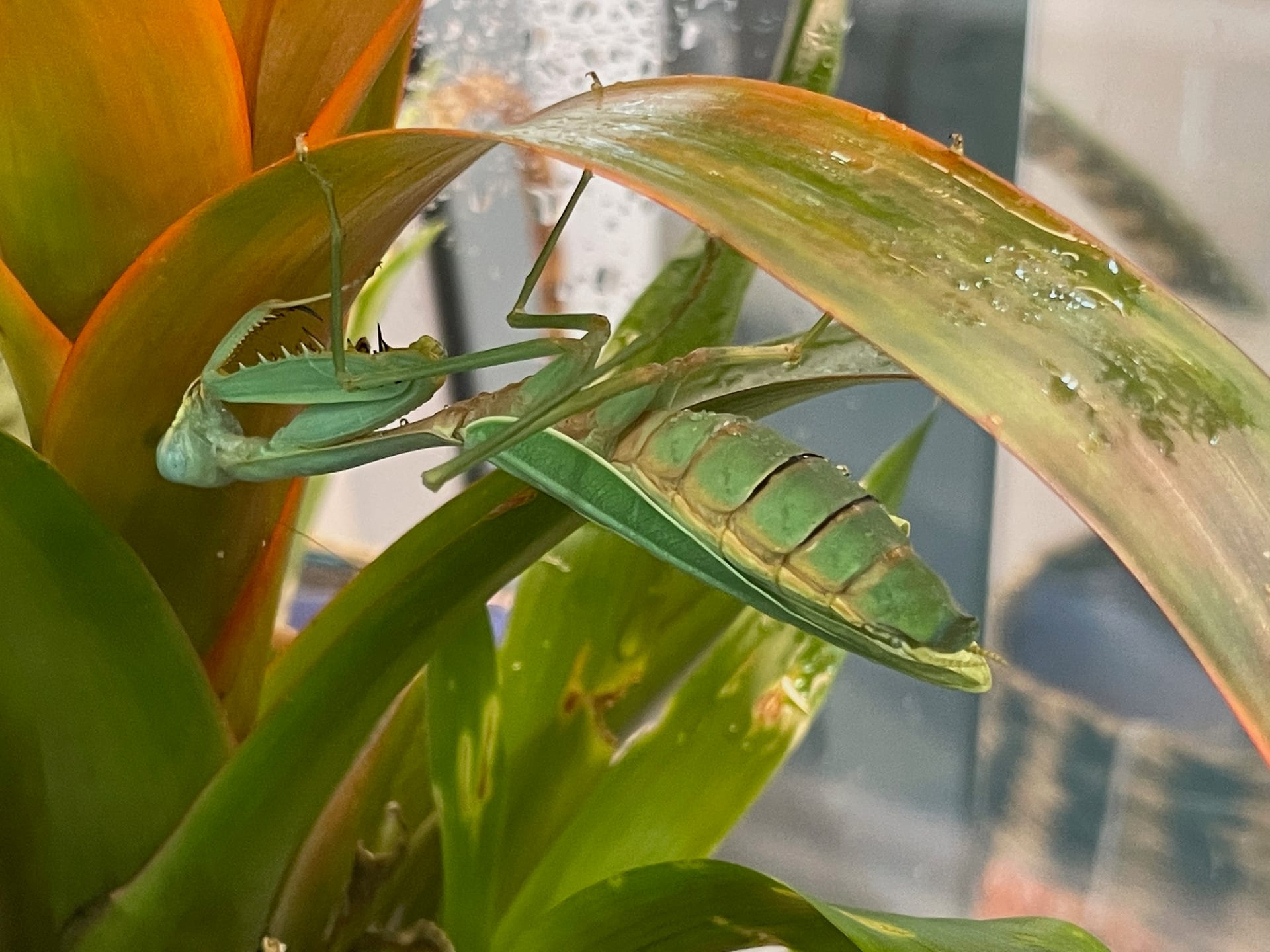
 © Fungus Guy / CC BY-SA 4.0
Giant Rainforest Mantis
The Giant Rainforest Mantis is Australia's largest mantis species, native to the tropical rainforests of the country's north. Adults grow to an impressive 7–11 cm in length, typically in a striking green that occasionally gives way to a rare bright yellow form. Despite its imposing size, this mantis has a fairly calm temperament and a tough, adaptable constitution, making it a good choice for anyone new to keeping mantids. All individuals offered are captive-bred over multiple generations, so what looks like a formidable predator turns out to be surprisingly manageable to care for.
View Giant Rainforest Mantis encyclopedia →0% commission on your first sales!Register by September 30, 2026 and your first 2 sales are commission-free!
Breeder Wanted!
List on BreederDirect and sell directly to customers nationwide!
6 Transparency Standards You Can Trust
When listing Insects, Breeders disclose the following. We guarantee transparency on growth stage and breeding unit.
- Life Stage Clarity
- Generation Info
- Real Photos
- Breeding Unit
- Country of Origin
- Body Length (mm)
Browse all 296 breeds
No listings match your filters
Adjust your filters, or get notified when new listings arrive.
Getting alerts is free with a member account. When new listings match your saved search, we'll notify you by email and in-app.
Browse other categories
Verified breeders (preview)
Giant Rainforest Mantis key facts
- Care level
- Beginner-friendly
- Lifespan
- About one year
- Size
- Total length 7-11cm (body length up to about 70mm)
- Temperature
- 24〜30℃
- Humidity
- 60〜80%
- Diet
- Live crickets, flies and roaches
- Temperature & Humidity
- Best at 24-30C; 18-24C is tolerated with slower growth. Keep humidity at 60-80% with daily misting, which also provides drinking water. Avoid overheating in direct sun and ensure good ventilation.
- Breeding & Egg-laying
- Adults mate year-round. Pair in a large enclosure where the male can approach from a distance; cramped cages lead to cannibalism before mating. An ootheca is laid 20-40 days after mating and hatches 100-200 nymphs in 40-50 days. Unmated females also lay infertile oothecae.
- Cohabitation
- Hatchlings tolerate each other briefly, but afterwards any encounter ends in cannibalism. Separate the nymphs you intend to raise early.
- Lifespan & Rearing Period
- Lifespan is about a year. Males have seven abdominal segments, females six; wings mark adulthood. Moulting needs room to hang undisturbed from a leaf or branch.
- Health & Notes
- Moulting problems stem from cramped or dry enclosures and from feeder insects disturbing the moult, so remove uneaten prey. Adults may grab fingers as prey and males can fly, so handle with care.
About Giant Rainforest Mantis
Australia's largest mantis species, native to the country's northern rainforests. A hardy, green giant reaching 7–11 cm, well suited to first-time mantis keepers. All stock is captive-bred.
7 things to know before welcoming a Giant Rainforest Mantis
1Adult Size & Enclosure
Adults reach 7–11 cm in length, making this one of the larger mantis species you can keep. Give it a tall enclosure with plenty of headroom so it can molt and stretch out without touching the sides or floor.
2About a One-Year Lifespan
Like most mantises, this species typically lives around one year. Adjust prey size and feeding frequency as it grows, and make the most of its relatively short life with attentive care.
3Bold Temperament, Solo Housing
This mantis is a strongly territorial predator, and keeping two together in one enclosure often leads to cannibalism. House each individual separately as a rule.
4Mostly Green, Rarely Yellow
Most individuals are a vivid green, though a rare bright yellow color form occasionally appears. Color variation doesn't affect temperament or care requirements.
5Feeds on Live Insects
This species hunts live prey such as crickets and responds to movement to trigger its strike. Match prey size to the mantis's own size as it grows.
6Perches for Molting
Mantises molt hanging upside down from a secure perch. Provide sturdy mesh or branches near the top of the enclosure so it can grip firmly and molt safely.
7Hardy and Beginner-Friendly
Individuals sold are captive-bred over multiple generations and tend to be tough and adaptable to varying conditions. That makes this species approachable even for first-time mantis keepers.
Frequently asked questions about Giant Rainforest Mantis
- Q.How big does it grow?
- A.Adults reach about 7–11 cm in length, making it one of the largest mantis species found in Australia.
- Q.What is its lifespan?
- A.Its lifespan is typically around one year, so care needs shift as it moves through each growth stage.
- Q.Is this species regulated under CITES?
- A.No, this species is not covered by CITES.
- Q.Is it suitable for beginners?
- A.Yes — it's hardy and tolerant of varying conditions, making it a good choice for first-time mantis keepers. All individuals offered are captive-bred.
- Q.What colors does it come in?
- A.Most individuals are a vivid green, though a rare bright yellow color form occasionally occurs.
Useful tools for Giant Rainforest Mantis care
Learn more about Giant Rainforest Mantis in the encyclopedia
View Giant Rainforest Mantis encyclopedia entry →
Care difficulty, lifespan, size and diet — all basics covered.
More in this category
Can't find the one you're looking for?
Post your wishes for free and breeders with matching animals will contact you with introductions.