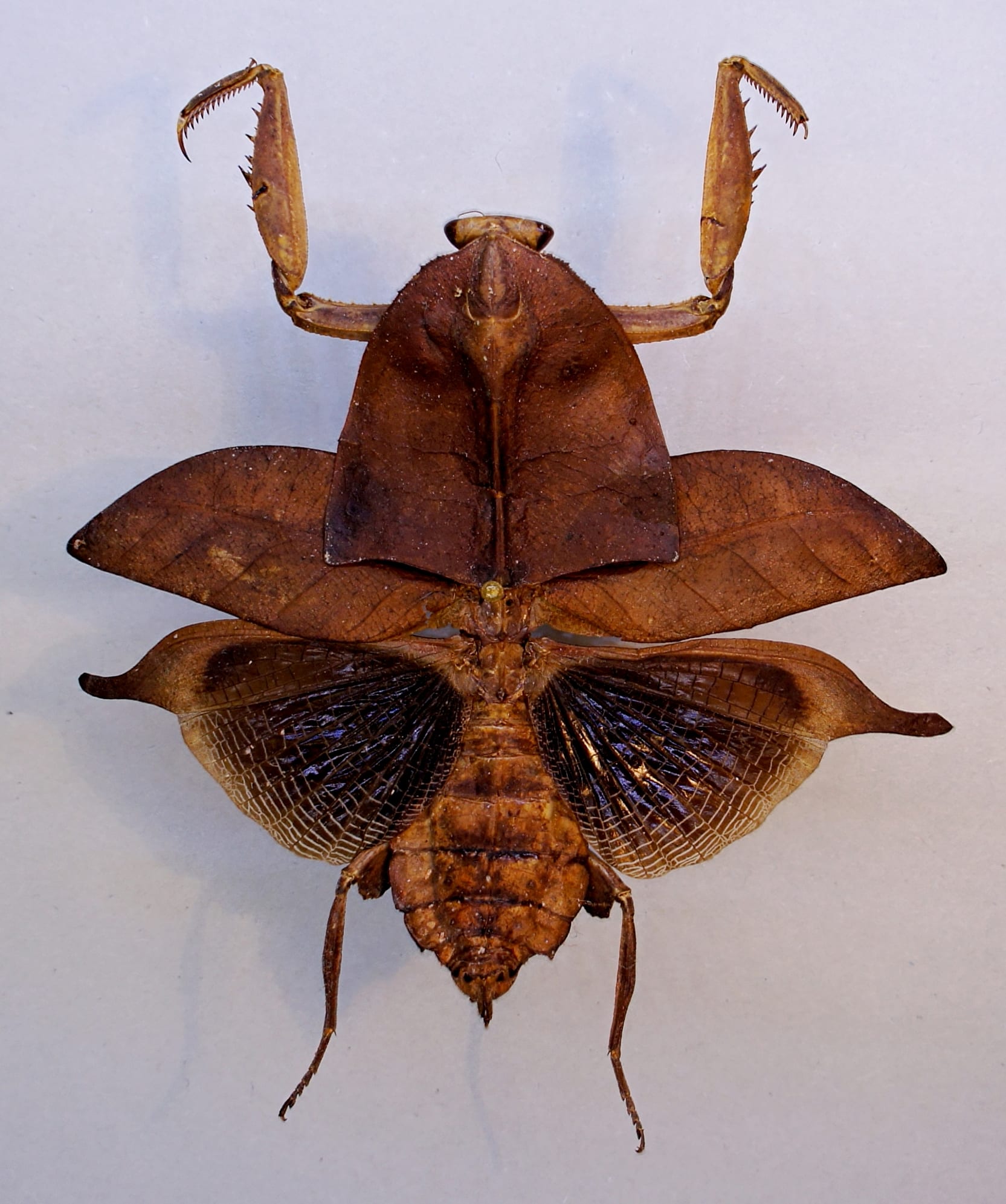
 © Tanja Popp / CC BY-SA 4.0
Dead Leaf Mantis (truncata)
The Truncata Dead Leaf Mantis is a leaf mantis native to the tropical forests of the Malay Peninsula and Borneo. Its brown to blackish-brown body and the genus's most exaggerated hood-shaped pronotum give it a striking, cobra-like profile when viewed head-on. It normally stays motionless, blending into leaf litter to ambush prey, but will flare its hood and strike a threat display when disturbed. A medium-sized species with real presence, it does best in moderately high humidity and a calm setup, making it a rewarding pick for intermediate keepers drawn to its dramatic look.
View Dead Leaf Mantis (truncata) encyclopedia →0% commission on your first sales!Register by September 30, 2026 and your first 2 sales are commission-free!
Breeder Wanted!
List on BreederDirect and sell directly to customers nationwide!
6 Transparency Standards You Can Trust
When listing Insects, Breeders disclose the following. We guarantee transparency on growth stage and breeding unit.
- Life Stage Clarity
- Generation Info
- Real Photos
- Breeding Unit
- Country of Origin
- Body Length (mm)
Browse all 296 breeds
No listings match your filters
Adjust your filters, or get notified when new listings arrive.
Getting alerts is free with a member account. When new listings match your saved search, we'll notify you by email and in-app.
Browse other categories
Verified breeders (preview)
Dead Leaf Mantis (truncata) key facts
- Care level
- Intermediate
- Lifespan
- Adults 8-14 months
- Temperature
- Humidity
- 60〜80%
- Diet
- Fruit flies (nymphs), small crickets and roaches, flies
- Temperature & Humidity
- Aim for 25-30C by day, 22-23C at night and 60-80% humidity, misting regularly with good ventilation. Some vendors recommend a cooler 15-21C for Malaysian highland stock, so avoid overheating.
- Breeding & Egg-laying
- Ready to mate 8-14 days after the final moult. Around dusk place the female in the male's cage so that he sees her first. Females readily attack the male before or after mating. An ootheca follows 7-20 days later.
- Cohabitation
- Females are aggressive and may eat the male, so house singly and limit cohabitation to brief supervised pairing.
- Lifespan & Rearing Period
- No reliable figure for adult lifespan is available. First instar nymphs are large at about 12mm and grow on fruit flies from the start.
- Health & Notes
- Too many feeders at once stress it into refusing food, and it will gorge to obesity, so limit large individuals to about 4-5 large crickets a week. Poorly ventilated cages breed mould and stale air.
About Dead Leaf Mantis (truncata)
A leaf mantis from the Malay Peninsula and Borneo, known for its cobra-like hooded pronotum, the largest in its genus. Medium-sized and suited to intermediate keepers who can maintain moderately high humidity.
7 things to know before welcoming a Dead Leaf Mantis (truncata)
1Moderately High Humidity
Native to the tropical forests of the Malay Peninsula and Borneo, the Truncata Dead Leaf Mantis prefers moderately high humidity. Mist the enclosure regularly to keep it from drying out.
2The Hood-Shaped Pronotum
Its most striking feature is the genus's most developed hood-shaped pronotum, giving it a cobra-like look from the front. It may flare this hood as a threat display when disturbed.
3Prefers a Calm Setting
This species can be sensitive to noise and vibration, so it does best in a quiet, calm setup. Think about where you place the enclosure and when you handle daily care.
4Extra Care Around Molting
As with mantises generally, the period around molting is delicate and the body is unstable. Provide enough space and secure footholds, and avoid disturbing it while molting.
5Keep Them Housed Alone
Mantises are prone to cannibalism, so housing multiple individuals together is generally avoided. This is especially risky when animals are at different growth stages.
6Feeding Basics
As a predator that eats live insects, it needs prey sized appropriately for its body. Adjust portions carefully, since excess leftover food can cause stress and hygiene issues.
7Prepare the Enclosure First
Setting up a tall enclosure with branches or other footholds beforehand makes molting and activity go smoothly from day one. As a medium-sized species, choose an enclosure sized for its eventual growth.
Frequently asked questions about Dead Leaf Mantis (truncata)
- Q.How much humidity does it need?
- A.Coming from the tropical forests of the Malay Peninsula and Borneo, it prefers moderately high humidity. Mist regularly to maintain moisture while ensuring enough airflow to avoid excess dampness.
- Q.Is its temperament calm?
- A.It's generally calm, staying motionless while it waits to ambush prey. That said, it may flare its hood-shaped pronotum in a threat display when disturbed.
- Q.Can beginners keep this species?
- A.It's considered suited to intermediate keepers. Since it requires moderately high humidity and a calm setup, it's best approached after you have some insect-keeping experience.
- Q.Is it subject to CITES?
- A.The Truncata Dead Leaf Mantis is not subject to CITES.
- Q.Can multiple individuals be kept together?
- A.Mantises are prone to cannibalism, so keeping multiple individuals in the same enclosure should generally be avoided. Housing them individually is the standard approach.
Useful tools for Dead Leaf Mantis (truncata) care
Learn more about Dead Leaf Mantis (truncata) in the encyclopedia
View Dead Leaf Mantis (truncata) encyclopedia entry →
Care difficulty, lifespan, size and diet — all basics covered.
More in this category
Can't find the one you're looking for?
Post your wishes for free and breeders with matching animals will contact you with introductions.