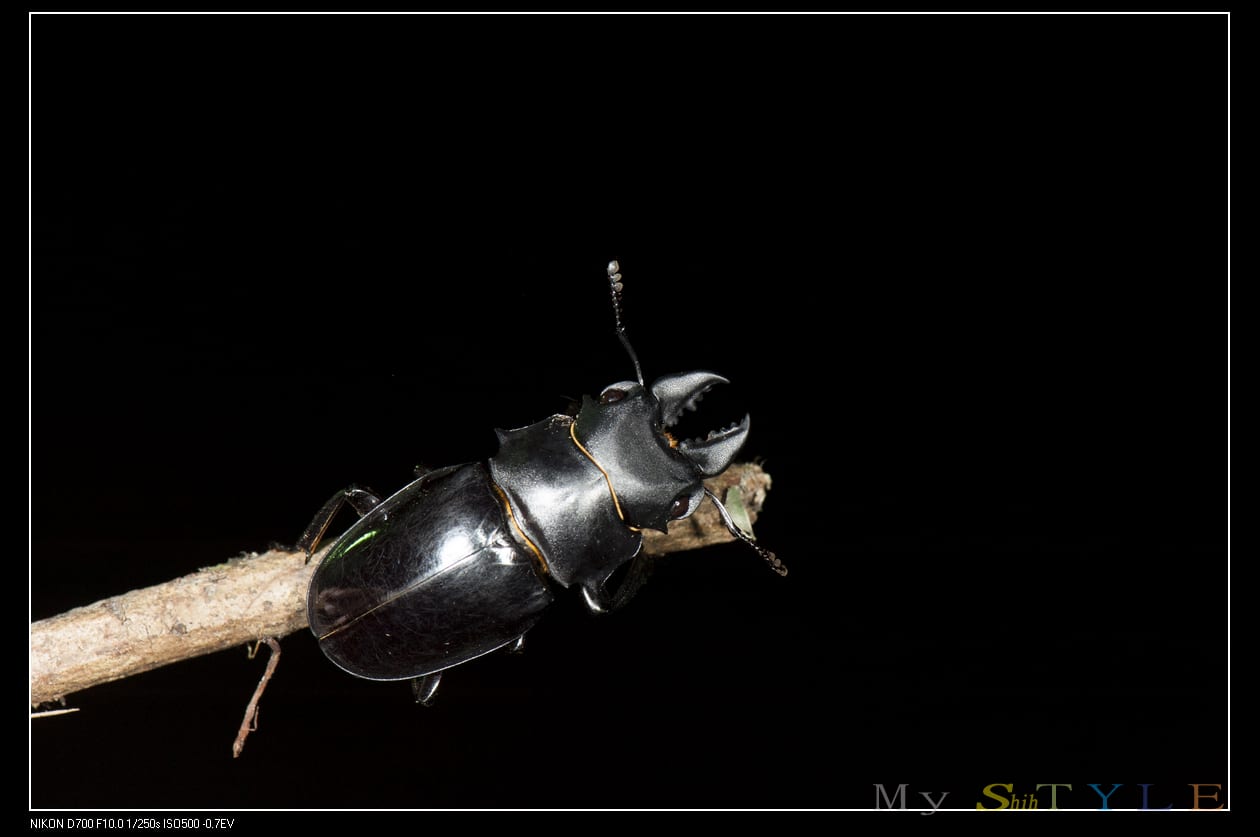
 © LiCheng Shih / CC BY 2.0
Siva Shining Stag Beetle
The Siva Shining Stag Beetle (also known as the Ounitsuya stag beetle) is a large, glossy stag beetle native to a wide range spanning India, Taiwan, the Malay Peninsula, and Vietnam. Its lustrous body and the male's impressively developed mandibles are its main draw, with captive-bred specimens recorded at up to 96.6mm. The shape of a male's mandibles is known to be influenced by the temperature during the prepupal stage, so individual beetles can show noticeably different jaw forms even within the same species. It's generally considered suitable for intermediate keepers with some prior experience in temperature management. Adults are typically active for just a few months, making close daily observation part of the appeal.
View Siva Shining Stag Beetle encyclopedia →0% commission on your first sales!Register by September 30, 2026 and your first 2 sales are commission-free!
Breeder Wanted!
List on BreederDirect and sell directly to customers nationwide!
6 Transparency Standards You Can Trust
When listing Insects, Breeders disclose the following. We guarantee transparency on growth stage and breeding unit.
- Life Stage Clarity
- Generation Info
- Real Photos
- Breeding Unit
- Country of Origin
- Body Length (mm)
Browse all 296 breeds
No listings match your filters
Adjust your filters, or get notified when new listings arrive.
Getting alerts is free with a member account. When new listings match your saved search, we'll notify you by email and in-app.
Browse other categories
Verified breeders (preview)
Siva Shining Stag Beetle key facts
- Care level
- Intermediate
- Lifespan
- A few months as an adult
- Size
- Captive records 96.6mm for the nominate form and 95.5mm for Taiwanese stock (wild records 92.8mm and 90.6mm)
- Diet
- Adults take fermented sap of broadleaf trees and beetle jelly; larvae eat humus close to soil
- Temperature & Humidity
- No published figures for general rearing temperature or humidity could be found for this species, so none are given. It is reported, however, that the male's mandible form depends on the temperature during the prepupal stage: roughly 23 to 25 degrees gives the short-toothed form, 20 to 23 the intermediate form and 16 to 20 the tip-toothed form. The genus as a whole tolerates cold poorly.
- Breeding & Egg-laying
- Within the genus, O. burmeisteri, this species and O. dalmanni are described as laying readily in ordinary shop-bought rhinoceros-beetle substrate, so this one falls on the easy side for egg-laying. The larvae are reared on spent substrate mixed with the remains of mycelium, or on nitrogen-rich rhinoceros-beetle substrate. The captive records are 96.6 mm for the nominate form and 95.5 mm for Taiwanese stock.
- Cohabitation
- Male Odontolabis are for the most part short-tempered and combative, and a male will sometimes kill a female he does not take to. Several are never kept together and each beetle is housed alone. The larvae too hold their chamber in the humus as territory, attacking and sometimes eating intruders, so they are reared separately.
- Lifespan & Rearing Period
- For the genus, one to two years pass between hatching and pupation and the adults live a few months. Aiming for a large long- or tip-toothed male means holding the prepupal stage at a lower temperature, which lengthens the time to eclosion accordingly.
- Health & Notes
- Taiwanese stock circulates as a separate line, so beetles from different regions should not be mixed. Importing live Scarabaeoidea requires the species identification certificate. Odontolabis larvae compete strongly with other species, and the Japanese insects they would most likely displace are said to be the rhinoceros beetle and rare Okinawan species such as Cheirotonus jambar and the Neolucanus stags, so the beetles must never be released outdoors.
About Siva Shining Stag Beetle
A large glossy stag beetle native from India to Taiwan, known for its lustrous body and impressive mandibles, with captive records up to 96.6mm. Suited to intermediate keepers; adults are active for just a few months.
7 things to know before welcoming a Siva Shining Stag Beetle
1Mandible shape shifts with temperature
A male's mandible shape is known to be influenced by the temperature during the prepupal stage. Because this causes noticeable individual variation even within the same species, watching how each beetle develops is part of the appeal.
2Adults live only a few months
Adult activity typically lasts just a few months. Rather than expecting a long-term companion, approach this species with the mindset of closely observing a shorter but eventful stage of life.
3Temperature control is key
This species is considered suitable for intermediate keepers, and temperature management matters throughout both the larval and adult stages. Avoid extreme heat or cold and aim for a stable environment.
4A large species with a wide range
This large stag beetle is native to a broad range spanning India, Taiwan, the Malay Peninsula, and Vietnam. Captive-bred individuals have been recorded at up to 96.6mm, so there's real potential for an impressively sized adult.
5Also known as the "Ounitsuya"
This species also goes by the Japanese trade name "Ounitsuyakuwagata." Since multiple names circulate for it, it's worth confirming the scientific name or key features before bringing one home.
6Prepare housing and climbing branches
Given its large adult size, it helps to prepare an appropriately sized enclosure and climbing branches in advance. Check the substrate and perches regularly to keep conditions in good shape.
7Expect individual variation
Mandible shape and body color can vary noticeably between individuals of the same species. Approaching each beetle with curiosity about its own particular features makes for a more rewarding experience.
Frequently asked questions about Siva Shining Stag Beetle
- Q.How large does the Siva Shining Stag Beetle get?
- A.Captive-bred records reach 96.6mm for the nominate subspecies and 95.5mm for the Taiwanese form. Wild records are somewhat smaller, at 92.8mm and 90.6mm respectively, so captive-raised individuals tend to grow a bit larger.
- Q.Is this species suitable for beginners?
- A.It's generally considered suitable for intermediate keepers. If you're new to keeping stag beetles, it helps to build up some basic experience with temperature management before taking one on.
- Q.Why do males have different mandible shapes?
- A.A male's mandible shape is known to be influenced by the temperature during the prepupal stage. This creates individual variation, so beetles of the same species can look noticeably different from one another.
- Q.How long do the adults live?
- A.Adults are active for roughly a few months. Rather than a long-term pet, this species is better suited to enjoying a shorter, closely observed stage of life.
- Q.Are there any legal restrictions on keeping this species?
- A.The Siva Shining Stag Beetle is not subject to CITES.
Useful tools for Siva Shining Stag Beetle care
Learn more about Siva Shining Stag Beetle in the encyclopedia
View Siva Shining Stag Beetle encyclopedia entry →
Care difficulty, lifespan, size and diet — all basics covered.
More in this category
Can't find the one you're looking for?
Post your wishes for free and breeders with matching animals will contact you with introductions.