Ryukyu Lesser Stag Beetle
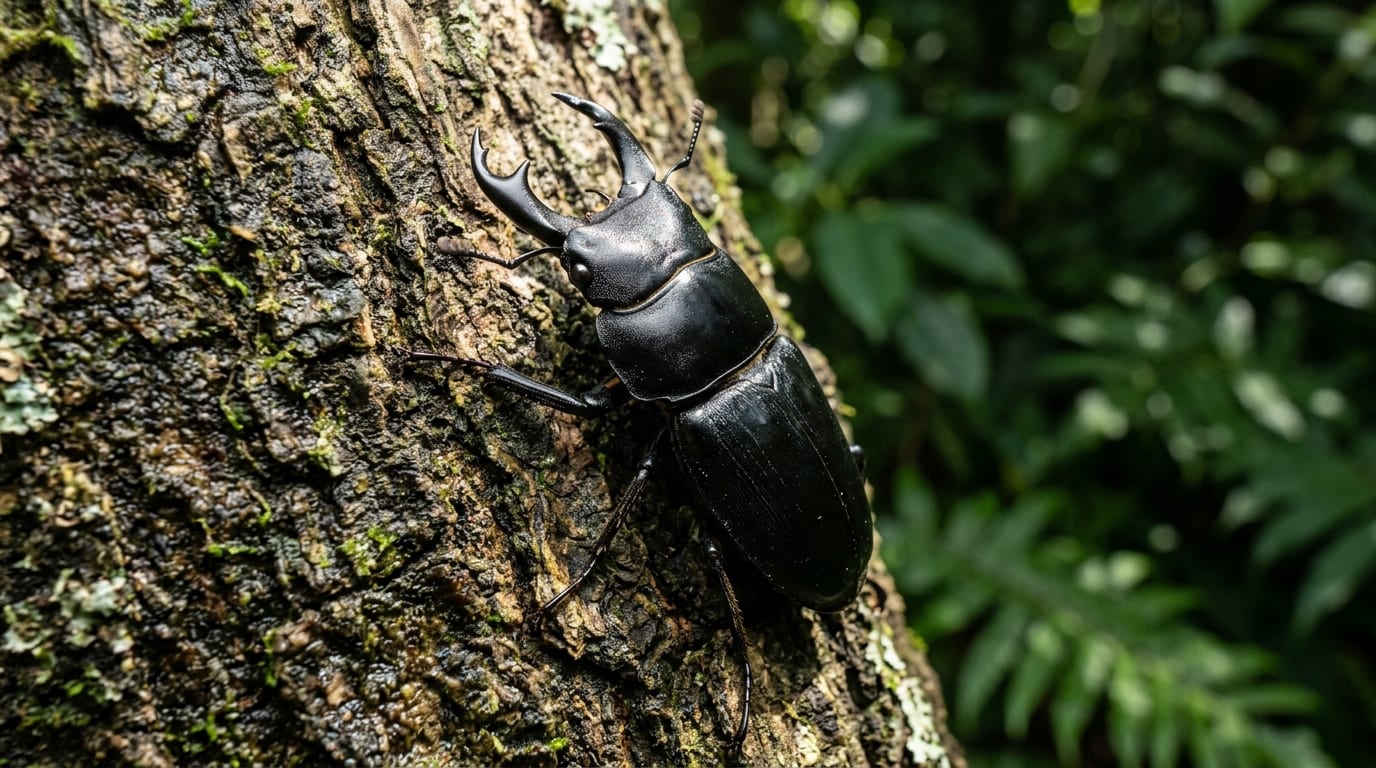
The Ryukyu Lesser Stag Beetle is a regional subspecies of the Amami Lesser Stag Beetle, found in the northern part of Okinawa Island. It has a glossy black body and short, strongly curved mandibles that give it the sturdy, classic look of a Dorcus stag beetle. Its legs and tarsi are somewhat elongated, an adaptation suited to life in the trees, making it an interesting species to observe closely. It's encountered far less often than the mainland Lesser Stag Beetle, so keeping one calls for the kind of grounding in the basics expected of an intermediate-level keeper. Individuals tend to be quite hardy, making this a species keepers can enjoy getting to know over the long term.
View Ryukyu Lesser Stag Beetle encyclopedia →0% commission on your first sales!Register by September 30, 2026 and your first 2 sales are commission-free!
Breeder Wanted!
List on BreederDirect and sell directly to customers nationwide!
6 Transparency Standards You Can Trust
When listing Insects, Breeders disclose the following. We guarantee transparency on growth stage and breeding unit.
- Life Stage Clarity
- Generation Info
- Real Photos
- Breeding Unit
- Country of Origin
- Body Length (mm)
Browse all 296 breeds
No listings match your filters
Adjust your filters, or get notified when new listings arrive.
Getting alerts is free with a member account. When new listings match your saved search, we'll notify you by email and in-app.
Browse other categories
Verified breeders (preview)
Ryukyu Lesser Stag Beetle key facts
- Care level
- Intermediate
- Lifespan
- 6 months to 2 years as an adult
- Size
- Males 21.7-35.7mm, females 20-32mm
- Diet
- Adults take sap of broadleaf trees and beetle jelly; larvae feed on soft rotten wood
- Temperature & Humidity
- The larvae live in fairly damp, soft rotten wood, so neither the laying log nor the rearing medium should be allowed to dry out.
- Breeding & Egg-laying
- Females lay in rotten broadleaf wood along streams. The larvae hatch about a month after laying, feed on soft rotten wood and take about a year to develop. Final-instar larvae begin building a pupal chamber in the autumn of that year or the following spring, spend about a month becoming a pupa and eclose about a month after that.
- Cohabitation
- As with stag beetles generally, males fight, so keep adults singly. Dorcus amamianus is split into four subspecies from the Amami islands to the Yaeyamas, so beetles from other localities belong to other subspecies and must not be housed or crossed with them.
- Lifespan & Rearing Period
- Adults live from six months to two years. Those that eclose in autumn overwinter and become active the following spring, while those that eclose in spring leave the pupal chamber after about a month.
- Health & Notes
- The beetle also goes by the name Okinawa lesser stag. Females are easily confused with those of Rhaetulus recticornis, so check for the pair of weak swellings on the head. The north of Okinawa Island is designated as Yambaru National Park, covering the villages of Kunigami, Ogimi and Higashi, and falls within the World Natural Heritage site 'Amami-Oshima Island, Tokunoshima Island, Northern part of Okinawa Island, and Iriomote Island'. Inside a national park's special zones the Natural Parks Act requires permission to take animals or plants, so anyone handling wild-caught beetles must check the rules for the collecting site. The beetle is not as numerous as the mainland lesser stag, so never release captive stock into the wild.
About Ryukyu Lesser Stag Beetle
A guide to the Ryukyu Lesser Stag Beetle, an Okinawa-native subspecies of the Amami Lesser Stag Beetle, covering its glossy black body, curved mandibles, lifespan, adult size, and key care points for keepers.
7 things to know before welcoming a Ryukyu Lesser Stag Beetle
1A Regional Subspecies
The Ryukyu Lesser Stag Beetle is a subspecies of the Amami Lesser Stag Beetle found in the northern part of Okinawa Island. Knowing it as a distinct regional population helps you appreciate what sets it apart from its Amami relatives.
2Glossy Black Body, Short Jaws
Its body has a glossy black sheen, and its mandibles are notably shorter and more strongly curved than those of many other Dorcus stag beetles. This sturdy, powerful look is one of its main visual draws.
3Long Legs Built for Climbing
Its legs and tarsi are somewhat elongated, an adaptation for life in trees. Give it climbing branches or bark in the enclosure so it can move around in three dimensions.
4Best Suited to Experienced Keepers
This species is considered suitable for intermediate-level keepers. It helps to have a working grasp of basic care -- temperature, humidity, and feeding -- before bringing one home.
5Adults Live 6 Months to 2 Years
As an adult, this beetle typically lives anywhere from six months to two years, depending on the individual and how it's kept. That relatively long lifespan means you can enjoy its company for quite a while.
6Males and Females Differ in Size
Adult males typically measure 21.7 to 35.7mm, while females run 20 to 32mm. The size difference, along with mandible shape, makes it fairly easy to tell the sexes apart.
7What to Prepare Before Bringing One Home
Have an enclosure, insect substrate, climbing branches, and food such as insect jelly ready in advance. Because a pinch from the mandibles can hurt, it's best to pick the beetle up gently from behind rather than near the jaws.
Frequently asked questions about Ryukyu Lesser Stag Beetle
- Q.How is the Ryukyu Lesser Stag Beetle different from a regular Lesser Stag Beetle?
- A.The Ryukyu Lesser Stag Beetle is a subspecies of the Amami Lesser Stag Beetle found in the northern part of Okinawa Island, distinct from the common Lesser Stag Beetle found across mainland Japan. That said, the two share many traits, including body color and mandible shape.
- Q.How difficult is it to keep?
- A.Care is considered suitable for intermediate-level keepers. It helps to have a solid grasp of basic insect care -- temperature, humidity, and feeding -- before bringing one home.
- Q.How long do they live?
- A.As adults, they typically live around six months to two years. The exact lifespan varies by individual and by how they're kept.
- Q.How can I tell males and females apart?
- A.Size is the main clue: males grow to about 21.7-35.7mm, while females reach around 20-32mm. Mandible size and overall build also differ between the sexes.
- Q.Is the Ryukyu Lesser Stag Beetle CITES-listed?
- A.No, the Ryukyu Lesser Stag Beetle is not subject to CITES. It's a good basic fact to know before considering keeping one.
Useful tools for Ryukyu Lesser Stag Beetle care
Learn more about Ryukyu Lesser Stag Beetle in the encyclopedia
View Ryukyu Lesser Stag Beetle encyclopedia entry →
Care difficulty, lifespan, size and diet — all basics covered.
More in this category
Can't find the one you're looking for?
Post your wishes for free and breeders with matching animals will contact you with introductions.