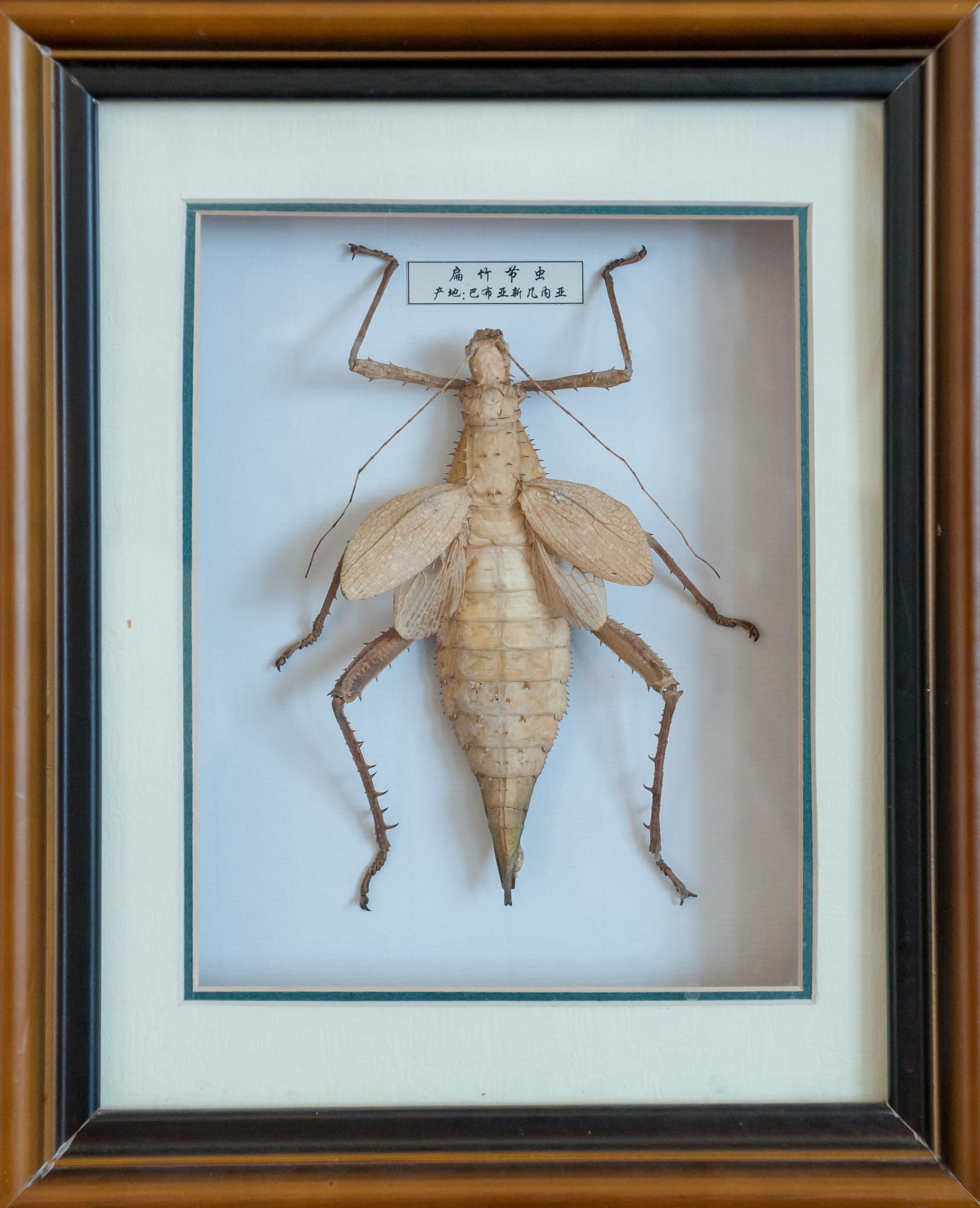
 © CEphoto, Uwe Aranas / CC BY-SA 3.0
Jungle Nymph
The Jungle Nymph is a giant stick insect native to the Malay Archipelago. Its most striking feature is the female's size — reaching 14 to 17 cm in length and 30 to 65 grams, making her one of the heaviest living insects. Her lime-green body is lined with spines, giving her a bold, armored look. Males are noticeably smaller and slimmer, measuring 9 to 13 cm. Though both sexes have short wings, neither can fly, and their movements tend to be slow and deliberate, reflecting a generally calm temperament. Because keeping them well requires some background knowledge and proper setup, this species is considered better suited to intermediate keepers than absolute beginners — yet their imposing presence continues to fascinate insect enthusiasts.
View Jungle Nymph encyclopedia →0% commission on your first sales!Register by September 30, 2026 and your first 2 sales are commission-free!
Breeder Wanted!
List on BreederDirect and sell directly to customers nationwide!
6 Transparency Standards You Can Trust
When listing Insects, Breeders disclose the following. We guarantee transparency on growth stage and breeding unit.
- Life Stage Clarity
- Generation Info
- Real Photos
- Breeding Unit
- Country of Origin
- Body Length (mm)
Browse all 296 breeds
No listings match your filters
Adjust your filters, or get notified when new listings arrive.
Getting alerts is free with a member account. When new listings match your saved search, we'll notify you by email and in-app.
Browse other categories
Verified breeders (preview)
Jungle Nymph key facts
- Care level
- Intermediate
- Lifespan
- Adult females 1-2 years / adult males 3-4 months
- Size
- Females 14-17cm and 30-65g, males 9-13cm
- Diet
- The leaves of broadleaf trees
- Temperature & Humidity
- It comes from tropical forest in the Malay Archipelago, so mist the enclosure against drying. Females are 14-17cm and heavy, so moulting needs real height and footholds strong enough to bear the weight.
- Breeding & Egg-laying
- The female lays into the ground using the secondary ovipositor at the end of the abdomen. Phasmid eggs resemble plant seeds, and in captivity they wait to hatch within the substrate.
- Cohabitation
- It is placid, and several of the same species can share an enclosure. Being touched during a moult easily spoils it, so give the container height and plenty of footholds. When alarmed it snaps the hind legs shut like scissors and defends itself with the spines on the tibiae, so handle it with care.
- Lifespan & Rearing Period
- Across stick insects as a whole, lifespans run from a few months to at most three years. Being a large species, it also takes longer to reach maturity.
- Health & Notes
- The import of insects, foreign stick insects included, is regulated under Japan's Plant Protection Act, and whether a given species may enter depends on the country it comes from. What circulates in Japan is captive-bred stock, so buy from a clear source and never let one loose outdoors. The eggs look like plant seeds, so always check the substrate for them before discarding it.
About Jungle Nymph
A giant stick insect from the Malay Archipelago — females reach 14–17 cm and 30–65 g, among the heaviest living insects, with a spiny lime-green body. Flightless, and best suited to intermediate keepers.
7 things to know before welcoming a Jungle Nymph
1The Female's Impressive Size
Females reach 14–17 cm in length and 30–65 g in weight, making them among the heaviest living insects, while males are noticeably smaller and slimmer at 9–13 cm. It helps to know this difference in advance so the adult size and appearance don't come as a surprise.
2A Tall, Roomy Enclosure
Because this species grows so large, the enclosure needs enough height for the insect to molt without getting caught. A cramped cage becomes more stressful as the animal grows, so it's worth choosing a size with its adult dimensions in mind from the start.
3Calm Nature, Handle with Care
Movements are slow and the temperament is generally calm. That said, the body is lined with spines, so gripping it tightly or forcing it to move can trigger a defensive reaction meant to protect itself.
4A Diet of Fresh Leaves
This is a herbivorous insect that feeds on plant leaves. Before bringing one home, make sure you have a reliable, ongoing source of fresh leaves ready.
5Molting Is a Fragile Time
Just before and after molting, the body is extremely delicate and sensitive to disturbance or dry conditions in the enclosure. It's best to leave the insect undisturbed during this period and avoid sudden changes to its environment.
6Nocturnal and Quiet by Day
This species is nocturnal and tends to stay still during the day. Little activity in daylight hours isn't necessarily a sign of poor health, so it helps to understand its natural rhythm before assuming something is wrong.
7Wings That Can't Fly
Although it has short wings, it cannot use them to fly. That means there's little risk of it escaping by air, but it can still walk away, so make sure the enclosure's lid and latches are secure.
Frequently asked questions about Jungle Nymph
- Q.How big does it grow?
- A.Females grow to 14–17 cm in length and 30–65 g in weight, putting them among the heaviest living insects. Males are smaller, at roughly 9–13 cm in length.
- Q.Can it fly?
- A.It has short wings, but it cannot use them to fly. It gets around entirely by walking.
- Q.Is it aggressive or likely to bite?
- A.Its movements are slow and its temperament is generally calm. That said, its body is lined with spines, and handling it roughly can trigger a defensive reaction.
- Q.What should it be fed?
- A.It's a herbivorous insect that mainly eats plant leaves. It's important to have a setup in place for supplying fresh leaves on an ongoing basis.
- Q.Is it suitable for beginners?
- A.This species is considered suited to intermediate keepers. It's recommended to have some basic knowledge and the right setup in place before bringing one home.
Useful tools for Jungle Nymph care
Learn more about Jungle Nymph in the encyclopedia
View Jungle Nymph encyclopedia entry →
Care difficulty, lifespan, size and diet — all basics covered.
More in this category
Can't find the one you're looking for?
Post your wishes for free and breeders with matching animals will contact you with introductions.