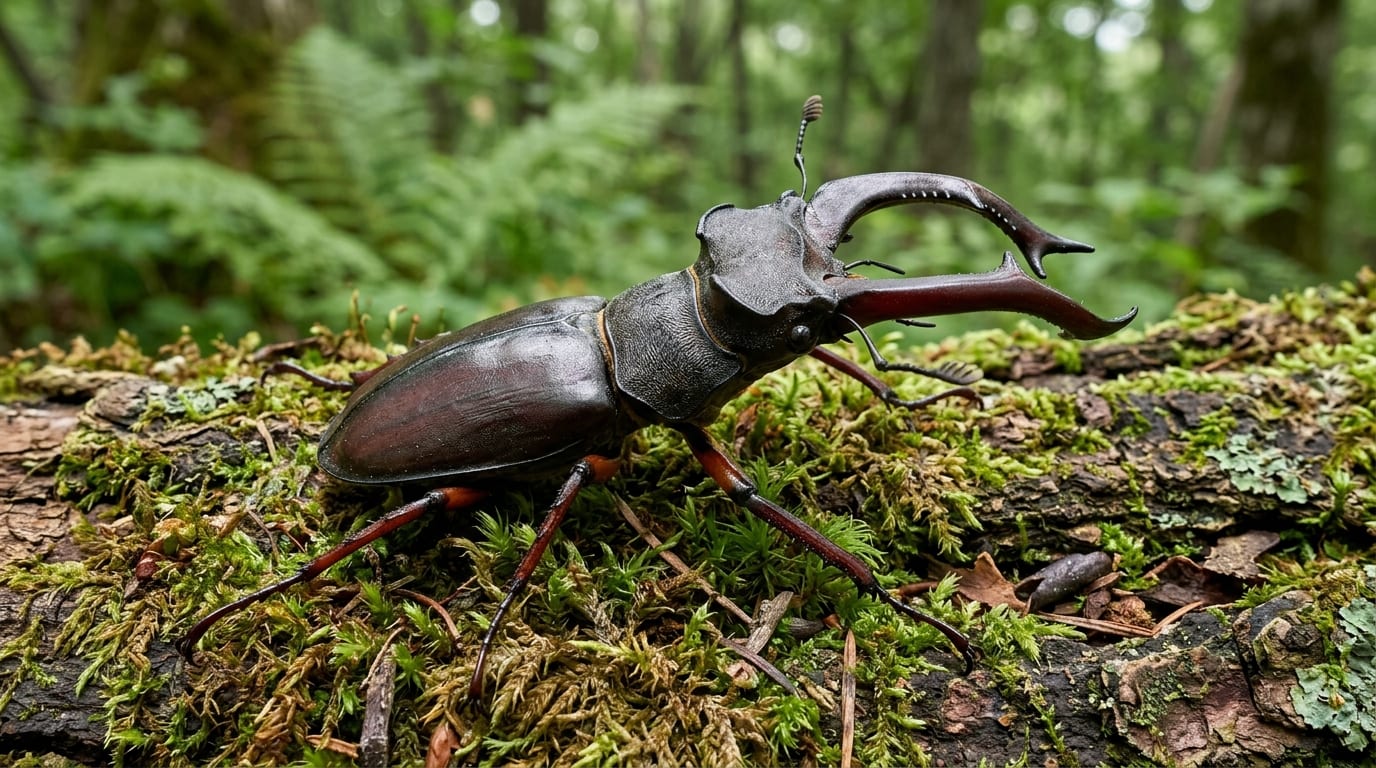
Dybowsky's Stag Beetle
Dybowsky's Stag Beetle ranges across the Korean Peninsula, northern China, and Russia's Amur region. Taxonomists remain divided on whether it's a subspecies of Japan's native stag beetle or a distinct species in its own right — a genuinely interesting point of scientific debate. It's known for its rugged, continental build and substantial mandibles, with a captive-bred record of 72.0mm. Because members of this genus tend to be sensitive to heat, keeping one successfully calls for careful temperature management, making it a beetle best suited to experienced hobbyists rather than newcomers.
View Dybowsky's Stag Beetle encyclopedia →0% commission on your first sales!Register by September 30, 2026 and your first 2 sales are commission-free!
Breeder Wanted!
List on BreederDirect and sell directly to customers nationwide!
6 Transparency Standards You Can Trust
When listing Insects, Breeders disclose the following. We guarantee transparency on growth stage and breeding unit.
- Life Stage Clarity
- Generation Info
- Real Photos
- Breeding Unit
- Country of Origin
- Body Length (mm)
Browse all 296 breeds
No listings match your filters
Adjust your filters, or get notified when new listings arrive.
Getting alerts is free with a member account. When new listings match your saved search, we'll notify you by email and in-app.
Browse other categories
Verified breeders (preview)
Dybowsky's Stag Beetle key facts
- Care level
- Advanced
- Lifespan
- Adults 2-3 months
- Size
- Captive record 72.0mm, wild record 68.3mm
- Diet
- Adults take beetle jelly; larvae eat fermented substrate
- Temperature & Humidity
- In the related Japanese L. maculifemoratus, egg-laying is said to be straightforward below 25C and cool rearing suits the raising of large beetles, so keep this species cool along the same lines. Keep the substrate at a moisture that forms a ball when squeezed.
- Breeding & Egg-laying
- The BE-KUWA 2025 edition gives a captive record of 72.0mm for foreign stag beetles (Rei Ikubo, registered 2023; wild record 68.3mm, expected maximum 76mm). As with the Japanese miyama stag beetle the larval stage is long and the beetle is presumed to rest after eclosion, so years can pass between egg-laying and an active adult.
- Cohabitation
- Adults are kept singly and put together only for pairing. Males fight with their mandibles and must always be separated. It is close to the Japanese miyama stag beetle and looks much like it, so never mix it with domestic stock.
- Lifespan & Rearing Period
- Adults of the genus Lucanus are generally short-lived while the larval stage is long.
- Health & Notes
- It is close enough to the Japanese miyama stag beetle that some treat it as a subspecies, so keep it well apart from domestic stock to prevent hybridising. The spelling varies between sources (dybowskyi or dybowski) and the Japanese name is sometimes given as the Korean miyama, so check the label when buying. Importing foreign stag beetles falls under the Plant Protection Act, and whether a given species may enter depends on the country it comes from, so domestically bred stock is the safe choice.
About Dybowsky's Stag Beetle
A stag beetle from the Korean Peninsula, northern China, and the Amur region, with debated status as a subspecies or distinct species. Captive record: 72.0mm. An advanced-keeper species requiring careful temperature control.
7 things to know before welcoming a Dybowsky's Stag Beetle
1Taxonomy Is Debated
Dybowsky's Stag Beetle is sometimes classified as a subspecies of Japan's native stag beetle and sometimes as its own distinct species. Depending on the source you consult, you may see it listed either way.
2A Continental Range
This beetle is found across the Korean Peninsula, northern China, and Russia's Amur region. Coming from a continental climate, its natural background differs from that of Japan's native stag beetles.
3Suited to Experienced Keepers
This species is rated as suitable for experienced keepers. Members of this genus tend to be sensitive to temperature swings, so successful care relies on environmental management built from hands-on experience.
4Temperature Is Key
Beetles in this genus are generally considered vulnerable to heat, so checking your enclosure's temperature regularly matters. It's worth researching placement and seasonal adjustments before you bring one home.
5Recorded Size Range
The captive-bred record stands at 72.0mm, while the wild record is 68.3mm. Individual beetles vary, so not every specimen will reach these lengths.
6Sturdy, Robust Mandibles
Males have thick, sturdy mandibles typical of continental stag beetles. Handle them gently to avoid injuring the mandibles or legs.
7Prepare Your Setup First
Before bringing one home, set up an enclosure with reliable temperature control along with suitable substrate and housing. Since this is a species for experienced keepers, doing your research beforehand is recommended.
Frequently asked questions about Dybowsky's Stag Beetle
- Q.Is it a subspecies or a separate species?
- A.Sources differ on this point — some classify it as a subspecies of Japan's native stag beetle, while others treat it as its own distinct species. There isn't a single settled answer.
- Q.Can beginners keep this species?
- A.This species is considered suitable for experienced keepers rather than beginners. Since it calls for careful temperature management, it's best approached after you've gained some hands-on beetle-keeping experience.
- Q.How large does it grow?
- A.The captive-bred record is 72.0mm, and the wild record is 68.3mm. Individual size varies, so not every beetle will reach these lengths.
- Q.Is care the same as for other stag beetles?
- A.The basics overlap with other members of the genus, but this species tends to be more sensitive to temperature changes, so it calls for more careful environmental management.
- Q.How is it different from Japan's native stag beetle?
- A.The main difference is its range, spanning the Korean Peninsula, northern China, and the Amur region. Taxonomists also disagree on whether it's a subspecies of the Japanese species or an independent one — a question still under discussion.
Useful tools for Dybowsky's Stag Beetle care
Learn more about Dybowsky's Stag Beetle in the encyclopedia
View Dybowsky's Stag Beetle encyclopedia entry →
Care difficulty, lifespan, size and diet — all basics covered.
More in this category
Can't find the one you're looking for?
Post your wishes for free and breeders with matching animals will contact you with introductions.