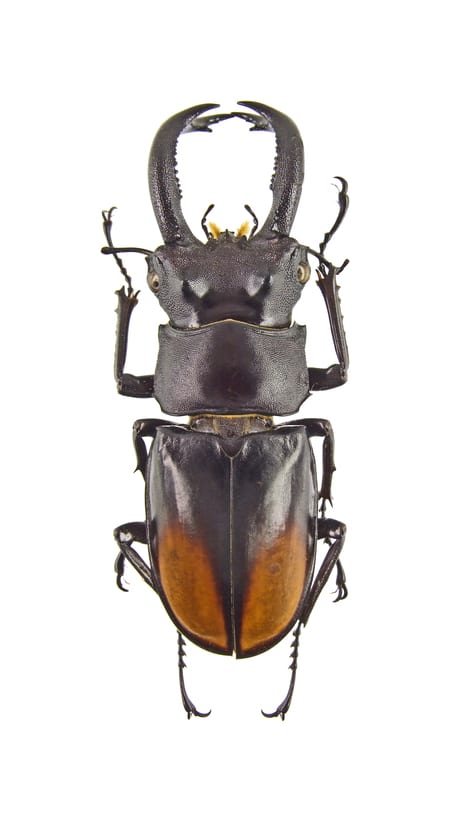
 © Noël Mal / CC BY-SA 4.0
Deyrolle's Stag Beetle
Deyrolle's Stag Beetle is an Indochinese subspecies of Parry's Stag Beetle (Hexarthrius parryi), found from southeastern Myanmar to northern Thailand. Its forked mandibles, the source of its "two-pronged" name, paired with a distinctive bump on the head give it a bold, striking presence. The sharp contrast between the orange patch and black area toward the rear of the elytra is another standout feature. Though less commonly seen in the hobby, it's kept the same way as the parent species and is hardy and easy to manage, making it a great choice for beginners who want to watch a beetle with real presence grow over time.
View Deyrolle's Stag Beetle encyclopedia →0% commission on your first sales!Register by September 30, 2026 and your first 2 sales are commission-free!
Breeder Wanted!
List on BreederDirect and sell directly to customers nationwide!
6 Transparency Standards You Can Trust
When listing Insects, Breeders disclose the following. We guarantee transparency on growth stage and breeding unit.
- Life Stage Clarity
- Generation Info
- Real Photos
- Breeding Unit
- Country of Origin
- Body Length (mm)
Browse all 296 breeds
No listings match your filters
Adjust your filters, or get notified when new listings arrive.
Getting alerts is free with a member account. When new listings match your saved search, we'll notify you by email and in-app.
Browse other categories
Verified breeders (preview)
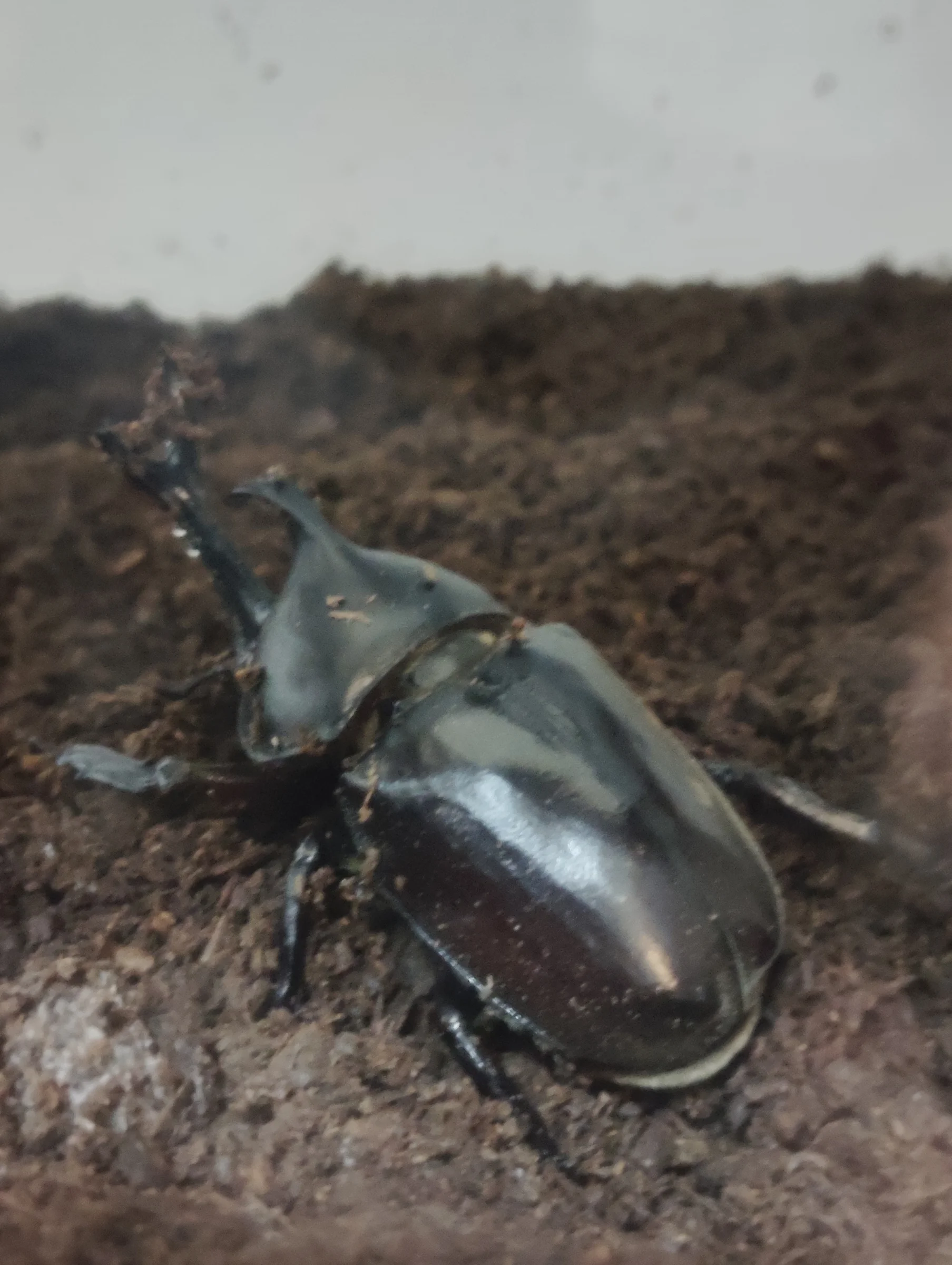
Deyrolle's Stag Beetle key facts
- Care level
- Beginner-friendly
- Lifespan
- Adults 6-8 months (general figure for Parry's stag)
- Size
- Males up to 86.5mm (wild max), female 44.5mm in a captive example
- Temperature
- 23〜25℃
- Diet
- Beetle jelly (adults); fermented substrate or kinshi bottles (larvae)
- Temperature & Humidity
- Adults at 23-25C, larvae at 20-23C (about 21C is ideal). Run the laying set slightly warm at 25-27C. Keep above 15C in winter; above 30C keep the case drier and ventilated.
- Breeding & Egg-laying
- Adults feed 1-2 months after eclosion and mature 2-3 months later. Lay Quercus logs unburied on the surface; eggs sit near the log surface and are not laid in substrate. Not prolific, with much variation between females.
- Cohabitation
- Extremely combative, threatening even the hand that changes the jelly. House singly; for cohabitation pairing tie the male's mandibles and separate after 3-7 days.
- Lifespan & Rearing Period
- Adults live 6-8 months as for Parry's stag. On kinshi larvae emerge in 8-10 months (males) or 6-8 months (females), about two months longer on substrate. From mid third instar some larvae wander on the surface.
- Health & Notes
- Conversion from pupal weight to adult size varies widely. Females look almost identical to Malay-Sumatran Parry's stag and H. mandibularis, so keep locality and subspecies records strictly.
About Deyrolle's Stag Beetle
An Indochinese subspecies of Parry's Stag Beetle from Myanmar and Thailand, known for its forked jaws, head bump, and bold orange markings. Hardy and beginner-friendly.
7 things to know before welcoming a Deyrolle's Stag Beetle
1Forked Jaws Are the Signature
Deyrolle's Stag Beetle gets its name from its distinctive mandibles, which split into two prongs at the tip. Combined with the bump on its head, this gives it a striking look unlike many other stag beetles.
2A Parry's Stag Relative
This beetle is an Indochinese subspecies of Parry's Stag Beetle (Hexarthrius parryi). Care is essentially the same as the parent species, so it's manageable even for those new to stag beetle keeping.
3Native to Myanmar and Thailand
It's found in the region spanning southeastern Myanmar to northern Thailand. It isn't widely available in the hobby, so it's worth considering when you come across one that interests you.
4Hardy and Beginner-Friendly
This species is considered beginner-friendly and doesn't require special equipment to keep. Avoiding sudden swings in temperature and humidity while maintaining basic care routines is enough to keep it stable.
5Adults Live About Half a Year
Adult lifespan is typically around 6 to 8 months. Give a newly emerged beetle time to rest until its body hardens before starting regular feeding and misting.
6Males Develop Larger Jaws
Wild males have been recorded up to 86.5mm, with impressively developed mandibles. Captive-bred females have reached around 44.5mm, and the size difference between sexes is part of what makes this species interesting to observe.
7Prepare the Enclosure First
Before bringing one home, set up an enclosure with insect mat substrate, a climbing branch, and something to prevent the beetle from getting stuck on its back. Having the environment ready in advance means less scrambling once your beetle arrives.
Frequently asked questions about Deyrolle's Stag Beetle
- Q.Is this species suitable for beginners?
- A.Yes, Deyrolle's Stag Beetle is considered a beginner-friendly species. With basic temperature and humidity management, it can be kept stably without any special equipment.
- Q.How long do adults typically live?
- A.Adult lifespan is generally around 6 to 8 months. This can vary somewhat depending on the individual and its care environment.
- Q.What does the "two-pronged" name refer to?
- A.The name comes from the mandibles splitting into two prongs at the tip. This forked jaw, along with the bump on the head, is a key feature for identifying this species.
- Q.How does it differ from Parry's Stag Beetle?
- A.Deyrolle's Stag Beetle is an Indochinese subspecies of Parry's Stag Beetle (Hexarthrius parryi). It's known for a sharper boundary between the orange patch and black area on the rear elytra, while care is nearly identical to the parent species.
- Q.How large can this beetle get?
- A.Wild males have been recorded at up to 86.5mm. Captive-bred females have reached around 44.5mm.
Useful tools for Deyrolle's Stag Beetle care
Learn more about Deyrolle's Stag Beetle in the encyclopedia
View Deyrolle's Stag Beetle encyclopedia entry →
Care difficulty, lifespan, size and diet — all basics covered.
More in this category
Can't find the one you're looking for?
Post your wishes for free and breeders with matching animals will contact you with introductions.