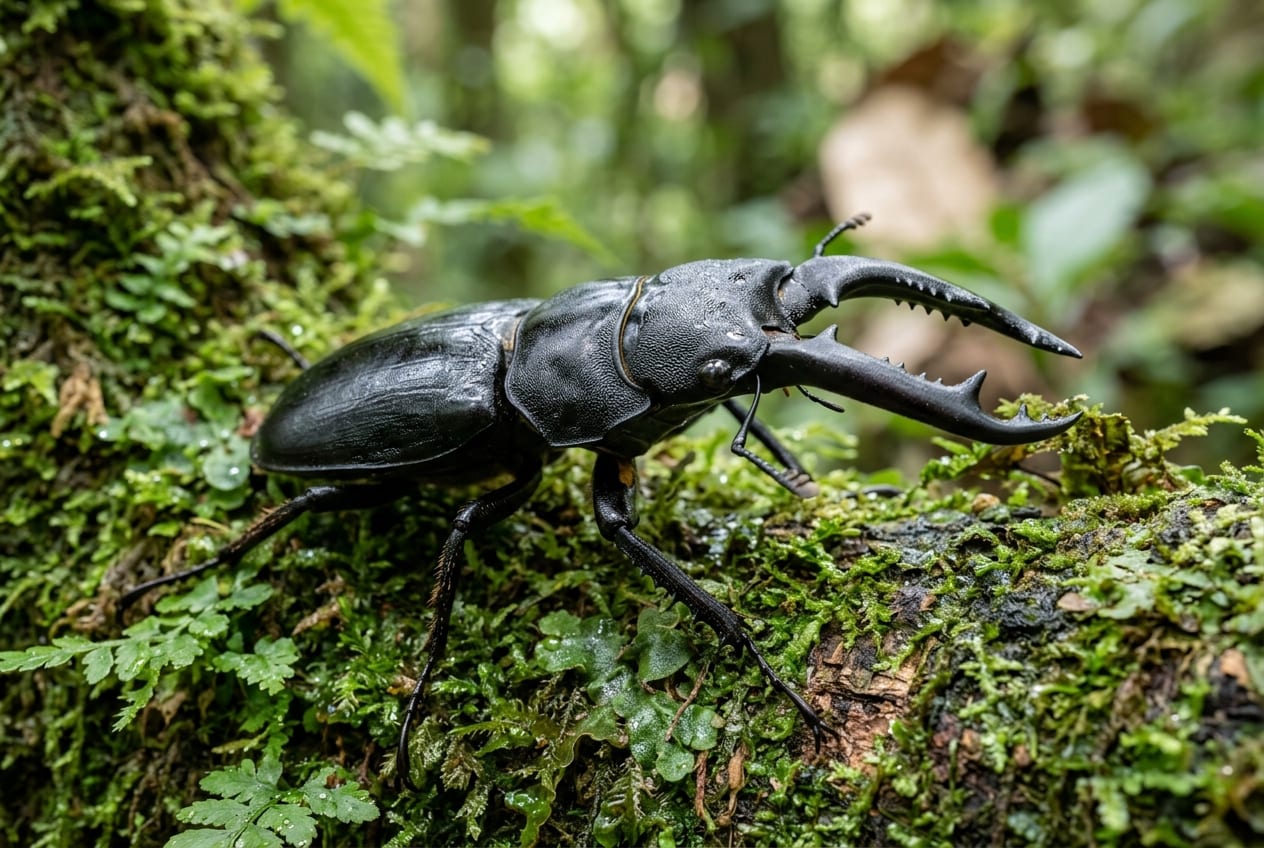
Amami Saw Stag Beetle
The Amami Saw Stag Beetle is found only on Amami Ōshima and Kakeroma Island, making it the largest species in Japan's saw stag beetle genus. Its deep black body and thick, sweeping mandibles are its defining features, with recorded lengths reaching 82.1mm in captivity and 80.5mm in the wild. These beetles tend to be feisty, and males housed together often fight, so keeping them individually is standard practice. Their bold mandibles and striking presence make them a favorite among stag beetle enthusiasts. Because care calls for some experience, keepers should have the basics — temperature control, substrate choice — in place before bringing one home.
View Amami Saw Stag Beetle encyclopedia →0% commission on your first sales!Register by September 30, 2026 and your first 2 sales are commission-free!
Breeder Wanted!
List on BreederDirect and sell directly to customers nationwide!
6 Transparency Standards You Can Trust
When listing Insects, Breeders disclose the following. We guarantee transparency on growth stage and breeding unit.
- Life Stage Clarity
- Generation Info
- Real Photos
- Breeding Unit
- Country of Origin
- Body Length (mm)
Browse all 296 breeds
No listings match your filters
Adjust your filters, or get notified when new listings arrive.
Getting alerts is free with a member account. When new listings match your saved search, we'll notify you by email and in-app.
Browse other categories
Verified breeders (preview)
Amami Saw Stag Beetle key facts
- Care level
- Intermediate
- Lifespan
- Adults live two to three months in the wild
- Size
- Males 23.4-82.1 mm (including captive; the wild record is 80.5 mm) / females 28.5-40 mm
- Diet
- Sap of broadleaf trees such as Mallotus, Machilus and Castanopsis; beetle jelly
- Temperature & Humidity
- Although it comes from subtropical islands, keep it like the mainland Japanese saw stag. Avoid extreme cold in winter and keep the substrate moist enough to clump when squeezed. Larval substrate does best kept on the damp side.
- Breeding & Egg-laying
- She lays in substrate, but along the walls and floor of the box or against a log rather than in the middle of it. Pack black soil or fully fermented fine substrate firmly. Eggs hatch in about a month and larvae take one to two years. Slightly damp fermented substrate suits them best; fungus bottles work but offer little advantage.
- Cohabitation
- Males are very aggressive: where the mainland saw stag mostly postures, this group grabs straight away. Females are often killed during pairing, so keep the beetles singly, house them together only a few days and separate them once mating is seen.
- Lifespan & Rearing Period
- Adults live two to three months in the wild. They fly from mid-June to early September; the larva builds a pupal cell in spring, pupates in about a month and emerges about a month later. In captivity beetles that emerge by August become active after some two months, while later ones usually stay dormant even under temperature control.
- Health & Notes
- Males of this group cannot chew an exit hole through wood, so the larva usually leaves the log and builds its pupal cell in the soil; give it a deep layer of substrate. The subspecies are separated island by island, so never release captive beetles or cross stock from different localities.
About Amami Saw Stag Beetle
Japan's largest saw stag beetle, found only on Amami Ōshima and Kakeroma Island. Black body, thick mandibles, captive record of 82.1mm. Best suited to keepers with some experience; wild adults live about 2-3 months.
7 things to know before welcoming a Amami Saw Stag Beetle
1Endemic to the Amami Islands
This species is found only on Amami Ōshima and Kakeroma Island, nowhere else in the world. That narrow range makes it a prized and distinctive beetle among Japanese stag beetle keepers.
2Japan's largest saw stag beetle
This is the largest species in Japan's saw stag beetle genus. Males range from 23.4mm up to 82.1mm in captivity, with a wild record of 80.5mm, and their thick, curved mandibles are the main visual draw.
3Best suited to experienced keepers
Care is rated for intermediate-level keepers, so understanding basics like temperature, humidity, and substrate selection helps a lot. First-time keepers may want to build up some experience before taking one on.
4A somewhat feisty temperament
Males will use their mandibles to fight one another, so housing multiple males together isn't recommended. Keeping them individually helps prevent injury and unnecessary stress.
5Adult lifespan is relatively short
In the wild, adults live for roughly 2 to 3 months. Because that window is short, providing a good environment from the moment you bring one home matters.
6A striking, all-black body
The body is uniformly black with a glossy finish that contrasts sharply with the thick mandibles. It's a species that really shows off the bold, dramatic look typical of saw stag beetles.
7Prepare the setup beforehand
Before bringing one home, prepare a ventilated enclosure, insect substrate, and climbing branches. Since this species comes from the warm Amami region, choose a spot that avoids extreme cold.
Frequently asked questions about Amami Saw Stag Beetle
- Q.Is this beetle suitable for beginners?
- A.Care for this species is rated for intermediate-level keepers. If you're new to stag beetles, it's a good idea to learn the basics — temperature control, substrate choice, and so on — before bringing one home.
- Q.How long do they live?
- A.Wild adults typically live about 2 to 3 months. Since that time is limited, it's worth setting up a comfortable environment as soon as you bring one home.
- Q.Is this species listed under CITES?
- A.The Amami Saw Stag Beetle is not listed under CITES.
- Q.How big do males get?
- A.Males range from 23.4mm up to 82.1mm in captivity, with a wild record of 80.5mm. Females typically reach 28.5mm to 40mm.
- Q.Can two males be kept together?
- A.Males will fight each other with their mandibles, so housing them together isn't recommended. To avoid injury, it's best to keep them individually.
Useful tools for Amami Saw Stag Beetle care
Learn more about Amami Saw Stag Beetle in the encyclopedia
View Amami Saw Stag Beetle encyclopedia entry →
Care difficulty, lifespan, size and diet — all basics covered.
More in this category
Can't find the one you're looking for?
Post your wishes for free and breeders with matching animals will contact you with introductions.