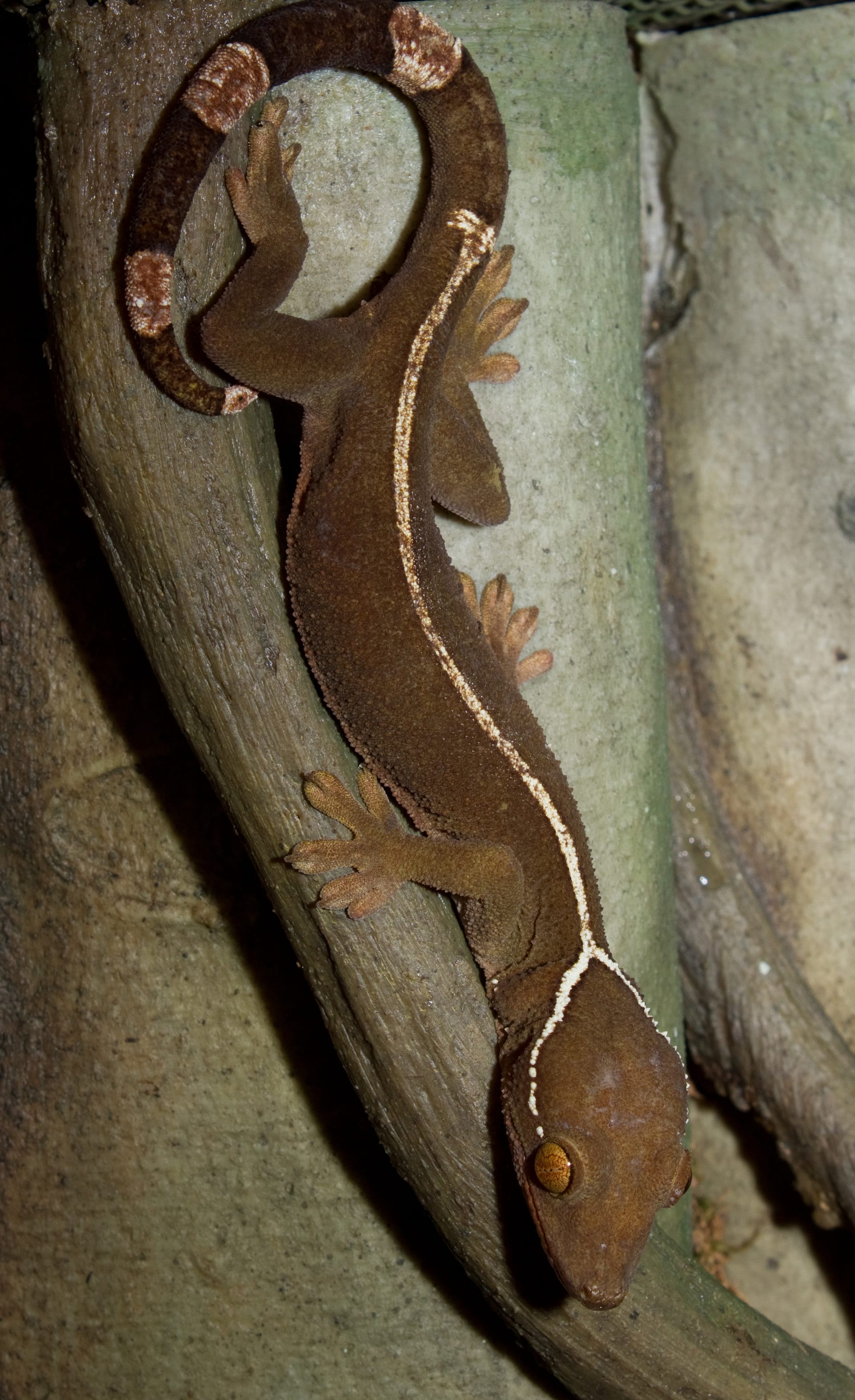
 © Brian Gratwicke / CC BY 2.0
White-Lined Gecko
The White-Lined Gecko is an arboreal species native to the region stretching from eastern Indonesia to the Solomon Islands. Its name comes from the single white stripe running from the neck to the base of the tail against a brown body — a simple yet striking pattern. Reaching 23 to 25 cm in length, this nocturnal, medium-sized gecko rests in cover during the day and becomes active after dark, moving nimbly through branches in a way that reflects its tree-dwelling nature. Individuals tend to have a fairly calm temperament and can grow more confident once settled, but successful care requires attention to humidity and climbing furniture, making this a species best suited to keepers with some prior reptile experience.
View White-Lined Gecko encyclopedia →0% commission on your first sales!Register by September 30, 2026 and your first 2 sales are commission-free!
Breeder Wanted!
List on BreederDirect and sell directly to customers nationwide!
6 Transparency Promises from Br-Choku
Every Reptiles & Amphibians from verified Breeder breeders includes complete information: morph, genetics, feeding requirements, and temperament details.
- Morph Information
- Actual Photos
- Feeding Information
- Temperament Information
- Genetics Information
- Age (Months)
Browse all 280 breeds
Difficulty Level
Feeding Type
Temperament
No listings match your filters
Adjust your filters, or get notified when new listings arrive.
Getting alerts is free with a member account. When new listings match your saved search, we'll notify you by email and in-app.
Browse other categories
Verified breeders (preview)
Are you raising reptiles & amphibians?
Register as a breeder and connect with buyers directly.
Apply as a breederWhite-Lined Gecko key facts
- Care level
- Intermediate
- Lifespan
- 7-10 years in captivity, with records of over 15 years
- Size
- 23-25cm
- Temperature
- Humidity
- 70〜80%
- Diet
- Crickets, dubia roaches and other insects, plus fruit-based gel diets
- Temperature & Humidity
- Aim for 29-32 C by day and 24 C at night, with humidity held at 70-80%. It is a Ferguson Zone 1 animal, so keep the UV index at the basking site between 0 and 0.7, with a maximum zone of 0.6-1.4, and mount the UVB lamp about 20 cm above it.
- Enclosure
- As an arboreal species it needs a tall enclosure; a heat lamp above a mesh lid creates a useful vertical gradient. Add cork bark and live plants so it has places to hide during the day.
- Diet & Feeding
- Insects such as crickets and dubia roaches are the staple, gut-loaded and dusted with calcium. Fruit-based gel diets can be offered alongside them.
- Temperament
- Nervous and fast-moving, it is not a gecko for handling: attempts to grab it may end in a bite or a dropped tail, so keep it as a display animal.
- Notes
- Not listed on any CITES appendix and not among Japan's designated dangerous animals. Wild-caught animals still enter the trade, so on acquisition check the skin and mouth carefully and have a faecal screen done.
About White-Lined Gecko
A guide to the White-Lined Gecko, an arboreal nocturnal species from eastern Indonesia to the Solomon Islands, covering its size, lifespan, and care difficulty.
7 things to know before welcoming a White-Lined Gecko
1Vertical, Climbable Setup
As an arboreal species, the enclosure should include branches and climbing surfaces arranged vertically. A tall enclosure with hiding spots helps the gecko feel secure.
2Temperature and Humidity
Being a nocturnal tropical species, it needs a proper temperature gradient along with relatively high humidity. Insufficient humidity can lead to shedding problems, so regular misting helps.
3Nocturnal Activity Pattern
This gecko rests quietly in cover during the day and becomes active after sunset. Evening checks are the best way to observe its natural behavior.
4Insect and Fruit-Based Diet
It is omnivorous, feeding mainly on insects along with fruit and commercial gecko diets. Adjust the amount and frequency of feeding based on the individual's condition.
5Calm but Quick-Moving
Some individuals become fairly calm compared to other arboreal geckos, though they can move quickly when startled. Frequent handling can cause stress, so observation-based interaction is usually a better fit.
6Monitoring Shedding and Health
Regularly check shedding condition, body weight, and skin appearance. If you notice incomplete sheds or reduced appetite, consult a reptile-experienced vet early.
7Preparing Before Bringing One Home
In captivity, White-Lined Geckos typically live 7 to 10 years, with some records exceeding 15 years, so plan for long-term care. Set up the enclosure, climbing branches, and a thermo-hygrometer before your gecko arrives.
Frequently asked questions about White-Lined Gecko
- Q.Is the White-Lined Gecko regulated under CITES?
- A.The White-Lined Gecko is not listed under CITES. It falls outside that international trade framework.
- Q.Is this gecko suitable for beginners?
- A.The White-Lined Gecko is generally considered suitable for intermediate keepers. Since it requires attention to temperature, humidity, and a climbable enclosure, some prior reptile-keeping experience is recommended.
- Q.How large does it grow?
- A.Adults typically reach 23 to 25 cm in total length. It is known as a medium-sized nocturnal gecko.
- Q.How long do they live?
- A.In captivity they typically live 7 to 10 years, with some records exceeding 15 years. Plan to care for them over the long term.
- Q.What is their temperament like?
- A.Compared to some other arboreal geckos, individuals can be fairly calm, though they may move quickly when startled. This species is better suited to quiet observation than frequent handling.
Useful tools for White-Lined Gecko care
Learn more about White-Lined Gecko in the encyclopedia
View White-Lined Gecko encyclopedia entry →
Care difficulty, lifespan, size and diet — all basics covered.
More in this category
Can't find the one you're looking for?
Post your wishes for free and breeders with matching animals will contact you with introductions.