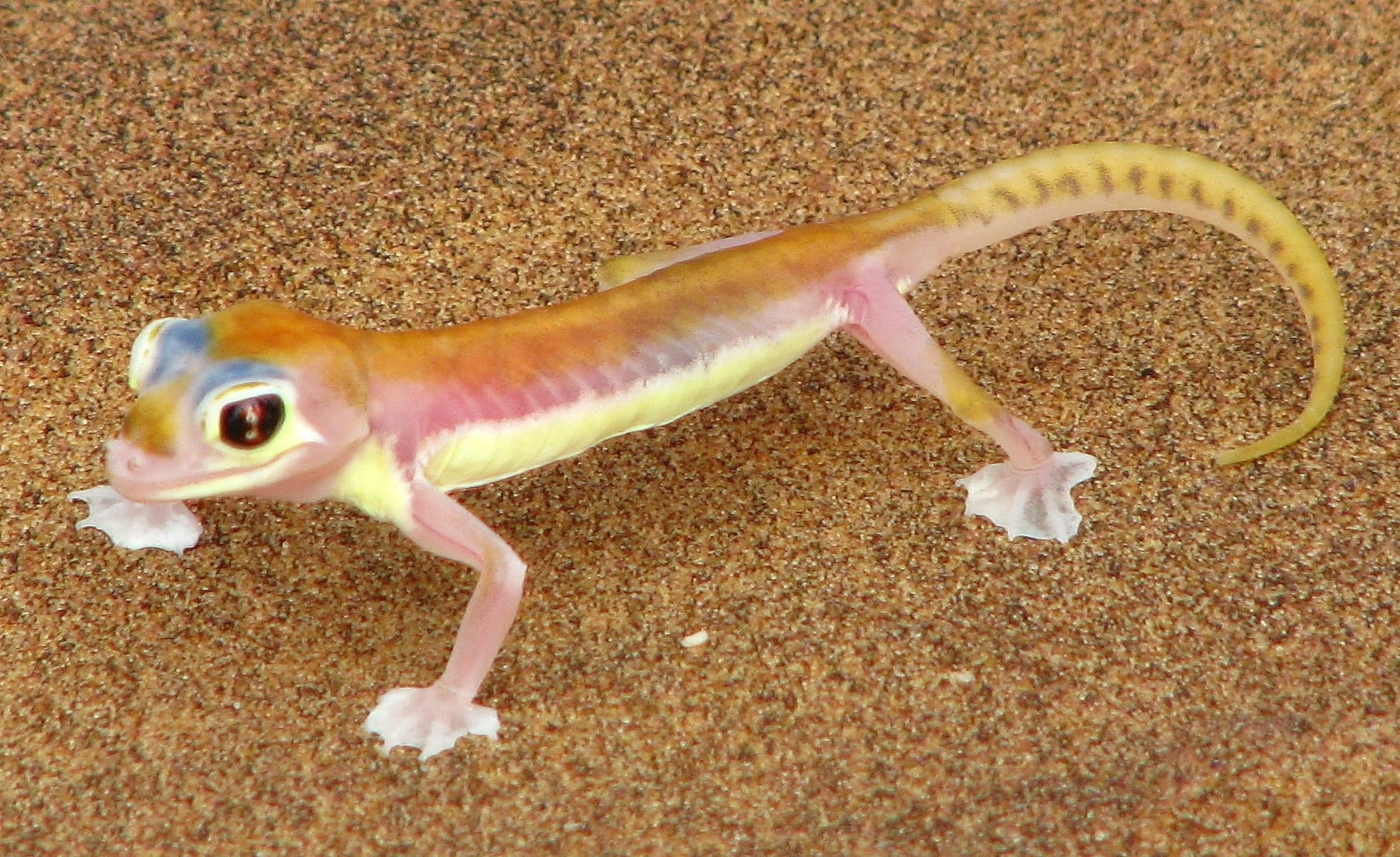
 © Stefan Wolmarans / CC BY 4.0
Namib Web-Footed Gecko
The Namib Web-Footed Gecko is a nocturnal lizard found only in Namibia's Namib Desert. Webbing stretches all the way to the tips of its toes, letting it sprint across loose, fine sand without sinking in. Its skin is remarkably thin and almost translucent, sometimes revealing the faint outline of its internal organs, while its sandy coloring helps it blend into the desert floor. By day it retreats into a deep burrow it digs itself, emerging only after dark. Quiet and easily startled, this species appeals most to keepers interested in recreating a true desert micro-habitat.
View Namib Web-Footed Gecko encyclopedia →0% commission on your first sales!Register by September 30, 2026 and your first 2 sales are commission-free!
Breeder Wanted!
List on BreederDirect and sell directly to customers nationwide!
6 Transparency Promises from Br-Choku
Every Reptiles & Amphibians from verified Breeder breeders includes complete information: morph, genetics, feeding requirements, and temperament details.
- Morph Information
- Actual Photos
- Feeding Information
- Temperament Information
- Genetics Information
- Age (Months)
Browse all 280 breeds
Difficulty Level
Feeding Type
Temperament
No listings match your filters
Adjust your filters, or get notified when new listings arrive.
Getting alerts is free with a member account. When new listings match your saved search, we'll notify you by email and in-app.
Browse other categories
Verified breeders (preview)
Are you raising reptiles & amphibians?
Register as a breeder and connect with buyers directly.
Apply as a breederNamib Web-Footed Gecko key facts
- Care level
- Advanced
- Lifespan
- 5-10 years
- Size
- 12-14cm total length (tail 6cm, 6-10g)
- Diet
- Carnivorous: a wide range of arthropods including termites, darkling beetles, crickets and spiders
- Temperature & Humidity
- It lives on Namib dune fields and spends the day in a deep burrow, where there is a moderate amount of moisture even during the day; it comes to the surface only at night once temperatures have dropped. Reliable published husbandry figures for this species are scarce, so no numbers are quoted here, but keep the surface sand dry with damp deeper layers and let the enclosure cool properly at night.
- Enclosure
- A dune species that digs burrows 80-100 cm deep in the wild, so it needs an enclosure with a generous depth of fine sand. The webbing is an organ for scooping sand, and coarse substrates or hard flooring are unsuitable. Its skin and limbs are extremely delicate, so avoid sharp materials in the layout.
- Diet & Feeding
- It takes a wide range of arthropods including termites, darkling beetles, crickets and spiders. It is not an efficient hunter and relies on foraging at night when other lizards are not competing. In captivity offer small crickets and roach nymphs dusted with calcium and vitamin supplements. Because it licks dew, mist to produce droplets.
- Temperament
- Largely solitary; males placed together in one enclosure fight fiercely. The thin skin and slender limbs are easily injured by handling. It produces a varied repertoire of sounds, from squeaks and clicks to croaks and barks, when disturbed or courting.
- Notes
- Not listed on any CITES appendix. It appears neither on the schedule of designated dangerous animals under the Order for Enforcement of the Act on Welfare and Management of Animals nor on Japan's list of invasive alien species. It is highly specialised to dune habitat, so reproducing the substrate and its moisture gradient is the key to keeping it. Hunting for food and habitat destruction have been noted as threats to its populations.
About Namib Web-Footed Gecko
A nocturnal gecko found only in Namibia's Namib Desert, known for its toe webbing and near-transparent skin. Here's what makes the Namib Web-Footed Gecko distinctive and what to know before keeping one.
7 things to know before welcoming a Namib Web-Footed Gecko
1An Advanced-Level Species
Keeping this gecko well requires precise humidity control and the right sand substrate, so it suits keepers who already have reptile experience. If this is your first gecko, consider starting with a hardier species first.
2Webbing to the Toe Tips
Its webbed feet extend all the way to the tips of its toes, letting it run across fine sand without sinking. Choose a substrate of fine, dry sand to let this adaptation work as intended.
3Thin, Translucent Skin
The skin is unusually thin and semi-transparent, sometimes showing the faint outline of internal organs. Because it's so delicate, handling should be kept to a minimum.
4Nocturnal, Resting by Day
During the day it rests quietly inside the burrow it has dug; activity begins after sunset. If you want to observe it, a dim red light at night is gentler than direct illumination.
5A Natural Burrower
It digs its own deep burrow to use as a hideout and resting spot. Provide a substrate deep enough, and loose enough, for digging.
6Easily Startled
It's sensitive to noise and vibration and will dart into its burrow when startled. Keep the enclosure in a quiet spot and observe calmly through the glass.
7An Insectivorous Diet
Crickets and similar insects make up the staple diet, supplemented with calcium and vitamin powders. Since this is a desert species, misting is generally a better way to offer water than a standing dish.
Frequently asked questions about Namib Web-Footed Gecko
- Q.Is the Namib Web-Footed Gecko suitable for beginners?
- A.It's generally considered an advanced-level species, requiring careful humidity and substrate management. Keepers are encouraged to gain reptile experience before taking one on.
- Q.What is the webbing on its feet actually used for?
- A.The webbing, which extends to the tips of the toes, lets it run across fine sand without sinking in. It also helps when digging its burrow.
- Q.Why is its skin so thin?
- A.This species naturally has thin, semi-transparent skin, through which the outline of internal organs can sometimes be seen. Because the skin is delicate, its enclosure should avoid excessive dryness or abrasive surfaces.
- Q.What does it do during the day?
- A.It's fully nocturnal and spends daylight hours resting quietly inside a burrow it has dug. Activity is mostly seen after sunset and through the night.
- Q.Are there any regulations on this species?
- A.The Namib Web-Footed Gecko is not subject to CITES. That's a useful basic fact to know before bringing one home.
Useful tools for Namib Web-Footed Gecko care
Learn more about Namib Web-Footed Gecko in the encyclopedia
View Namib Web-Footed Gecko encyclopedia entry →
Care difficulty, lifespan, size and diet — all basics covered.
More in this category
Can't find the one you're looking for?
Post your wishes for free and breeders with matching animals will contact you with introductions.