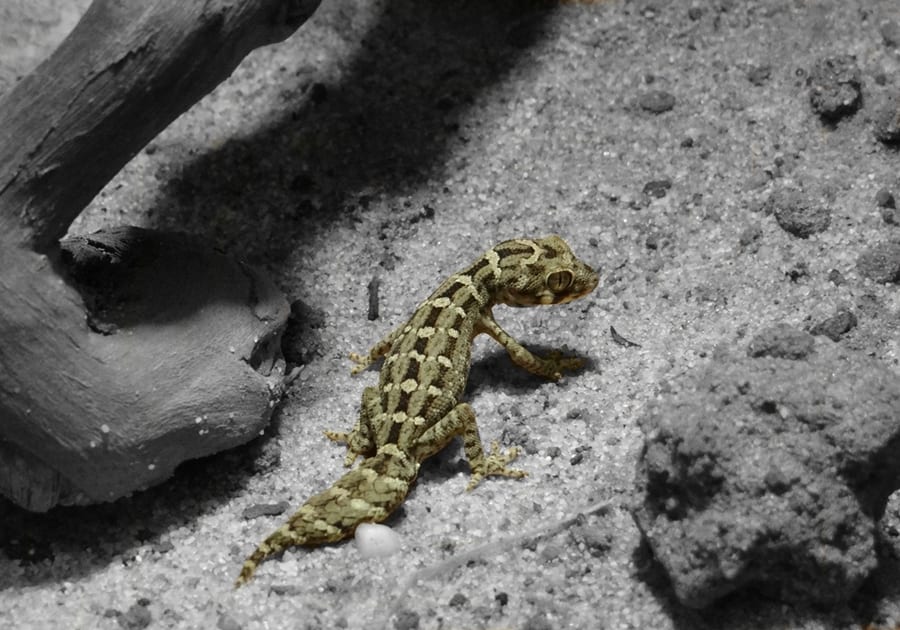
 © Kaliumperoxid / CC BY 3.0
Carrot-Tail Viper Gecko
The Carrot-Tail Viper Gecko is a small, ground-dwelling gecko best known for its thick, pinecone-scaled tail — a fat-storage organ that can grow even thicker than its head or body when well fed. Its grayish-brown body is marked with dark stripes running parallel to the spine and scattered pale spots, giving it a distinctive, almost armored look. Unlike many geckos, it spends most of its time on the ground rather than climbing, and it's generally considered calm in temperament. Reaching just 8–10 cm in total length, it's a compact species often recommended for beginners.
View Carrot-Tail Viper Gecko encyclopedia →0% commission on your first sales!Register by September 30, 2026 and your first 2 sales are commission-free!
Breeder Wanted!
List on BreederDirect and sell directly to customers nationwide!
6 Transparency Promises from Br-Choku
Every Reptiles & Amphibians from verified Breeder breeders includes complete information: morph, genetics, feeding requirements, and temperament details.
- Morph Information
- Actual Photos
- Feeding Information
- Temperament Information
- Genetics Information
- Age (Months)
Browse all 280 breeds
Difficulty Level
Feeding Type
Temperament
No listings match your filters
Adjust your filters, or get notified when new listings arrive.
Getting alerts is free with a member account. When new listings match your saved search, we'll notify you by email and in-app.
Browse other categories
Verified breeders (preview)
Are you raising reptiles & amphibians?
Register as a breeder and connect with buyers directly.
Apply as a breederCarrot-Tail Viper Gecko key facts
- Care level
- Beginner-friendly
- Lifespan
- 10-15 years with proper care
- Size
- 8-10cm total length (up to 10.5cm)
- Temperature
- Humidity
- 50%
- Diet
- Carnivorous: insects and other arthropods
- Temperature & Humidity
- Keep the basking spot at 33-35 C, the cool side at 24-29 C and nights at 21-24 C. Maintain fairly dry ambient humidity below 50 percent, misting only every few days. It tolerates cooler conditions well and does fine at around 28 C.
- Enclosure
- Small but usually kept in groups, with about 60 x 45 x 45 cm recommended for up to three animals. Use at least 5 cm of substrate, for example a mix of 60 percent organic topsoil and 40 percent fine sand. Provide several hides mimicking rock crevices. It will climb a little but cannot scale vertical surfaces.
- Diet & Feeding
- It eats insects and other arthropods. Because it is small, offer feeders sized to its mouth such as small crickets and roach nymphs, dusted with calcium and vitamin supplements. Given the high clutch frequency, feed breeding females well and secure a supply of very small feeders for the hatchlings.
- Temperament
- Placid and easy to keep. It can be housed in groups, but males fight, so keep only one male per enclosure. It is small and quick, so watch for escapes when opening the enclosure.
- Notes
- Not listed on any CITES appendix. The IUCN assesses it as Least Concern. It appears neither on the schedule of designated dangerous animals under the Order for Enforcement of the Act on Welfare and Management of Animals nor on Japan's list of invasive alien species. The old name Teratolepis fasciata is still in circulation, so check the synonymy when buying. Records from India and Sri Lanka are considered most likely erroneous.
About Carrot-Tail Viper Gecko
A small, beginner-friendly gecko known for its thick, pinecone-scaled tail, grayish-brown striped body, and compact 8–10 cm size.
7 things to know before welcoming a Carrot-Tail Viper Gecko
1A Tail That Stores Fat
The gecko's thick tail acts as a fat-reserve organ, and on a well-fed individual it can grow even thicker than the head or body. If the tail looks noticeably slim, it's worth keeping an eye on the gecko's overall condition.
2Ground-Dweller, Not a Climber
Unlike many geckos, this species lives mostly on the ground and isn't built for climbing smooth vertical surfaces. Prioritize floor space over height in the enclosure, and provide several hides so it always has somewhere to retreat.
3Active at Night
Being nocturnal, it typically rests inside a hide during the day and becomes active after dark. Not seeing it during daylight hours is normal, so there's no need to coax it out.
4Prefers a Dry Setup
This species comes from arid, rocky habitats, so an enclosure that avoids excess humidity generally suits it well. Still, keep a water dish available at all times so it can drink whenever it needs to.
5Can Drop Its Tail
Like many geckos, it may drop its tail if grabbed firmly or startled. The tail will regrow, but often with a different pattern than before, so it's best to handle the body gently rather than restraining the tail.
6Generally Calm Temperament
Many individuals have a fairly calm temperament and become more accepting of handling once settled in. That said, personality varies, so it's best to go slowly and let a new gecko adjust before handling it much.
7A Decade-Plus Commitment
Under proper care, this gecko can live around 10 to 15 years, making it a long-term companion. Before bringing one home, it's worth confirming you can provide consistent care for its whole lifespan.
Frequently asked questions about Carrot-Tail Viper Gecko
- Q.Is this gecko suitable for beginners?
- A.It's generally considered a beginner-friendly species that can be kept in a fairly simple setup. With some basic reptile-keeping knowledge, it's an approachable choice for someone keeping a gecko for the first time.
- Q.How big does it get?
- A.Adults typically reach a total length of about 8 to 10 cm, with larger individuals topping out around 10.5 cm. It stays fairly compact even in an enclosure.
- Q.How long does it live?
- A.With proper care, it can live around 10 to 15 years. It's worth considering whether you can commit to that long-term care before bringing one home.
- Q.Can it be handled?
- A.Many individuals have a fairly calm temperament and become easier to handle once settled in. That said, startling it or gripping the tail can cause it to drop, so gentle handling is important.
- Q.Is it okay to touch its tail?
- A.Grabbing the tail firmly or startling the gecko can cause it to drop its tail, so it's best to avoid lifting it by the tail. Supporting the body gently when handling is the safer approach.
Useful tools for Carrot-Tail Viper Gecko care
Learn more about Carrot-Tail Viper Gecko in the encyclopedia
View Carrot-Tail Viper Gecko encyclopedia entry →
Care difficulty, lifespan, size and diet — all basics covered.
More in this category
Can't find the one you're looking for?
Post your wishes for free and breeders with matching animals will contact you with introductions.