 © en:User:Cburnett / CC BY-SA 3.0
Trans-Pecos Rat Snake
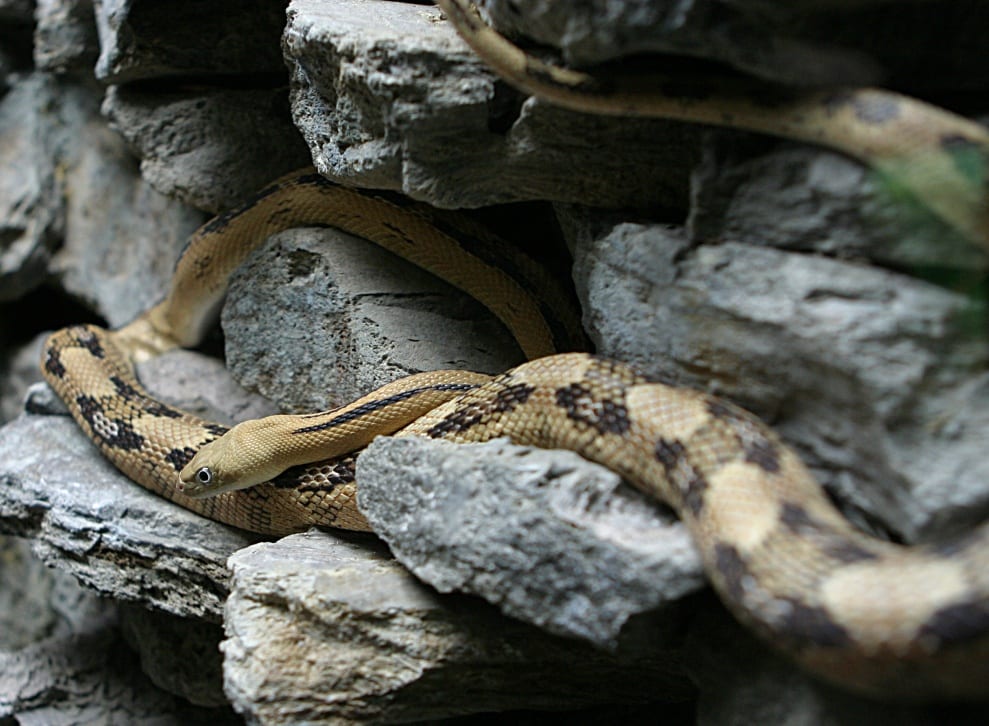
The Trans-Pecos rat snake is a desert-dwelling colubrid native to arid regions, known for its striking yellow-to-tan body marked with dark H-shaped blotches. Its defining trait is the row of small subocular scales between the eye and upper lip — the feature behind its scientific name. With large, prominent eyes and round pupils, this snake has a calm temperament that makes it approachable for beginner reptile keepers. Well-suited to dry, desert-style enclosures, it's also prized for its bold, eye-catching pattern.
View Trans-Pecos Rat Snake encyclopedia →0% commission on your first sales!Register by September 30, 2026 and your first 2 sales are commission-free!
Breeder Wanted!
List on BreederDirect and sell directly to customers nationwide!
6 Transparency Promises from Br-Choku
Every Reptiles & Amphibians from verified Breeder breeders includes complete information: morph, genetics, feeding requirements, and temperament details.
- Morph Information
- Actual Photos
- Feeding Information
- Temperament Information
- Genetics Information
- Age (Months)
Browse all 280 breeds
Difficulty Level
Feeding Type
Temperament
No listings match your filters
Adjust your filters, or get notified when new listings arrive.
Getting alerts is free with a member account. When new listings match your saved search, we'll notify you by email and in-app.
Browse other categories
Verified breeders (preview)
Are you raising reptiles & amphibians?
Register as a breeder and connect with buyers directly.
Apply as a breederTrans-Pecos Rat Snake key facts
- Care level
- Beginner-friendly
- Lifespan
- 15-20 years
- Size
- 90-137cm total length, with a record of 168cm
- Temperature
- Humidity
- 40〜50%
- Diet
- Carnivorous: small vertebrates such as birds and small mammals; juveniles take lizards
- Temperature & Humidity
- Keep the warm side at 28-29 C and the cool side at 21-27 C, letting nights fall to around 21 C as they do in the wild. As a desert species it wants 40-50 percent relative humidity and an enclosure that never becomes stuffy. For breeding, brumate it at 7-18 C for about 60 days; attempting brumation above 21 C makes animals ill.
- Enclosure
- It does best with a localised heat source and a clear gradient, so a large enclosure is recommended to keep the whole space from heating up. As a desert animal it needs a dry substrate, and the water bowl should be small and impossible to tip. Place crevice-style hides on both the warm and cool sides.
- Diet & Feeding
- In the wild it takes small vertebrates such as birds and small mammals, while juveniles eat lizards. In captivity offer frozen-thawed mice sized to the snake. Being nocturnal, it responds better when fed in the evening or later.
- Temperament
- It is not aggressive when approached and is in fact rather passive, and it is easily raised in captivity. Being nocturnal it usually stays hidden by day. Snakes can prey on one another, so keep it singly.
- Notes
- Not listed on any CITES appendix. The IUCN assesses it as Least Concern. It appears neither on the schedule of designated dangerous animals under the Order for Enforcement of the Act on Welfare and Management of Animals nor on Japan's list of invasive alien species. Little enters trade in Japan, but what does is mostly captive-bred stock from Europe and North America. The old name Elaphe subocularis is still in circulation, so confirm the identity when buying.
About Trans-Pecos Rat Snake
A desert colubrid known for its H-shaped markings. Beginner-friendly and calm-natured, growing to 90–137cm in length.
7 things to know before welcoming a Trans-Pecos Rat Snake
1Set Up a Dry, Desert-Style Enclosure
Because this species hails from arid regions, its enclosure should stay on the dry side rather than humid. Choose a dry-type substrate and avoid excessive moisture. Providing multiple hides will help it feel secure.
2Plan Enclosure Size for Full Growth
Adults typically reach 90–137cm in length, with a maximum recorded length of 168cm. It's wise to plan enclosure sizing with this eventual length in mind, even while the snake is still young.
3The Distinctive Subocular Scales
A row of small scales between the lower eye margin and the upper lip scales — called subocular scales — is a hallmark of this species. Combined with its large, protruding eyes and round pupils, it has a distinctive facial look compared to other colubrids.
4A Temperament Suited to Beginners
This species is generally considered beginner-friendly, with many individuals showing a fairly calm disposition. That said, temperament varies between individuals, so avoid excessive handling right after bringing one home and give it time to settle in.
5Color and Pattern Variation
Body coloration ranges from yellow to tan, overlaid with dark H-shaped blotches in black or deep brown. Since the shade and pattern intensity vary between individuals, choosing one can be part of the enjoyment.
6Basic Temperature and Humidity Management
As a desert species, it benefits from a temperature gradient within the enclosure so it can choose its preferred spot. Given its arid-region origin, ensure adequate ventilation to prevent excess humidity buildup.
7Prepare the Enclosure Before Bringing One Home
Setting up the enclosure, substrate, hides, and heating equipment for a proper temperature gradient before your snake arrives helps reduce post-transport stress. It's best to have the environment ready in advance.
Frequently asked questions about Trans-Pecos Rat Snake
- Q.Is this snake suitable for first-time snake owners?
- A.This species is generally considered beginner-friendly, with many individuals showing a calm temperament. With basic husbandry knowledge and proper setup, it's a popular choice for first-time snake owners.
- Q.How large does this snake get as an adult?
- A.Adults typically grow to about 90–137cm in length, with a maximum recorded length of 168cm. It's best to plan your enclosure space with this eventual size in mind.
- Q.What are the subocular scales and why are they notable?
- A.These are the small scales that form a row between the lower edge of the eye and the upper lip scales. It's one of the species' defining features and is even the basis for its scientific name.
- Q.Does this species prefer a dry or humid environment?
- A.As a species from arid desert regions, it does best in a relatively dry environment. Choosing appropriate substrate and ensuring good ventilation while avoiding excess humidity is the basic approach.
- Q.Are there any legal regulations on this species?
- A.The Trans-Pecos rat snake is not subject to CITES.
Useful tools for Trans-Pecos Rat Snake care
Learn more about Trans-Pecos Rat Snake in the encyclopedia
View Trans-Pecos Rat Snake encyclopedia entry →
Care difficulty, lifespan, size and diet — all basics covered.
More in this category
Can't find the one you're looking for?
Post your wishes for free and breeders with matching animals will contact you with introductions.