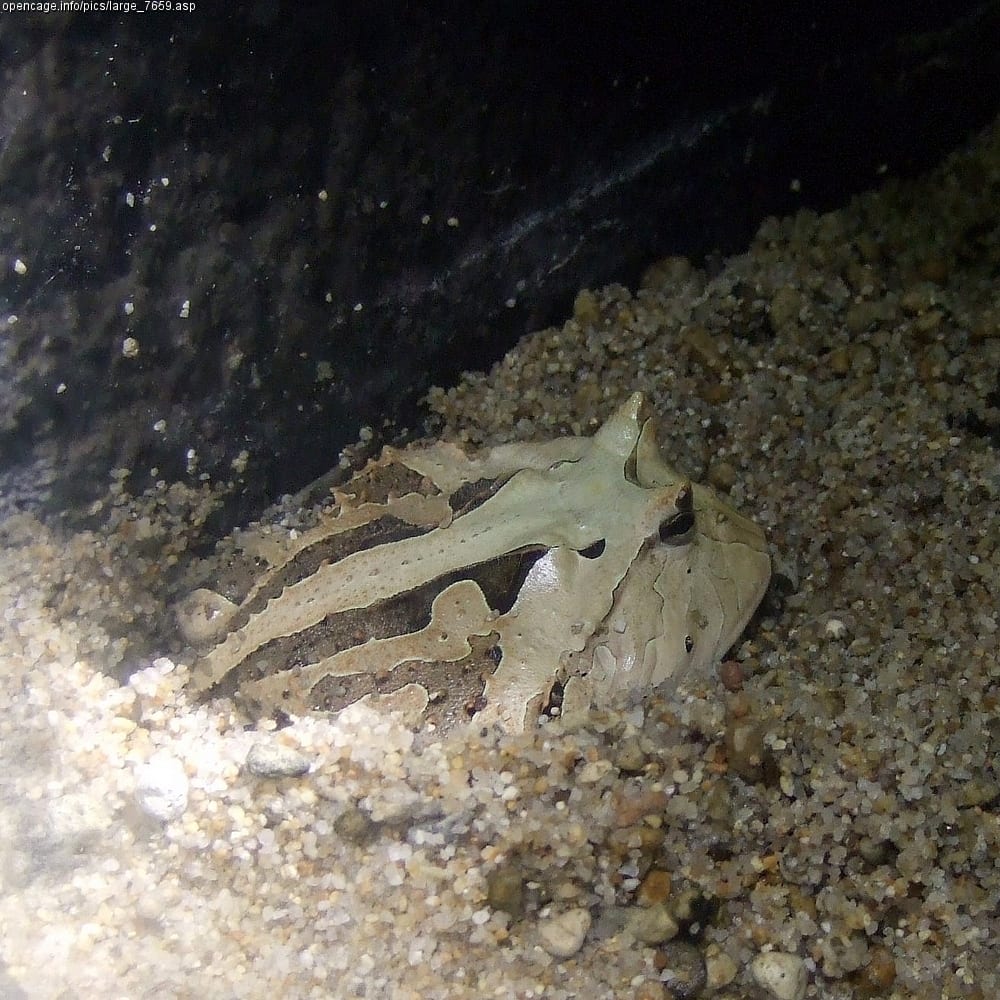
 © Daiju Azuma / CC BY-SA 2.5
Surinam Horned Frog
The Surinam horned frog, also known as the Amazon horned frog, is a striking amphibian native to the rainforests of the Amazon basin. Its most distinctive feature is the pair of elongated horn-like projections above its eyes, more pronounced than in related horned frog species, giving it an almost prehistoric look. In the wild it buries itself in leaf litter and waits motionless for prey to wander close, and that same ambush instinct carries over into captivity — expect a frog that sits still far more than it moves. Coloring and patterning vary widely between individuals, so no two frogs look quite alike. It suits anyone drawn to a quietly captivating companion rather than an interactive pet.
View Surinam Horned Frog encyclopedia →0% commission on your first sales!Register by September 30, 2026 and your first 2 sales are commission-free!
Breeder Wanted!
List on BreederDirect and sell directly to customers nationwide!
6 Transparency Promises from Br-Choku
Every Reptiles & Amphibians from verified Breeder breeders includes complete information: morph, genetics, feeding requirements, and temperament details.
- Morph Information
- Actual Photos
- Feeding Information
- Temperament Information
- Genetics Information
- Age (Months)
Browse all 280 breeds
Difficulty Level
Feeding Type
Temperament
No listings match your filters
Adjust your filters, or get notified when new listings arrive.
Getting alerts is free with a member account. When new listings match your saved search, we'll notify you by email and in-app.
Browse other categories
Verified breeders (preview)
Are you raising reptiles & amphibians?
Register as a breeder and connect with buyers directly.
Apply as a breederAbout Surinam Horned Frog
A horned frog native to the Amazon rainforest, known for its long eye-horns and ambush-hunting habit of burying in leaf litter. Grows 7-15cm, with females larger than males.
7 things to know before welcoming a Surinam Horned Frog
1Solitary Housing
Surinam horned frogs have a powerful feeding response and a very wide mouth, so housing more than one together risks cannibalism. Keep each frog in its own enclosure rather than pairing them up.
2Burrowing Substrate
In the wild they bury themselves in leaf litter to ambush prey, so a soft, moisture-retentive substrate deep enough to burrow into — coco fiber or sphagnum moss work well — helps them settle in.
3Warm, Humid Environment
As a rainforest species, it doesn't tolerate dryness or sudden temperature swings well. Keep the substrate moist and provide some airflow so humidity stays high without the enclosure turning stagnant.
4A Low-Activity Frog
As an ambush predator, it spends most of its time buried and motionless, waiting for food to come to it. Don't expect constant movement — its appeal lies in its quiet, still presence.
5Feed With Tongs, Not Hands
It bites reflexively at anything that moves nearby, so feed with tongs rather than bare hands. Offer insects as a staple and adjust prey size as the frog grows.
6Marked Size Difference Between Sexes
Adults typically reach 7-15cm, occasionally approaching 20cm in large individuals. Females grow noticeably larger than males, which tend to stay around 7cm.
7A 10-15 Year Commitment
In captivity these frogs typically live 10-15 years, making them a long-term commitment. It's worth considering beforehand whether you can maintain consistent care over that span.
Frequently asked questions about Surinam Horned Frog
- Q.Can I keep more than one together?
- A.It's best to house them individually, since there's a real risk of cannibalism. They may try to eat any tankmate small enough to fit in their mouth, so avoid housing them together.
- Q.Do they bond with their owner or enjoy handling?
- A.They don't bond with people the way dogs or cats do — this is more of a watch-and-enjoy species. Their skin is sensitive, so handling should be kept to a minimum.
- Q.What should I feed it?
- A.Insects such as crickets make up the staple diet, with prey size increasing as the frog grows. It's a carnivorous, reflexive feeder that reacts strongly to anything moving nearby.
- Q.Is it normal for it to barely move?
- A.Yes, that's completely normal. As an ambush predator it spends long stretches buried and still, waiting for prey — it isn't a species that moves around actively.
- Q.Are there any legal restrictions on keeping one?
- A.The Surinam horned frog is not subject to CITES. There's no need to worry about special international trade restrictions for this species.
Useful tools for Surinam Horned Frog care
Learn more about Surinam Horned Frog in the encyclopedia
View Surinam Horned Frog encyclopedia entry →
Care difficulty, lifespan, size and diet — all basics covered.
More in this category
Can't find the one you're looking for?
Post your wishes for free and breeders with matching animals will contact you with introductions.