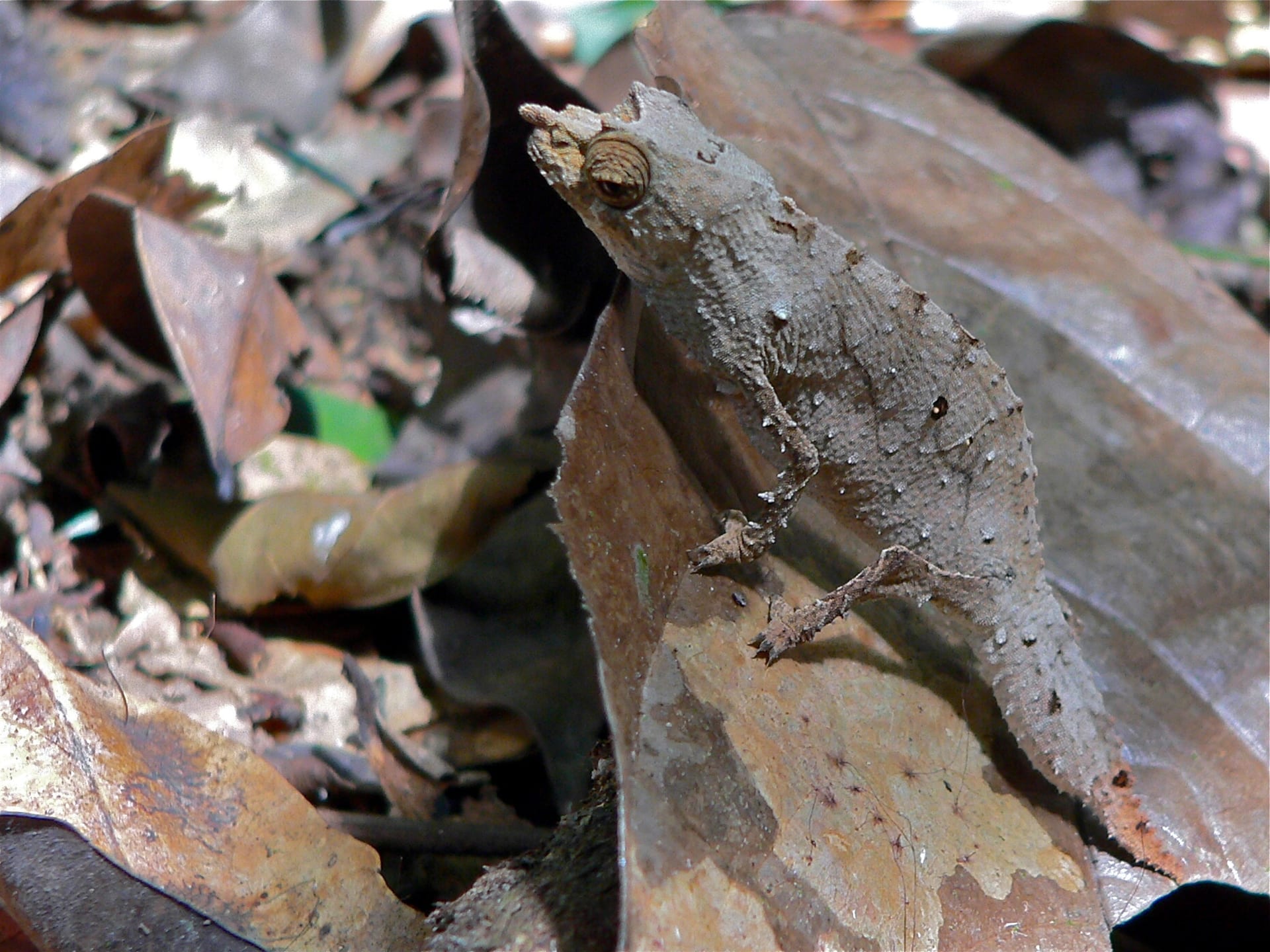
 © Bernard DUPONT from FRANCE / CC BY-SA 2.0
Spectral Pygmy Chameleon
The Cameroon pygmy chameleon (Spectral Pygmy Chameleon) is a diminutive lizard found on the forest floor from Cameroon to Gabon, growing no larger than 10 cm. Its muted brown-to-gray coloring lets it blend seamlessly into fallen leaves, offering natural camouflage from predators. Though its tail is notably short, it still grips branches with surprising strength, letting it move deliberately through low branches and undergrowth. Despite its tiny size, this species has real presence, with quiet, deliberate movements that reward patient observation. That said, it's considered a species for experienced keepers, so anyone considering one should be well prepared before bringing it home.
View Spectral Pygmy Chameleon encyclopedia →0% commission on your first sales!Register by September 30, 2026 and your first 2 sales are commission-free!
Breeder Wanted!
List on BreederDirect and sell directly to customers nationwide!
6 Transparency Promises from Br-Choku
Every Reptiles & Amphibians from verified Breeder breeders includes complete information: morph, genetics, feeding requirements, and temperament details.
- Morph Information
- Actual Photos
- Feeding Information
- Temperament Information
- Genetics Information
- Age (Months)
Browse all 280 breeds
Difficulty Level
Feeding Type
Temperament
No listings match your filters
Adjust your filters, or get notified when new listings arrive.
Getting alerts is free with a member account. When new listings match your saved search, we'll notify you by email and in-app.
Browse other categories
Verified breeders (preview)
Are you raising reptiles & amphibians?
Register as a breeder and connect with buyers directly.
Apply as a breederSpectral Pygmy Chameleon key facts
- Care level
- Advanced
- Lifespan
- 2-5 years
- Size
- Under 10cm
- Diet
- Fruit flies, small crickets and other small invertebrates
- Temperature & Humidity
- It is said to prefer cooler temperatures. For hatchlings, keep the temperature from exceeding 24 C. Mist the enclosure well several times a day to reproduce the damp conditions of the forest floor.
- Enclosure
- Furnish with plenty of plants and climbing branches, giving room to move and many places to hide. Because it lives on the forest floor where little direct sunlight reaches, low-intensity UVB is enough: a 2.0 bulb, or a 5.0 past its six-month service life. A heat or halogen lamp can provide a small basking area but is not essential.
- Diet & Feeding
- It eats small invertebrates. In captivity use feeders scaled to its size, such as fruit flies and pinhead crickets, gut-loaded and dusted with calcium.
- Temperament
- Extremely sedentary and, unlike other chameleons, not territorial. If animals are housed together, check that none are stressed by the others. Do not keep males together unless the enclosure is large, over 40 gallons, and heavily planted.
- Notes
- Listed on CITES Appendix II as Rhampholeon spp. since 2 January 2017, so no Japanese registration certificate is required. The IUCN Red List assesses it as Least Concern. Its reproductive biology is poorly known and captive breeding experience is limited.
About Spectral Pygmy Chameleon
A pygmy chameleon native to the forest floor of Cameroon and Gabon, growing under 10 cm, camouflaged in brown-gray tones with a short but strongly gripping tail; recommended for experienced keepers only.
7 things to know before welcoming a Spectral Pygmy Chameleon
1Care Level: Advanced Only
The Cameroon pygmy chameleon requires careful, precise environmental management, making it a species suited to experienced keepers. You'll need to monitor temperature, humidity, and airflow closely and respond quickly to small changes. It is not recommended as a first chameleon.
2Small Size, Small Enclosure
At under 10 cm in length, this species doesn't need a large enclosure, but its tiny size makes it easy to lose track of during feeding or handling, and it can slip through surprisingly small gaps. Choose a well-ventilated enclosure with a secure, gap-free lid.
3Leaf-Litter Camouflage
Its muted brown-to-gray coloring lets it blend into leaf litter, so a terrarium layout with dried leaves and bark mimics its natural habitat and helps it feel secure. Because its appearance changes little, it's best to judge its health by activity and appetite rather than color.
4Short Tail, Strong Grip
Compared to many other chameleons, its tail is notably short, but it still grips branches firmly. Provide several thin branches and twigs in the enclosure so it can move and rest in natural postures.
5Diet of Small Insects
Given its small size, feeding centers on correspondingly small insects such as tiny crickets or fruit flies. Offering prey that's too large can lead to refusal or leftover feed, so it's important to adjust prey size regularly as the animal grows.
6Humidity and a Quiet Setting
Since this species naturally lives in the humid understory of the forest floor, regular misting to maintain appropriate humidity is essential. At the same time, it can be sensitive to noise, vibration, and frequent handling, so place its enclosure somewhere quiet and stable.
7Prepare Fully Before Bringing One Home
Because this is a species suited to experienced keepers, it's important to have the entire setup ready before bringing one home, including thermometers, hygrometers, and lighting equipment. Consulting with a specialist shop or breeder experienced in chameleon care can help you prepare with confidence.
Frequently asked questions about Spectral Pygmy Chameleon
- Q.Can beginners keep this species?
- A.This species is considered suitable for experienced keepers, so it isn't recommended for anyone keeping a chameleon for the first time. Managing temperature and humidity and feeding correctly requires specialized knowledge and experience.
- Q.How large does it grow?
- A.Even as an adult, it stays under 10 cm in length, making it one of the smaller chameleon species. Because it's easy to lose sight of inside the enclosure, extra care is needed during observation and feeding.
- Q.What should it be fed?
- A.Because it's so small, feeding mainly consists of correspondingly small insects such as tiny crickets or fruit flies. It's important to adjust prey size as the animal grows.
- Q.Is the Cameroon pygmy chameleon subject to CITES?
- A.Spectral Pygmy Chameleon is listed in CITES Appendix II. International trade requires a permit from the exporting country, but as far as CITES is concerned, no registration is needed to buy or sell individuals already legally in Japan.
- Q.Is it calm, and does it get used to being handled?
- A.This species is sensitive to noise and vibration, so it's best enjoyed mainly through observation rather than frequent handling. Handling too often can cause stress, so it's recommended to keep it to a minimum when necessary.
Useful tools for Spectral Pygmy Chameleon care
Learn more about Spectral Pygmy Chameleon in the encyclopedia
View Spectral Pygmy Chameleon encyclopedia entry →
Care difficulty, lifespan, size and diet — all basics covered.
More in this category
Can't find the one you're looking for?
Post your wishes for free and breeders with matching animals will contact you with introductions.