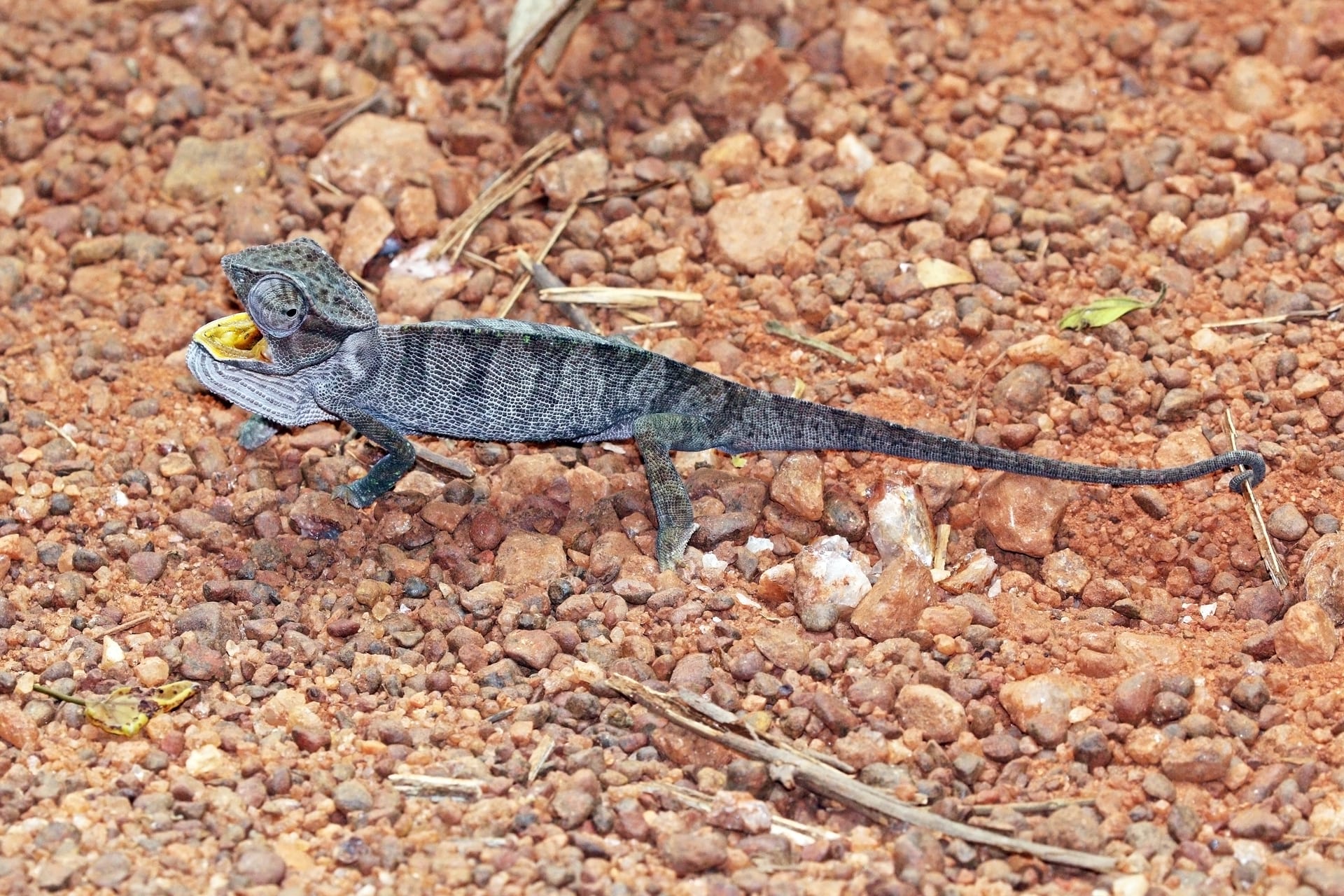
 © Charles J. Sharp / CC BY-SA 4.0
Senegal Chameleon
The Senegal Chameleon comes from the humid savanna regions of West Africa, growing to a total length of about 20 to 30 cm with a typically calm olive-brown coloration. Females tend to grow larger than males, a notable trait of the species, and it has long been one of the most familiar African chameleons in the hobby. Watching it swivel each eye independently to scan its surroundings before flicking out its long tongue to catch prey never gets old. Because it's a solitary animal, keeping one well calls for intermediate-level knowledge, but that makes the process of getting to know it all the more rewarding.
View Senegal Chameleon encyclopedia →0% commission on your first sales!Register by September 30, 2026 and your first 2 sales are commission-free!
Breeder Wanted!
List on BreederDirect and sell directly to customers nationwide!
6 Transparency Promises from Br-Choku
Every Reptiles & Amphibians from verified Breeder breeders includes complete information: morph, genetics, feeding requirements, and temperament details.
- Morph Information
- Actual Photos
- Feeding Information
- Temperament Information
- Genetics Information
- Age (Months)
Browse all 280 breeds
Difficulty Level
Feeding Type
Temperament
No listings match your filters
Adjust your filters, or get notified when new listings arrive.
Getting alerts is free with a member account. When new listings match your saved search, we'll notify you by email and in-app.
Browse other categories
Verified breeders (preview)
Are you raising reptiles & amphibians?
Register as a breeder and connect with buyers directly.
Apply as a breederSenegal Chameleon key facts
- Care level
- Intermediate
- Lifespan
- 4-6 years
- Size
- 20-30cm
- Diet
- Crickets, dubia roaches and other insects
- Temperature & Humidity
- Its habitat is moist West African savanna with a distinct dry and wet season. Build a continuous gradient from a basking spot down to full shade, and adjust from measured readings and the animal's own behaviour.
- Enclosure
- As an arboreal chameleon reaching 30 cm, it needs a screen or glass enclosure with generous height. Add live plants and branches of varying diameter at different heights so it can choose its own temperature and light level. Avoid substrates that can catch on the tongue.
- Diet & Feeding
- It is insectivorous; use crickets and dubia roaches as the staple, gut-loaded with vegetables and dusted with calcium. It drinks droplets, so hydration depends on regular misting or a dripper.
- Temperament
- Like chameleons generally it should be kept singly, and males must never be housed together. Keep handling to a minimum and observe through the enclosure instead.
- Notes
- Listed on CITES Appendix II as Chamaeleonidae spp. since 4 February 1977, so no Japanese registration certificate is required. The IUCN assesses it as Least Concern but notes the pet trade as a possible threat, and wild-caught animals should always be checked for parasites and dehydration.
About Senegal Chameleon
The Senegal Chameleon is a West African species reaching 20-30 cm, known for its olive-brown coloring and larger females. It's one of the longest-established African chameleons in the hobby.
7 things to know before welcoming a Senegal Chameleon
1Needs a Tall Enclosure
Senegal Chameleons are arboreal, so a tall, well-ventilated mesh enclosure suits them better than a wide, low one. Fill it with branches and live plants at different heights so they always have somewhere to climb and hide.
2Warm, Humid Care
Coming from a humid savanna habitat, they need both a basking hot spot and consistently elevated humidity. Regular misting or a dripper system for hydration, done morning and evening, helps keep them from drying out.
3Solitary by Nature
Chameleons are naturally solitary, and housing more than one together can cause serious stress and fighting. Keep each animal in its own enclosure, and only introduce a male and female briefly for breeding purposes.
4A Live-Insect Diet
Their diet centers on live insects such as crickets, dusted with calcium and vitamin supplements to round out nutrition. Remove any uneaten insects after feeding, since they can stress the chameleon if left roaming the enclosure.
5Color as a Health Cue
Color shifts can signal mood or health changes — a marked darkening from the usual olive-brown tone is often a cue to check for stress or illness. Getting into the habit of watching daily color and behavior helps you catch problems early.
6Keep Handling Minimal
Unlike dogs or cats, they don't seek out physical contact, and frequent handling can be stressful for them. It's best to enjoy watching them and limit direct contact to feeding and cleaning.
7Set Up Before Arrival
Have the enclosure, lighting, climbing branches, and plants fully set up before bringing your chameleon home so it can settle in right away. Arriving to a ready environment reduces the stress of the move.
Frequently asked questions about Senegal Chameleon
- Q.Can beginners keep a Senegal Chameleon?
- A.They're generally considered a species for intermediate keepers, since proper temperature, humidity, and solitary housing all need attention. Some reptile-keeping experience is recommended before taking one on.
- Q.How big do they grow?
- A.Adults typically reach a total length of about 20 to 30 cm. Females tend to grow larger than males, which is a notable trait of this species.
- Q.Can multiple chameleons be kept together?
- A.They're solitary by nature, so housing multiple animals in one enclosure isn't recommended. Keep males and females separate except during intentional breeding.
- Q.Is the Senegal Chameleon subject to any international trade regulations?
- A.Senegal Chameleon is listed in CITES Appendix II. International trade requires a permit from the exporting country, but as far as CITES is concerned, no registration is needed to buy or sell individuals already legally in Japan.
- Q.What should I pay special attention to in their enclosure setup?
- A.A tall enclosure that allows vertical movement, along with regular misting for humidity, is essential. Use a basking light to create a temperature gradient while avoiding excess dryness or heat.
Useful tools for Senegal Chameleon care
Learn more about Senegal Chameleon in the encyclopedia
View Senegal Chameleon encyclopedia entry →
Care difficulty, lifespan, size and diet — all basics covered.
More in this category
Can't find the one you're looking for?
Post your wishes for free and breeders with matching animals will contact you with introductions.