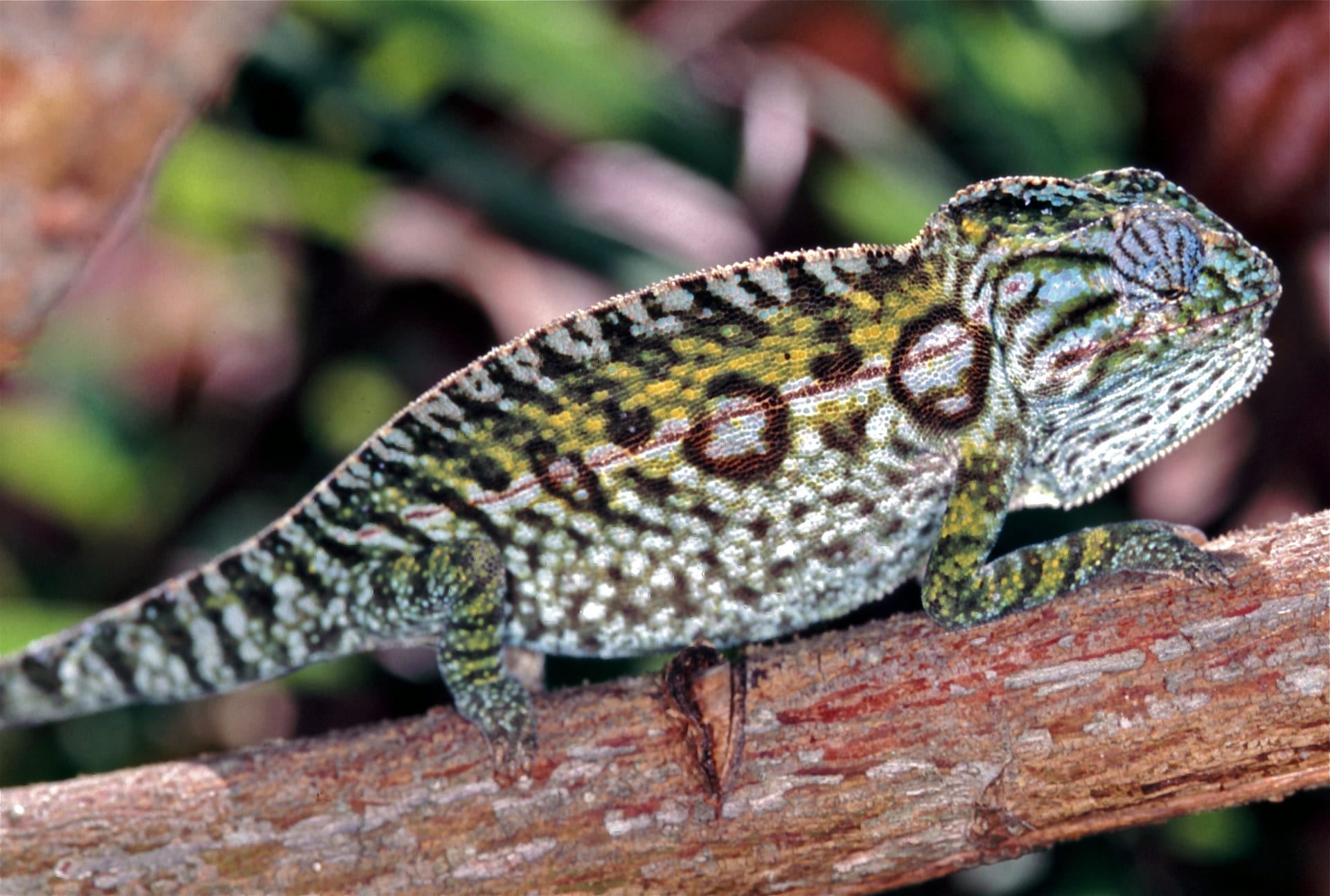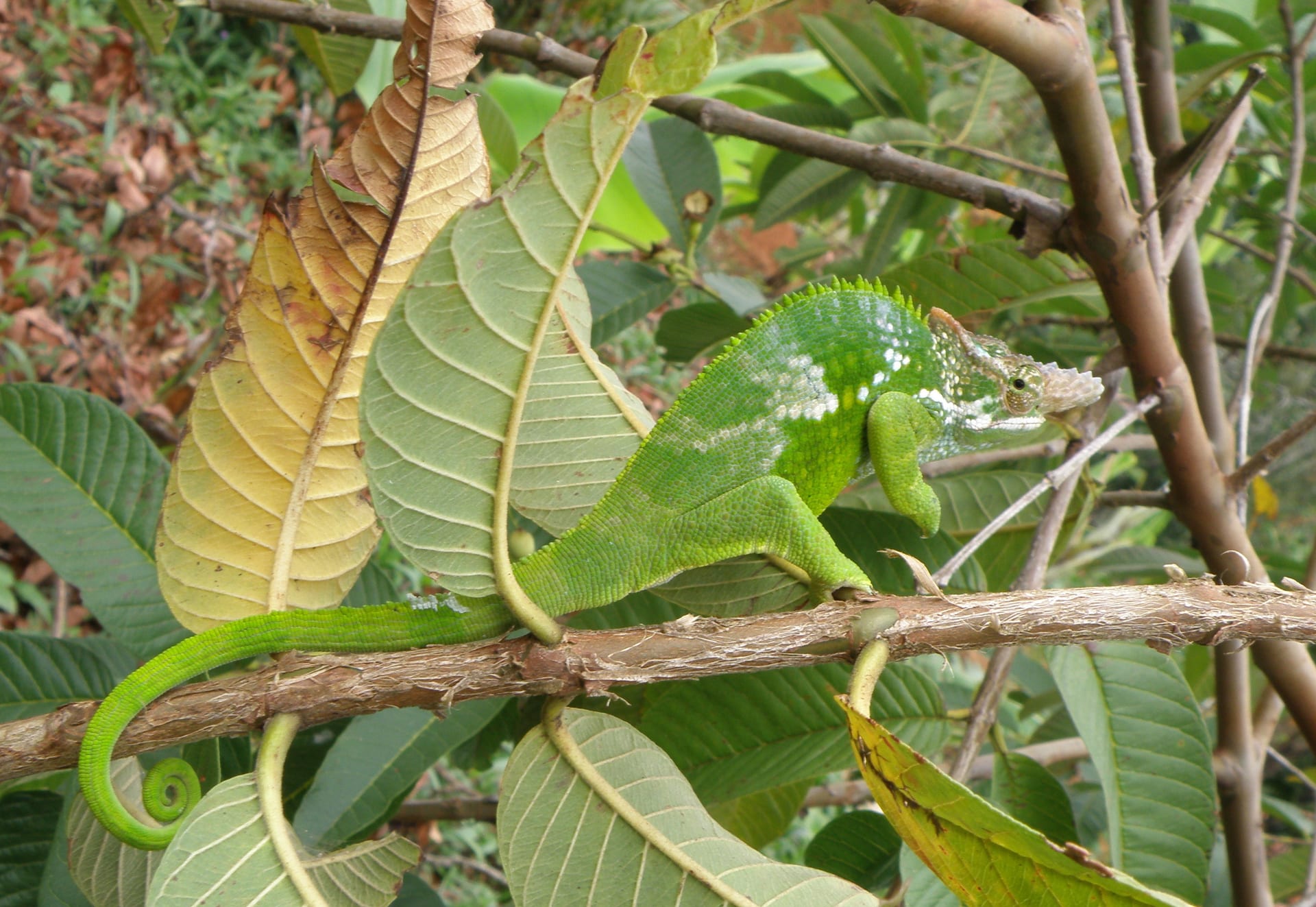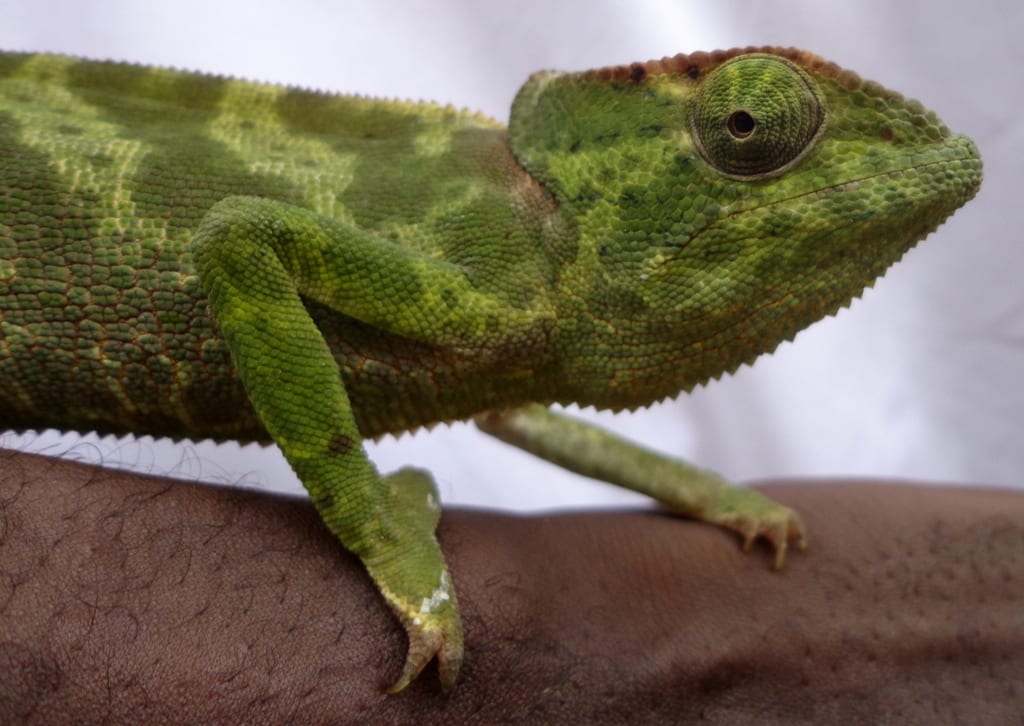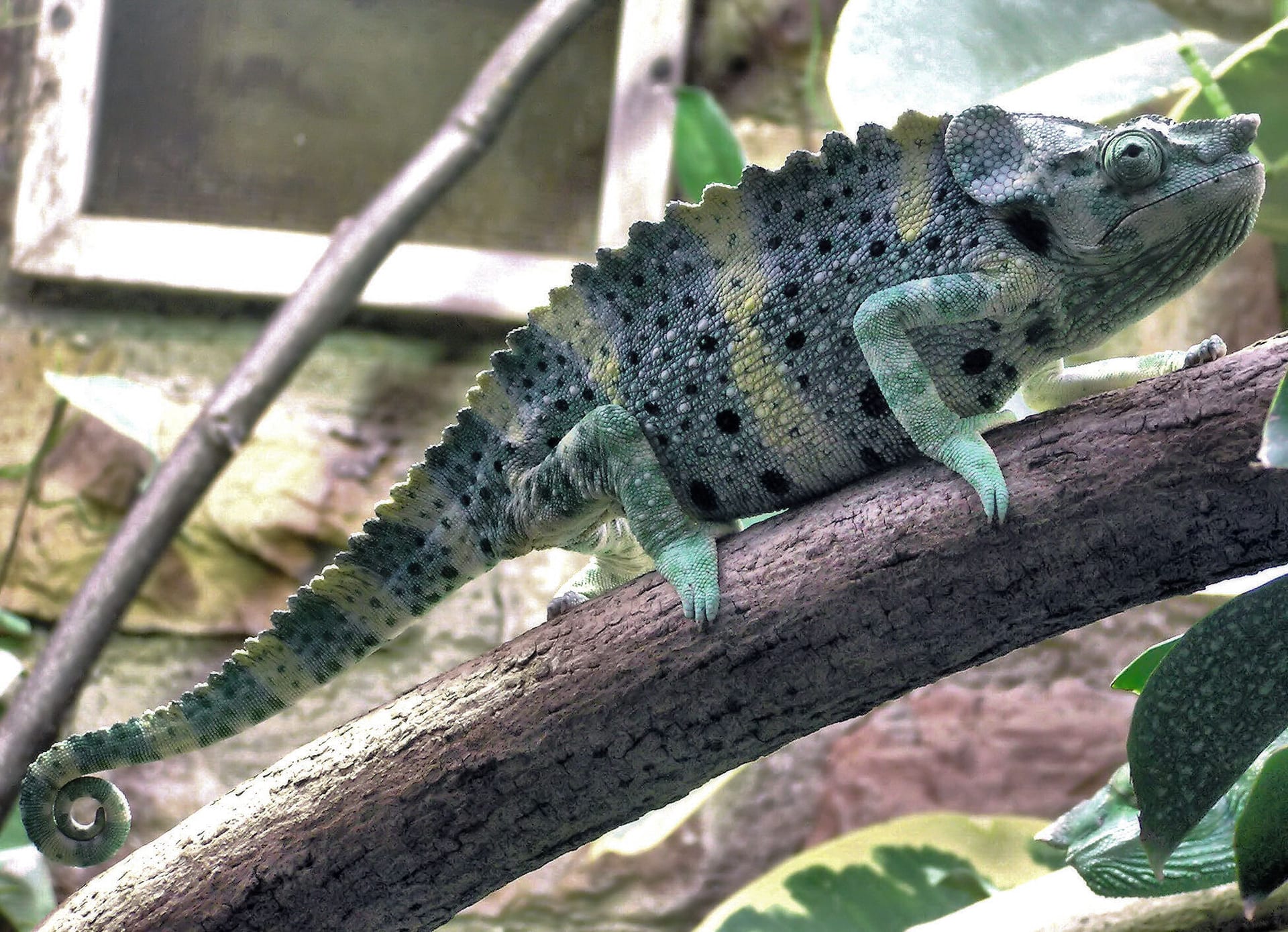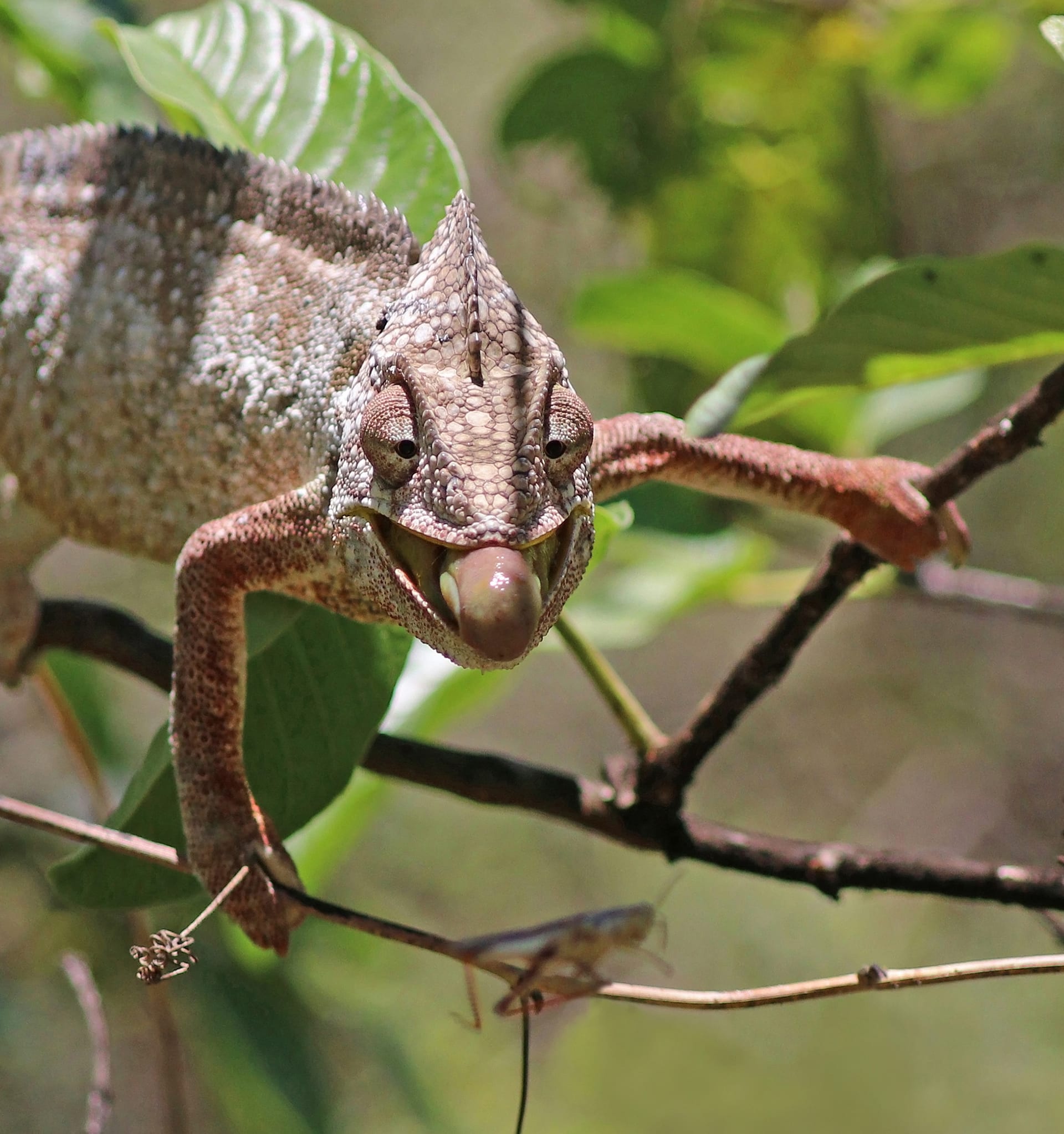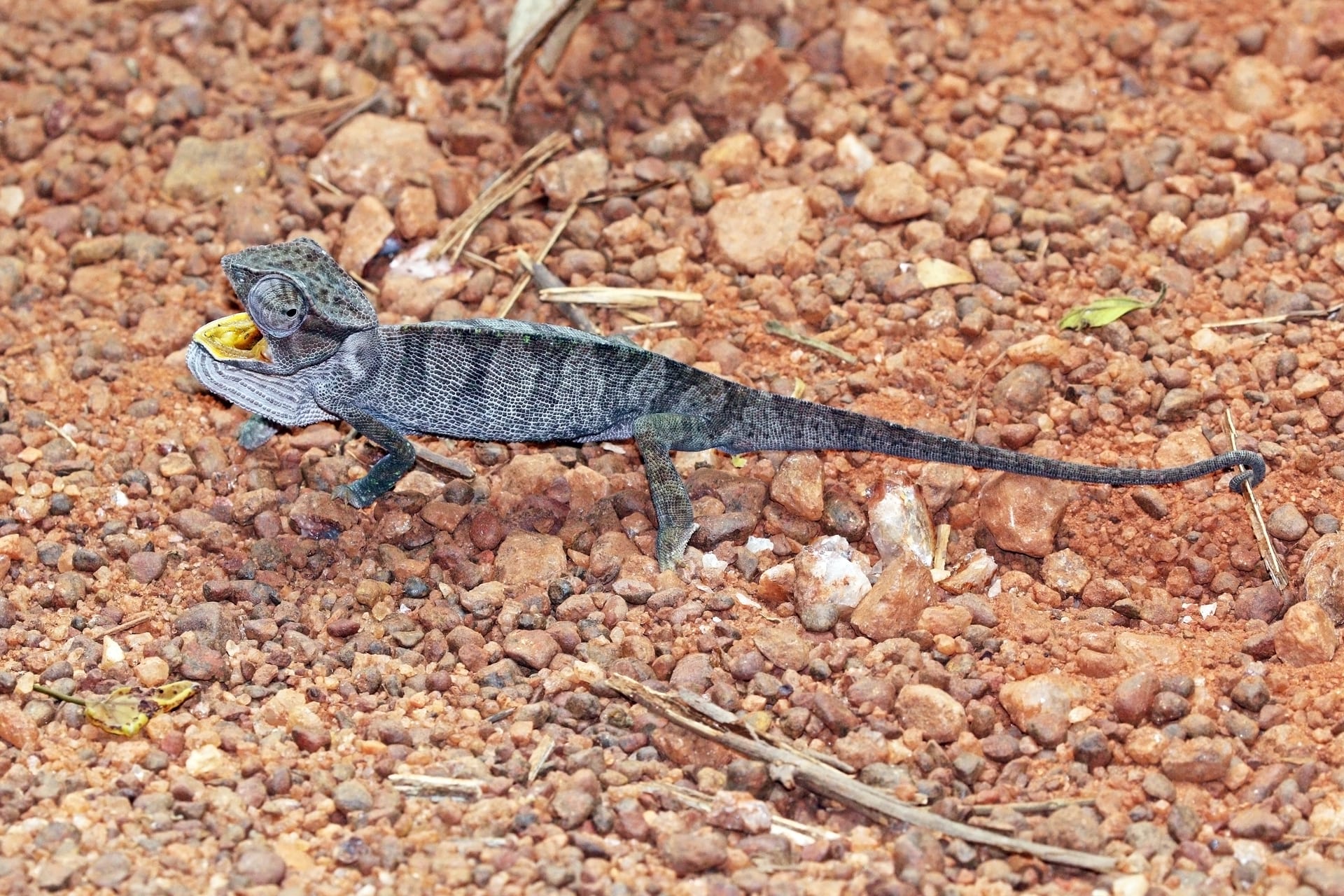
Source: Wikimedia Commons
Senegal Chameleon
IntermediateChamaeleo senegalensis
A chameleon of the moist savannas of West Africa, 20-30 cm long and usually olive brown. Unusually, the male is the smaller sex. It has long been among the African chameleons in trade.
Difficulty
Intermediate
Temperature
25〜32℃
Lifespan
4-6 years
Size
20-30cm
Humidity
40〜70%
Diet
Crickets, dubia roaches and other insects
About
Chamaeleo senegalensis is a chameleon widespread across tropical West Africa from Senegal to Cameroon, living in moist savanna and reaching 20 to 30 cm in total length. It is usually olive brown, and the male is normally the smaller sex. The type locality is Senegal, from which the specific name comes. It is oviparous. The IUCN Red List assesses it as Least Concern given its wide range and unknown population size, while noting that the pet trade may pose a threat. The Reptile Database flags a comparison with the closely related Chamaeleo laevigatus, so the identification of imported animals is worth confirming. Reliable published husbandry temperatures and humidity figures for this species are scarce, and none are quoted here.
Source: Wikipedia (CC BY-SA 4.0)
Lifespan of the Senegal Chameleon
The Senegal Chameleon lives 4-6 years.
Size of the Senegal Chameleon
The Senegal Chameleon grows to 20-30cm.
Basic Info
Origin
Tropical West Africa including Senegal, the Gambia, Guinea, Sierra Leone, Liberia, Ivory Coast, Ghana, Togo, Benin, Nigeria, Mali, Cameroon, the Central African Republic, Sudan and South Sudan, in moist savanna
Lifespan
4-6 years
Size
20-30cm
Temperature
25〜32℃
Care Specifications
Semi-aggressiveSolitary
Sources: Wikipedia (English) / Reptile Database
References & Sources
Edited & verified by: BreederDirect editorial team
The taxonomic, regulatory, and husbandry data on this page are compiled and verified against the authoritative primary sources below.
Taxonomy & Authority
Accepted name: Chamaeleo senegalensis Daudin, 1802
Synonyms: Chamaeleon subcroseus Merrem, 1820, Chamaeleo gymnocephalus Kaup, 1825, Chamaeleon leptopus Fitzinger, 1826
Authority databases: GBIF · Reptile Database
Nomenclature follows global taxonomic authority databases.
Regulations & Conservation Status
CITES Appendix IIIUCN LC · Least Concern
Family Chamaeleonidae spp. has been listed on CITES Appendix II since February 4, 1977 (Species+). Because it is on Appendix II, registration as an international rare species is not required. This species is not included in the specific animals listed in the Schedule of the Enforcement Ordinance of the Animal Protection and Management Law.
Sources: CITES Appendices (Chamaeleonidae spp., Appendix II, effective 4 February 1977) / IUCN Red List
Regulations may change. Always verify the latest information with the relevant authorities.
Senegal Chameleon Listings
Loading latest listingsFind listings for this species