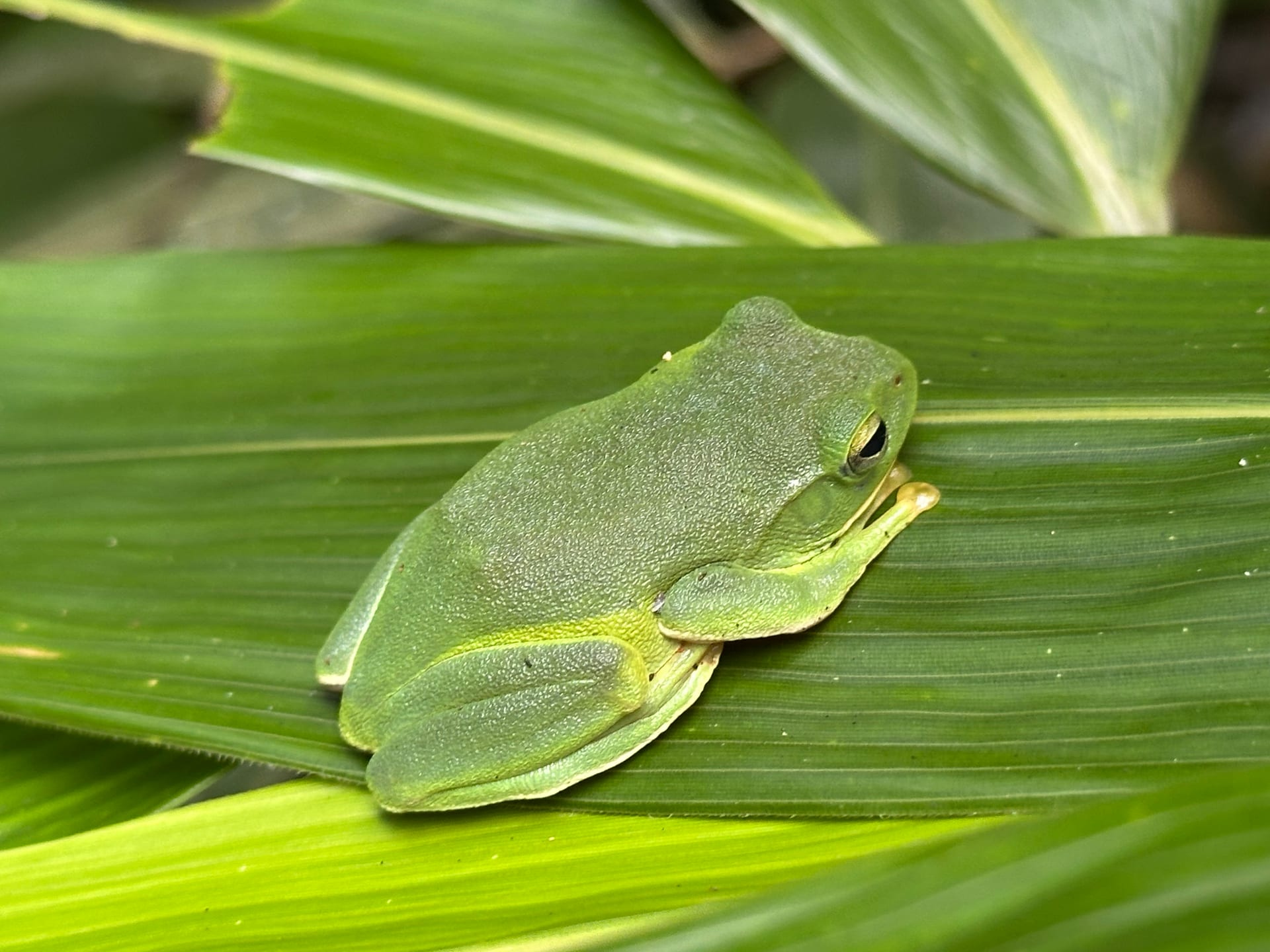
 © ノボホショコロトソ / CC BY 4.0
Schlegel's Green Tree Frog
Schlegel's Green Tree Frog is a frog species found only in Japan, native to a range stretching from Honshu to Kyushu. Its vivid green body and striking yellow eyes make it instantly recognizable, while by day it tends to stay quiet and still, tucked among leaves or in shaded spots. During the breeding season, it digs a burrow into the soil near rice paddy banks and lays a foam-like egg mass inside — a distinctive habit it shares with its sister species, the Forest Green Tree Frog (Moriao Frog). Adults stay compact at roughly 3.2 to 5.3 cm, and while keeping this species calls for some intermediate-level care knowledge, its calm presence and charming expression make it a rewarding frog to observe up close.
View Schlegel's Green Tree Frog encyclopedia →0% commission on your first sales!Register by September 30, 2026 and your first 2 sales are commission-free!
Breeder Wanted!
List on BreederDirect and sell directly to customers nationwide!
6 Transparency Promises from Br-Choku
Every Reptiles & Amphibians from verified Breeder breeders includes complete information: morph, genetics, feeding requirements, and temperament details.
- Morph Information
- Actual Photos
- Feeding Information
- Temperament Information
- Genetics Information
- Age (Months)
Browse all 280 breeds
Difficulty Level
Feeding Type
Temperament
No listings match your filters
Adjust your filters, or get notified when new listings arrive.
Getting alerts is free with a member account. When new listings match your saved search, we'll notify you by email and in-app.
Browse other categories
Verified breeders (preview)
Are you raising reptiles & amphibians?
Register as a breeder and connect with buyers directly.
Apply as a breederSchlegel's Green Tree Frog key facts
- Care level
- Intermediate
- Lifespan
- 5-8 years
- Size
- 3.2-5.3cm
- Temperature
- 16〜24℃
- Diet
- Crickets and other insects
- Temperature & Humidity
- Keepers cite 16-24 C as suitable. For humidity, keep the substrate damp while ensuring ventilation so that it does not become stuffy.
- Enclosure
- Arboreal, so use a tall, well-ventilated enclosure. Combine a moisture-retaining substrate with branches, broad-leaved plants, hides and a shallow water area.
- Diet & Feeding
- Carnivorous, taking insects and other arthropods. Offer appropriately sized crickets after lights out, dusted with supplement.
- Temperament
- Small and nocturnal. The call is higher and quieter than that of the Japanese tree frog, and males call from inside burrows, so they are hard to locate.
- Notes
- A Japanese native: check local ordinances and protected-area rules before collecting. Never release captive animals, as it causes genetic disturbance.
About Schlegel's Green Tree Frog
Schlegel's Green Tree Frog is a frog species endemic to Japan, found from Honshu to Kyushu. It's known for its green body, yellow eyes, and the unusual habit of laying foam egg masses in underground burrows — an intermediate-level species to keep.
7 things to know before welcoming a Schlegel's Green Tree Frog
1Intermediate-Level Care
Schlegel's Green Tree Frog is generally considered suited to intermediate keepers, since it calls for some baseline knowledge of temperature and humidity control as well as escape-proofing. If this is your first frog, it may be worth gaining experience with an easier beginner species first.
2A Compact Adult Size
Adults stay compact at roughly 3.2 to 5.3 cm, so a large enclosure isn't required. That said, they're strong jumpers that can slip through small gaps, so make sure lids and seams are properly secured.
3An Arboreal Climber
Like other members of the green tree frog family, it uses toe pads to grip glass and vertical surfaces with ease. Adding climbable branches and plants that let it move both up and down helps it settle into its enclosure.
4A Foam-Nest Breeding Habit
This species is known for a distinctive breeding behavior: it digs a burrow in the soil near rice paddy banks and lays its eggs inside a foam-like mass. Anyone hoping to breed them at home should pay close attention to recreating suitable nesting conditions.
5Yellow Eyes, Green Body
A vivid green back paired with striking yellow eyes are the frog's most distinguishing features. It's a sister species to the Forest Green Tree Frog (Moriao Frog), so comparing the two side by side is a fun way to spot the subtle differences.
6A Calm, Quiet Temperament
This frog leans nocturnal and tends to sit still in shaded spots or among leaves during the day rather than moving around actively. It isn't really suited to handling, so it's best enjoyed as a species to observe quietly.
7Setting Up Before Arrival
Prepare a still-water dish and some cover plants in advance so humidity stays high, and plan on regular misting to keep conditions stable. Getting the balance of ventilation and moisture right before your frog arrives makes the settling-in period much smoother.
Frequently asked questions about Schlegel's Green Tree Frog
- Q.Is this frog suitable for beginners?
- A.Schlegel's Green Tree Frog is generally considered an intermediate-level species. If you've never kept a frog before, it's a good idea to start with an easier beginner species and build up experience first.
- Q.How big does it get?
- A.Adults stay a compact 3.2 to 5.3 cm. That means you don't need a particularly large enclosure to keep them comfortably.
- Q.How can I tell it apart from other frogs?
- A.Its vivid green body and bright yellow eyes are the clearest identifying features. It closely resembles its sister species, the Forest Green Tree Frog, so watching them side by side makes differences in build easier to spot.
- Q.Can it be bred at home?
- A.In the wild, this species digs a burrow in the soil near rice paddies and lays its eggs in a foam-like mass. Breeding it at home hinges on being able to recreate the right humidity and a suitable nesting spot.
- Q.Do I need to worry about escapes?
- A.Because it climbs glass and walls easily using its toe pads, gaps around lids are a common escape route. Sealing any gaps and using fine mesh over vents will help keep it securely contained.
Useful tools for Schlegel's Green Tree Frog care
Learn more about Schlegel's Green Tree Frog in the encyclopedia
View Schlegel's Green Tree Frog encyclopedia entry →
Care difficulty, lifespan, size and diet — all basics covered.
More in this category
Can't find the one you're looking for?
Post your wishes for free and breeders with matching animals will contact you with introductions.