 © A. C. Tatarinov / CC BY-SA 3.0
Russian Rat Snake
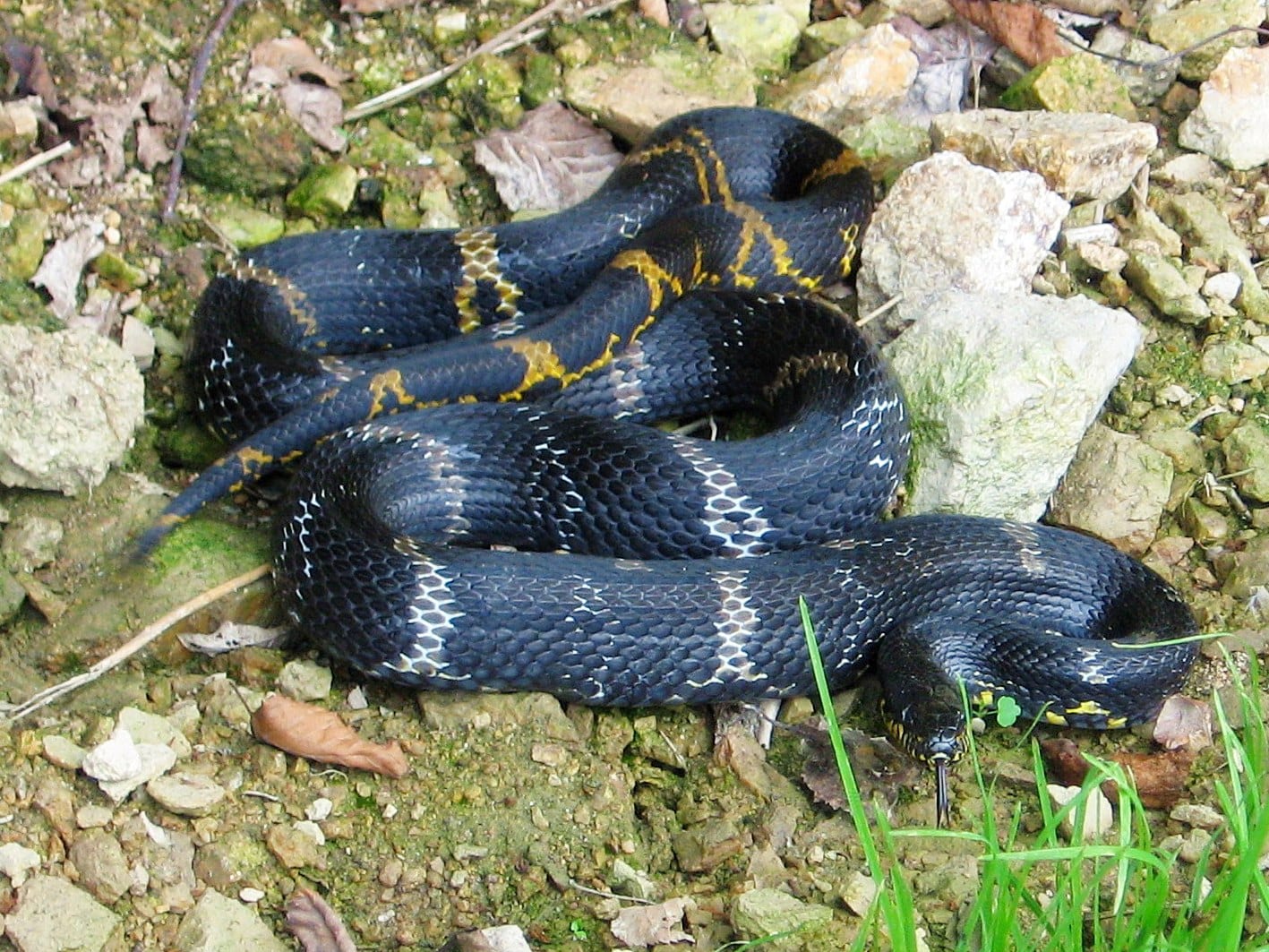
The Amur ratsnake (also known as Schrenck's rat snake) is a striking large colubrid native to East Asia, its black to blackish-brown body marked with pale yellow or white bands that split in two along the flanks. Adults can grow to about two meters, and their scales often carry a subtle blue sheen. The head is solid black on top, while the yellow upper lip scales edged in black add a distinctive touch. Generally calm and steady in temperament, this snake can grow comfortable with handling over time, but its large adult size calls for a spacious enclosure and some prior snake-keeping experience, making it a better fit for intermediate keepers than first-time reptile owners.
View Russian Rat Snake encyclopedia →0% commission on your first sales!Register by September 30, 2026 and your first 2 sales are commission-free!
Breeder Wanted!
List on BreederDirect and sell directly to customers nationwide!
6 Transparency Promises from Br-Choku
Every Reptiles & Amphibians from verified Breeder breeders includes complete information: morph, genetics, feeding requirements, and temperament details.
- Morph Information
- Actual Photos
- Feeding Information
- Temperament Information
- Genetics Information
- Age (Months)
Browse all 280 breeds
Difficulty Level
Feeding Type
Temperament
No listings match your filters
Adjust your filters, or get notified when new listings arrive.
Getting alerts is free with a member account. When new listings match your saved search, we'll notify you by email and in-app.
Browse other categories
Verified breeders (preview)
Are you raising reptiles & amphibians?
Register as a breeder and connect with buyers directly.
Apply as a breederRussian Rat Snake key facts
- Care level
- Intermediate
- Lifespan
- 15-20 years
- Size
- Adults reach 2m in total length; the specimen used in the description measured 1,950mm
- Diet
- Carnivorous: small mammals, birds and their eggs
- Temperature & Humidity
- It occurs in the cold temperate zone from the Russian Far East to northern China, in country with a distinct cold season. As a temperate snake it is intolerant of heat: avoid overheating in summer and give it a cooled winter rest period.
- Enclosure
- A large snake reaching 2 m, it needs enough floor area to lie coiled with room to spare. Because it is semi-arboreal, add branches or shelves stout enough to bear its weight so it can use the space vertically. Place hides on both the warm and cool sides and keep a water container available at all times.
- Diet & Feeding
- Like other Elaphe it takes small mammals, birds and their eggs, constricting them and swallowing them head first. In captivity offer frozen-thawed mice and rats sized to the snake, increasing prey size as it grows.
- Temperament
- Large and powerful, and some individuals are highly strung. Provide plenty of cover and avoid forced handling while it settles in. Do not house males together. Because it produces fertile hybrids with the Japanese rat snake, never house it with other species.
- Notes
- Not listed on any CITES appendix. The IUCN assesses it globally as Least Concern, but it is legally protected in Russia and South Korea and listed as Vulnerable on the China Species Red List. It appears neither on the schedule of designated dangerous animals under the Order for Enforcement of the Act on Welfare and Management of Animals nor on Japan's list of invasive alien species. The Korean rat snake, once treated as a subspecies, is now the separate species Elaphe anomala, so check the scientific name and locality when buying.
About Russian Rat Snake
A guide to the Amur ratsnake (Schrenck's rat snake), a large, strikingly patterned colubrid — covering its appearance, temperament, and care basics for intermediate reptile keepers.
7 things to know before welcoming a Russian Rat Snake
1Cage Space for a Large Adult
The Amur ratsnake can reach about two meters in length as an adult, making it one of the larger colubrids kept in captivity. Plan for a spacious, tall enclosure from the start so the snake has room to stretch out and move comfortably as it grows.
2Temperature and Humidity
This species comes from a continental climate, so its enclosure is best kept away from extreme heat and humidity, with a gentle temperature gradient it can move along. Watch the snake's behavior through seasonal changes and adjust conditions gradually rather than making sudden shifts.
3A Glossy, Striking Pattern
Adults show a striking pattern of pale yellow or white diagonal bands, each splitting in two along the flanks, set against a black to blackish-brown body. The top of the head is solid black, the upper lip scales are yellow outlined in black, and the whole body often carries a subtle bluish sheen.
4Temperament and Handling
Individual temperament varies, but many keepers find this species relatively calm for such a large colubrid. Because it grows quite large, handling is best introduced gradually in a calm setting rather than rushed.
5Shedding and Health Checks
Shedding is a good moment to check on overall condition — look for any retained skin patches or issues with the eye caps. Keeping a habit of watching appetite and waste output helps you notice any change from the snake's normal pattern early.
6Feeding Size and Frequency
Because this species grows so large, prey size needs to be matched to its current growth stage and build. Base feeding frequency on the individual's appetite and weight gain rather than a fixed schedule.
7Setup to Prepare Before Bringing One Home
Since adults can reach around two meters, it pays to set up a cage, heating equipment, and secure, escape-proof fittings sized for its eventual adult length before bringing one home. As this is considered a species better suited to keepers with some prior experience, it helps to build up basic snake-care knowledge first.
Frequently asked questions about Russian Rat Snake
- Q.How big does the Amur ratsnake get?
- A.Adults can reach about two meters in total length, making this one of the larger colubrids. The specimen used in the original description measured 1,950 mm, so keepers should plan for a spacious enclosure well in advance.
- Q.Is this species suitable for beginners?
- A.The Amur ratsnake is generally considered a species for intermediate keepers rather than complete beginners. Since adults grow quite large, having a spacious enclosure ready and some prior snake-keeping experience makes it easier to care for confidently.
- Q.What does its coloring and pattern look like?
- A.Adults have a black to blackish-brown body marked with pale yellow or white diagonal bands that each split in two along the sides. The top of the head is solid black, the upper lip scales are yellow with black suture lines, and the body often shows a bluish sheen overall.
- Q.Is its temperament calm?
- A.Temperament varies by individual, but many are described as relatively calm for such a large colubrid. Since it does grow quite large, it's best to introduce handling gradually in a calm setting.
- Q.Is it listed under CITES?
- A.The Amur ratsnake is not listed under CITES.
Useful tools for Russian Rat Snake care
Learn more about Russian Rat Snake in the encyclopedia
View Russian Rat Snake encyclopedia entry →
Care difficulty, lifespan, size and diet — all basics covered.
More in this category
Can't find the one you're looking for?
Post your wishes for free and breeders with matching animals will contact you with introductions.