 © TimVickers / Public domain
Rhinoceros Rat Snake
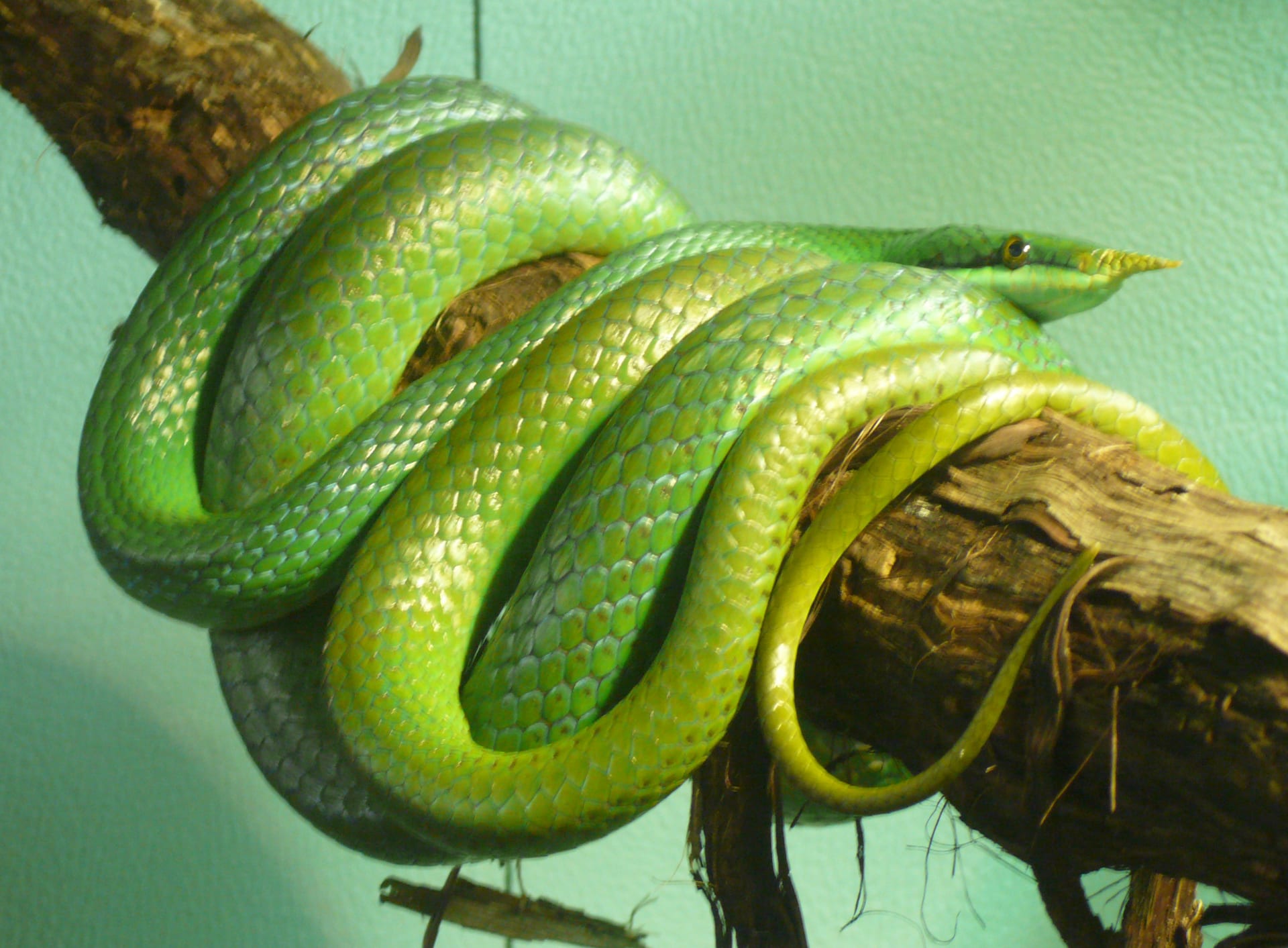
The Rhinoceros Rat Snake is an arboreal colubrid native to Asia, prized for the long, scale-covered, flexible horn projecting from the tip of its snout — the feature that gives the species its name, evoking a rhino's horn. A thin black line runs from the pointed snout through the eye to the neck, while the throat and upper lip scales carry a pale greenish-white hue. Slender and agile, this snake is a natural climber that spends much of its time among branches. Its striking looks have made it increasingly popular, but since it's generally considered a species for keepers with some prior snake-keeping experience, it's worth building up confidence before taking one on.
View Rhinoceros Rat Snake encyclopedia →0% commission on your first sales!Register by September 30, 2026 and your first 2 sales are commission-free!
Breeder Wanted!
List on BreederDirect and sell directly to customers nationwide!
6 Transparency Promises from Br-Choku
Every Reptiles & Amphibians from verified Breeder breeders includes complete information: morph, genetics, feeding requirements, and temperament details.
- Morph Information
- Actual Photos
- Feeding Information
- Temperament Information
- Genetics Information
- Age (Months)
Browse all 280 breeds
Difficulty Level
Feeding Type
Temperament
No listings match your filters
Adjust your filters, or get notified when new listings arrive.
Getting alerts is free with a member account. When new listings match your saved search, we'll notify you by email and in-app.
Browse other categories
Verified breeders (preview)
Are you raising reptiles & amphibians?
Register as a breeder and connect with buyers directly.
Apply as a breederRhinoceros Rat Snake key facts
- Care level
- Intermediate
- Lifespan
- 10-16 years
- Size
- 100-160cm total length
- Diet
- Carnivorous: small mammals such as mice, birds, reptiles and amphibians, and at times insects and even fish
- Temperature & Humidity
- It lives in subtropical forest at 300-1,100 m, particularly in stream valleys. As a montane rather than lowland tropical snake it does not need the high temperatures of the latter; keep humidity relatively high with good ventilation and a clear thermal gradient.
- Enclosure
- An arboreal snake of shrubs and the lower canopy, it needs a tall enclosure with slender horizontal branches at several heights. Plants, real or artificial, give it cover and help it settle. Reflecting its streamside habitat, keep a water container permanently available. Lay the enclosure out to avoid sharp materials and mesh contact that could damage the rostral appendage.
- Diet & Feeding
- In the wild it takes mainly small mammals such as mice, along with birds, reptiles and amphibians, and at times insects and fish. In captivity offer frozen-thawed mice sized to the snake. Hatchlings need very small prey, so start with pinkies or lizard-scented alternatives.
- Temperament
- Generally highly strung, darting away among the branches when startled. The rostral appendage is easily damaged, so avoid forced handling. Snakes can prey on one another, so keep it singly.
- Notes
- Not listed on any CITES appendix. It is assessed as Least Concern (LC) on the IUCN Red List. It appears neither on the schedule of designated dangerous animals under the Order for Enforcement of the Act on Welfare and Management of Animals nor on Japan's list of invasive alien species. The old genus name Rhynchophis is still in circulation, so confirm the identity when buying. Colour changes dramatically with age, so do not mistake a steel-grey juvenile for a different species.
About Rhinoceros Rat Snake
Meet the Rhinoceros Rat Snake, known for its horn-like snout appendage, slender arboreal build, and striking black eye-line. Explore its traits, care basics, and frequently asked questions.
7 things to know before welcoming a Rhinoceros Rat Snake
1High-Rise Enclosure Setup
Being highly arboreal, height matters more than floor space when setting up its enclosure. Provide climbing branches and vertical space so it can move naturally up and down.
2A Signature Snout Appendage
The rhino-horn-like appendage at the tip of the snout is this species' defining trait. It's covered in the same scales as the rest of the body and needs no special care beyond routine handling.
3Temperature and Humidity
As an arboreal colubrid, it tends to prefer moderate humidity. Set up a temperature gradient in the enclosure and use a water dish or misting to keep humidity from dropping too low.
4A Somewhat Skittish Temperament
This species tends to be alert and may act defensively, including striking, when startled. Give it time to settle in and avoid forcing handling before it's calm.
5Feeding Basics
Like other rat snakes, it preys on small animals in the wild. Offer appropriately sized food at a reasonable frequency matched to the individual's size.
6The Enclosure Grows With It
Adults reach a total length of about 100 to 160 cm, so the enclosure needs to be sized up as it grows. Pay particular attention to vertical space as it matures.
7Best Suited to Intermediate Keepers
The Rhinoceros Rat Snake is generally considered a species for intermediate keepers. Some prior experience with snake care will make getting started smoother.
Frequently asked questions about Rhinoceros Rat Snake
- Q.Is the Rhinoceros Rat Snake regulated under CITES?
- A.The Rhinoceros Rat Snake is not subject to CITES.
- Q.Is this species suitable for beginners?
- A.The Rhinoceros Rat Snake is generally considered a species for intermediate keepers. If you're new to keeping snakes, it's a good idea to build some foundational experience before taking one on.
- Q.How big does it get?
- A.Adults reach a total length of about 100 to 160 cm. The enclosure needs to be sized up, with attention to vertical space, as it grows.
- Q.Where does its name come from?
- A.It's named for the long, scale-covered, flexible appendage at the tip of its snout, which resembles a rhinoceros's horn. This feature is unique to the species.
- Q.Is it an easily tamed, friendly snake?
- A.It tends to be alert and may act defensively, including striking, when startled. Individual temperament varies, so it's best to approach handling patiently as it settles in.
Useful tools for Rhinoceros Rat Snake care
Learn more about Rhinoceros Rat Snake in the encyclopedia
View Rhinoceros Rat Snake encyclopedia entry →
Care difficulty, lifespan, size and diet — all basics covered.
More in this category
Can't find the one you're looking for?
Post your wishes for free and breeders with matching animals will contact you with introductions.