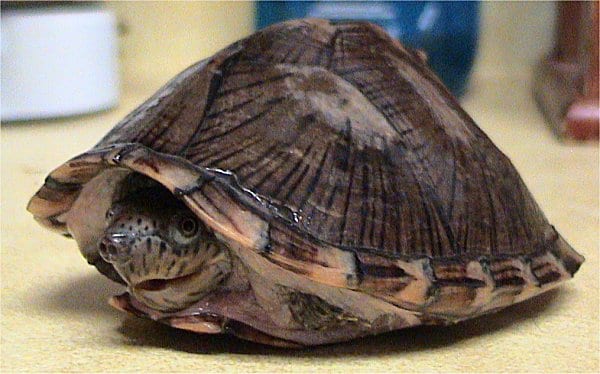
 © Photographer: LA Dawson / CC BY-SA 2.5
Razorback Musk Turtle
The Razorback Musk Turtle is one of the largest species in the musk turtle genus, native to the southern United States. Its name comes from the sharp keel running down the center of its carapace, giving it a rugged yet charming look. Almost fully aquatic, it prefers swimming to walking and is fun to watch as it moves actively through the water. Its temperament is relatively calm and it tends to acclimate well to people, which is why it's considered a beginner-friendly species and often chosen as an entry point into reptile keeping. It's a hardy turtle that can be a long-term companion in captivity.
View Razorback Musk Turtle encyclopedia →0% commission on your first sales!Register by September 30, 2026 and your first 2 sales are commission-free!
Breeder Wanted!
List on BreederDirect and sell directly to customers nationwide!
6 Transparency Promises from Br-Choku
Every Reptiles & Amphibians from verified Breeder breeders includes complete information: morph, genetics, feeding requirements, and temperament details.
- Morph Information
- Actual Photos
- Feeding Information
- Temperament Information
- Genetics Information
- Age (Months)
Browse all 280 breeds
Difficulty Level
Feeding Type
Temperament
No listings match your filters
Adjust your filters, or get notified when new listings arrive.
Getting alerts is free with a member account. When new listings match your saved search, we'll notify you by email and in-app.
Browse other categories
Verified breeders (preview)
Are you raising reptiles & amphibians?
Register as a breeder and connect with buyers directly.
Apply as a breederRazorback Musk Turtle key facts
- Care level
- Beginner-friendly
- Lifespan
- 20-30 years in the wild, up to 50 years in captivity
- Size
- About 15cm straight carapace length
- Temperature
- 24〜27℃、29〜32℃
- Diet
- Turtle pellets, insects such as crickets, and small feeder fish
- Temperature & Humidity
- Keep water at 24-27 C, air at 24-28 C and the basking spot at 29-32 C. For mud and musk turtles generally, water of 22-27 C and basking of 29-34 C suit well. Provide vitamin D and calcium supplements alongside full-spectrum lighting.
- Enclosure
- It is a strong swimmer, so allow about 38 litres of water per 2.5 cm of shell. Adults at 10-15 cm suit a 40-gallon tank, roughly 150 litres, or larger. Give real depth as well, since it likes to swim up and down. It is used to heavily vegetated water, so add plants and hides, and run a powerful filter to keep the water clean.
- Diet & Feeding
- It is carnivorous in the wild. In captivity use turtle pellets as the staple with insects such as crickets alongside. Small feeder fish encourage exercise. Watch for obesity from overfeeding.
- Temperament
- A shy species that does not bask much in the wild, though a basking spot where it can leave the water should always be provided. It can live with other turtles such as red-eared sliders, painted turtles and map turtles, but watch for rivalries when first introduced. Move your hand slowly when picking one up; they do occasionally bite.
- Notes
- The genus Sternotherus was listed on CITES Appendix II at CoP19 in 2022, effective 23 February 2023. Appendix II means no Japanese registration certificate is required, but international trade needs an export permit from the range state. Individuals have lived 50 years in captivity, so plan the setup for the long term.
About Razorback Musk Turtle
The Razorback Musk Turtle is a large, aquatic musk turtle species with a distinctive keeled shell. Beginner-friendly with a calm temperament — here's what to know before bringing one home.
7 things to know before welcoming a Razorback Musk Turtle
1Nearly Fully Aquatic Lifestyle
The Razorback Musk Turtle rarely comes onto land and is a strong swimmer. Set up the tank with enough water depth rather than focusing on a large basking area, and give it plenty of room to swim freely.
2Notice the Shell's Keel
Its defining feature is the sharp keel running down the center of the carapace. It may become slightly less pronounced with age, but this distinctive silhouette is the origin of both its Japanese and English names.
3Calm, Easy-Going Temperament
Many individuals settle down calmly around people once acclimated, reflecting the species' relatively easygoing temperament. That said, some may retain a degree of wariness at first, so it's best to give a new turtle time to adjust rather than handling it right away.
4Manageable Adult Size
Adults reach a carapace length of around 15 cm, making them easier to house than larger turtle species in terms of space. Still, choose a tank sized with the adult turtle in mind so it has plenty of room as it grows.
5Water Quality and Filtration Matter
Because it spends nearly all its time in water, water quality has a direct impact on its health. A reliable filtration system along with regular water changes and water quality checks is key to keeping it healthy long-term.
6A Long-Term Commitment
In the wild it can live 20 to 30 years, and in captivity potentially up to 50 years, meaning this is a truly long-term companion. Before bringing one home, think carefully about whether you can maintain its care for decades to come.
7Prepare the Setup Before Arrival
Ideally, set up the tank, filter, heater, and UV lighting in advance and let the water stabilize before the turtle arrives. Although considered beginner-friendly, getting the initial setup right lays the foundation for successful keeping.
Frequently asked questions about Razorback Musk Turtle
- Q.Can beginners keep a Razorback Musk Turtle?
- A.Yes, it's generally considered a beginner-friendly species. Being nearly fully aquatic with a relatively calm temperament, it's approachable as long as you can set up a proper aquatic turtle environment.
- Q.How large does it grow?
- A.Adults reach a carapace length of around 15 cm. This is compact compared to larger turtle species, but it's best to prepare a tank sized for its adult size from the start.
- Q.How long does it live?
- A.In the wild it lives 20 to 30 years, and in captivity it can live up to 50 years. When considering one, it's important to think about whether you can commit to its care over such a long period.
- Q.Does it need a land area?
- A.Since it's an almost fully aquatic species, a layout that prioritizes water depth and swimming space over a large land area is more suitable. A small shallow area to rest is generally enough.
- Q.Is it subject to any regulations?
- A.Razorback Musk Turtle is listed in CITES Appendix II. International trade requires a permit from the exporting country, but as far as CITES is concerned, no registration is needed to buy or sell individuals already legally in Japan.
Useful tools for Razorback Musk Turtle care
Learn more about Razorback Musk Turtle in the encyclopedia
View Razorback Musk Turtle encyclopedia entry →
Care difficulty, lifespan, size and diet — all basics covered.
More in this category
Can't find the one you're looking for?
Post your wishes for free and breeders with matching animals will contact you with introductions.