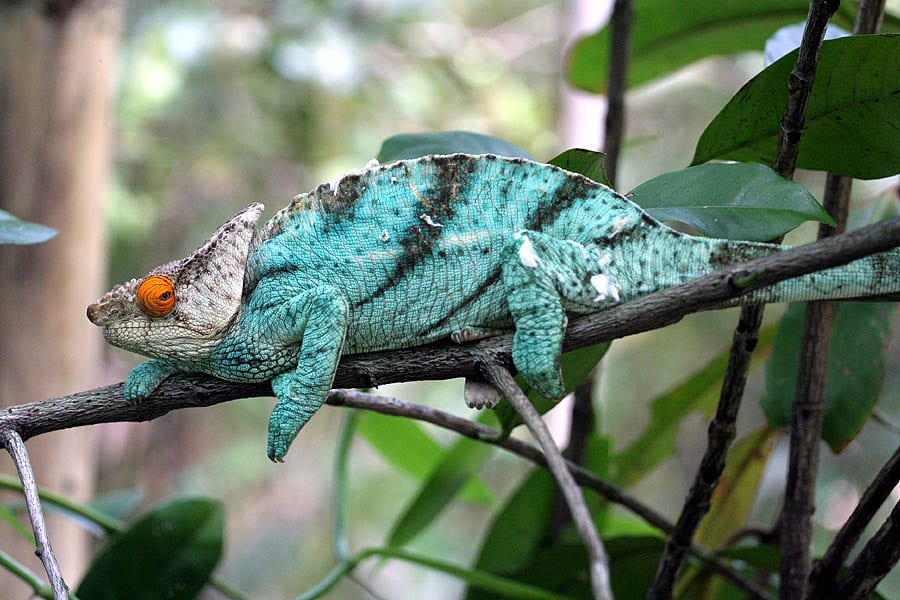
 © JialiangGao www.peace-on-earth.org / CC BY-SA 4.0
Parson's Chameleon
The Parson's chameleon is a giant species native to the humid primary forests of northern and eastern Madagascar, widely considered the heaviest chameleon in the world by body weight. Males are especially striking, with a helmet-like casque on the head and two horn-like ridges running from above the eyes to the tip of the snout. While generally slow-moving and calm, they are strongly solitary and territorial, so keepers need a spacious, well-managed enclosure. With a lifespan of around 20 years, this is a long-term companion best suited to experienced reptile keepers who appreciate a quiet, dignified presence.
View Parson's Chameleon encyclopedia →0% commission on your first sales!Register by September 30, 2026 and your first 2 sales are commission-free!
Breeder Wanted!
List on BreederDirect and sell directly to customers nationwide!
6 Transparency Promises from Br-Choku
Every Reptiles & Amphibians from verified Breeder breeders includes complete information: morph, genetics, feeding requirements, and temperament details.
- Morph Information
- Actual Photos
- Feeding Information
- Temperament Information
- Genetics Information
- Age (Months)
Browse all 280 breeds
Difficulty Level
Feeding Type
Temperament
No listings match your filters
Adjust your filters, or get notified when new listings arrive.
Getting alerts is free with a member account. When new listings match your saved search, we'll notify you by email and in-app.
Browse other categories
Verified breeders (preview)
Are you raising reptiles & amphibians?
Register as a breeder and connect with buyers directly.
Apply as a breederParson's Chameleon key facts
- Care level
- Advanced
- Lifespan
- About 20 years
- Size
- Up to 65cm in the nominate subspecies; usually to 50cm in cristifer
- Temperature
- 20〜24℃
- Humidity
- 50〜100%
- Diet
- Crickets, dubia roaches and other insects, plus small vertebrates
- Temperature & Humidity
- It wants cool, humid conditions, so work around the low twenties Celsius, roughly 20-24 C. Humidity should run from about 50 percent by day up to 100 percent at night. Greenhouse-style setups that run hot do not suit this species, so confirm at the design stage that you can keep it cool.
- Enclosure
- The minimum is about 120 cm wide by 60 cm deep by 120 cm tall, and many keepers build walk-in enclosures. It is not a restless species, but it needs space proportional to its bulk. A bird cage may be large but cannot hold humidity, so it is unsuitable. Furnish with live plants and thick horizontal branches.
- Diet & Feeding
- It hunts insects and small vertebrates in the trees by day. In captivity use crickets and dubia roaches as the staple, gut-loaded and dusted with calcium. It has a reputation as a heavy drinker, so ample hydration is essential. Budget for the feeding costs continuing across a 20-year life.
- Temperament
- It lives alone outside the breeding season and should be kept singly. It is slow and placid, but handling should be kept to a minimum; moving it on a perch rather than by hand is less stressful.
- Notes
- Listed on CITES Appendix II as Chamaeleonidae spp. since 4 February 1977, so no registration certificate is required. The IUCN Red List assesses it as Near Threatened. Wild-caught animals are hard to acclimatise, so captive-hatched stock is strongly preferred; a reliable incubation method has been published in recent years and captive-bred animals are now produced regularly.
About Parson's Chameleon
A giant chameleon native to Madagascar's primary forests, considered the heaviest chameleon species in the world. Males have a helmet-like head and horn-like ridges; the species lives about 20 years and suits experienced keepers with spacious enclosures.
7 things to know before welcoming a Parson's Chameleon
1Needs a Large Enclosure
As one of the heaviest chameleon species in the world, adult Parson's chameleons need a tall, spacious enclosure. The nominate subspecies can reach up to 65 cm, and even the smaller cristifer form typically grows to around 50 cm, so make sure you can provide enough room before bringing one home.
2Best Kept Alone
This species is solitary and highly territorial, so housing multiple chameleons together often leads to stress or fighting. Keep one animal per enclosure, positioned so individuals can't see each other.
3An Advanced-Level Pet
Parson's chameleons require precise temperature, humidity, and UV lighting management, making them a demanding choice for first-time keepers. It's best to build a solid foundation in chameleon care before taking one on.
4Males and Females Differ
Males have a distinctive helmet-like casque and two horn-like ridges running from above the eyes to the snout. Females lack these prominent features and tend to be somewhat smaller overall.
5A Long-Term Commitment
With a lifespan of around 20 years, this is one of the longer-lived reptiles you can keep. Consider how your living situation might change over the next two decades before committing to ownership.
6Calm, Deliberate Movers
Parson's chameleons tend to move slowly and stay relatively calm when handled gently and without sudden disturbance. That said, watch for color changes, which can signal stress, and adjust their environment accordingly.
7Dislikes Stagnant Humidity
Native to humid primary forests in Madagascar, this species needs good airflow alongside adequate moisture. A stuffy, poorly ventilated enclosure can lead to health problems, so balance humidity with proper ventilation.
Frequently asked questions about Parson's Chameleon
- Q.Is the Parson's chameleon suitable for beginners?
- A.Not really — this species requires careful temperature, humidity, and UV management, making it better suited to experienced keepers. It's best to build up chameleon-keeping experience before taking one on.
- Q.How large do Parson's chameleons get?
- A.The nominate subspecies can reach up to 65 cm, while the cristifer form typically grows to around 50 cm. Plan for an enclosure large enough to accommodate their full adult size.
- Q.How can you tell males and females apart?
- A.Males have a helmet-like casque and two horn-like ridges running from above the eyes to the snout. Females lack these prominent features and are generally somewhat smaller.
- Q.Can multiple Parson's chameleons be housed together?
- A.They are strongly solitary and territorial, so keeping them together often causes stress or fighting. As a rule, house one chameleon per enclosure.
- Q.How long do Parson's chameleons live?
- A.They typically live around 20 years, making them a long-term commitment. Think carefully about whether you can provide consistent care for that long before bringing one home.
Useful tools for Parson's Chameleon care
Learn more about Parson's Chameleon in the encyclopedia
View Parson's Chameleon encyclopedia entry →
Care difficulty, lifespan, size and diet — all basics covered.
More in this category
Can't find the one you're looking for?
Post your wishes for free and breeders with matching animals will contact you with introductions.