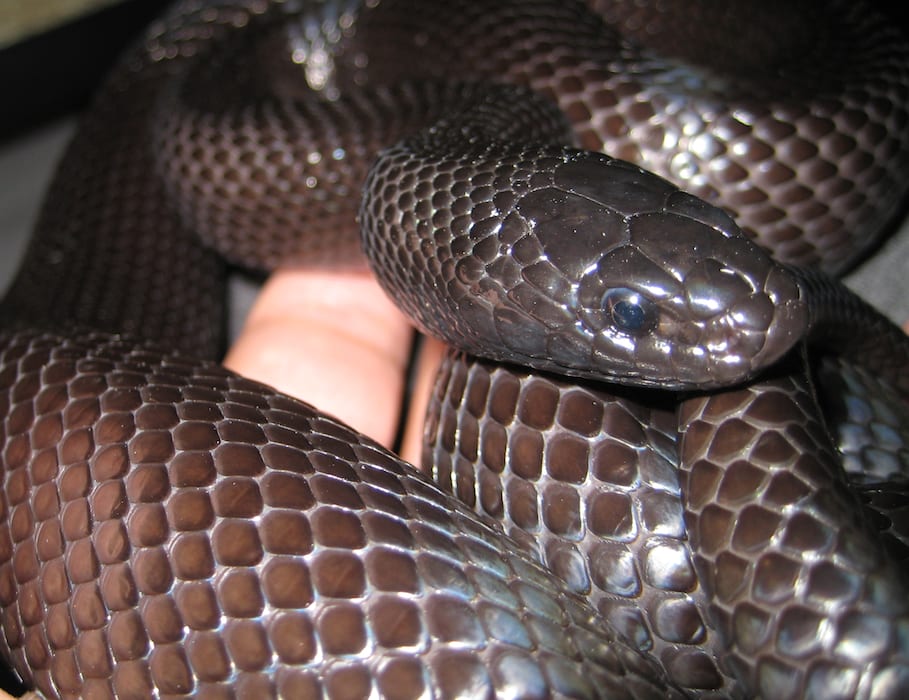
 © William Szilveszter ( Lokheed at English Wikipedia ) / CC BY 3.0
Mexican Black Kingsnake
The Mexican Black Kingsnake is a striking nonvenomous snake known for its uniform, glossy black-brown body. In direct light it takes on a deep chocolate hue, with scales that catch a subtle blue sheen. Calm and easygoing by nature, it tolerates handling well, making it a favorite starter snake for reptile keepers. Hardy and low-maintenance, it can live 20 to 30 years, making it a long-term companion for those ready for the commitment.
View Mexican Black Kingsnake encyclopedia →0% commission on your first sales!Register by September 30, 2026 and your first 2 sales are commission-free!
Breeder Wanted!
List on BreederDirect and sell directly to customers nationwide!
6 Transparency Promises from Br-Choku
Every Reptiles & Amphibians from verified Breeder breeders includes complete information: morph, genetics, feeding requirements, and temperament details.
- Morph Information
- Actual Photos
- Feeding Information
- Temperament Information
- Genetics Information
- Age (Months)
Browse all 280 breeds
Difficulty Level
Feeding Type
Temperament
No listings match your filters
Adjust your filters, or get notified when new listings arrive.
Getting alerts is free with a member account. When new listings match your saved search, we'll notify you by email and in-app.
Browse other categories
Verified breeders (preview)
Are you raising reptiles & amphibians?
Register as a breeder and connect with buyers directly.
Apply as a breederMexican Black Kingsnake key facts
- Care level
- Beginner-friendly
- Lifespan
- 20-30 years
- Size
- 90-120cm, sometimes over 1.5m in captivity, weighing up to about 1.3kg
- Temperature
- Humidity
- 40〜60%
- Diet
- Frozen-thawed mice; in the wild rodents, lizards and other snakes
- Temperature & Humidity
- Create a gradient with a basking surface of 29-32C and a cool side of 21-26C. Aim for average humidity of 40-60 per cent, naturally a little higher on the cool side and at night. Raising humidity before a shed helps prevent retained skin.
- Enclosure
- A minimum enclosure of about 120 x 60 x 60 cm per adult is recommended, and larger is better. It is active and explores a great deal, so provide branches and hides on both the warm and cool sides. It is strong and an accomplished escaper, so use a front-opening enclosure that locks securely.
- Diet & Feeding
- It is carnivorous and in captivity is fed appropriately sized frozen-thawed mice. In the wild it takes rodents, lizards and other snakes. Always feed it alone in the enclosure.
- Temperament
- Kingsnakes are ophiophagous and will eat each other, so they must be kept alone. They are generally docile and easy to handle, but wash your hands after feeding so they do not mistake them for prey.
- Notes
- The species is not listed in the CITES appendices, and it is neither a specified animal nor an invasive alien species under Japanese law. It is non-venomous and harmless to people, but escaped snakes are hard to recover, so keep the enclosure securely locked. Sources differ on its taxonomic status, so check the stated lineage and locality when buying an animal.
About Mexican Black Kingsnake
A hardy, docile nonvenomous snake with a glossy black-brown body. Easy to care for and popular as a beginner reptile, with a lifespan of 20 to 30 years.
7 things to know before welcoming a Mexican Black Kingsnake
1Enclosure Size Guide
Adults reach 90 to 120 cm in total length, so provide an enclosure sized to match along with several hiding spots. As a ground-dwelling species, focus on horizontal space and substrate rather than height.
2Temperature Setup
Create a temperature gradient in the enclosure so your snake can move between a warm basking spot and a cooler area. High humidity isn't necessary, as this species prefers a relatively dry environment.
3Keep Them Alone
Kingsnakes may prey on other snakes, so each individual should be housed in its own separate enclosure. If you plan to keep more than one, never house them together.
4Shedding Signs
Before shedding, the skin may look dull and the eyes can turn cloudy white — this is a normal part of the process. Provide a humid hide during this period and avoid handling until shedding is complete.
5Feeding Basics
Pre-killed, thawed frozen mice are the standard diet for this species. Adjust prey size and feeding frequency based on your snake's age and body size.
6Temperament & Handling
Mexican Black Kingsnakes are generally calm and tolerate handling well, which is part of their appeal. Still, avoid handling around shedding or right after feeding, and go at your snake's own pace.
7A Long-Term Commitment
With a lifespan of 20 to 30 years, think carefully about your enclosure setup and the daily care involved before bringing one home. It's a hardy, easy-to-keep species, but still a long-term responsibility.
Frequently asked questions about Mexican Black Kingsnake
- Q.Can it be kept with other snakes?
- A.No, kingsnakes may prey on other snakes, so cohabitation should be avoided. Always house each individual in its own separate enclosure.
- Q.Is this species suitable for beginners?
- A.Yes, its hardiness and calm temperament make it a popular starter snake. It's manageable as long as you keep up with basic temperature control and feeding.
- Q.How big does it get?
- A.Adults typically reach 90 to 120 cm in total length. Some captive individuals exceed 1.5 meters, with a maximum weight of around 1.3 kg.
- Q.How long of a commitment is keeping one?
- A.With a lifespan of 20 to 30 years, it requires a long-term commitment to daily care. Consider this carefully before bringing one home.
- Q.Is this species subject to any special regulations?
- A.The Mexican Black Kingsnake is not subject to CITES.
Useful tools for Mexican Black Kingsnake care
Learn more about Mexican Black Kingsnake in the encyclopedia
View Mexican Black Kingsnake encyclopedia entry →
Care difficulty, lifespan, size and diet — all basics covered.
More in this category
Can't find the one you're looking for?
Post your wishes for free and breeders with matching animals will contact you with introductions.