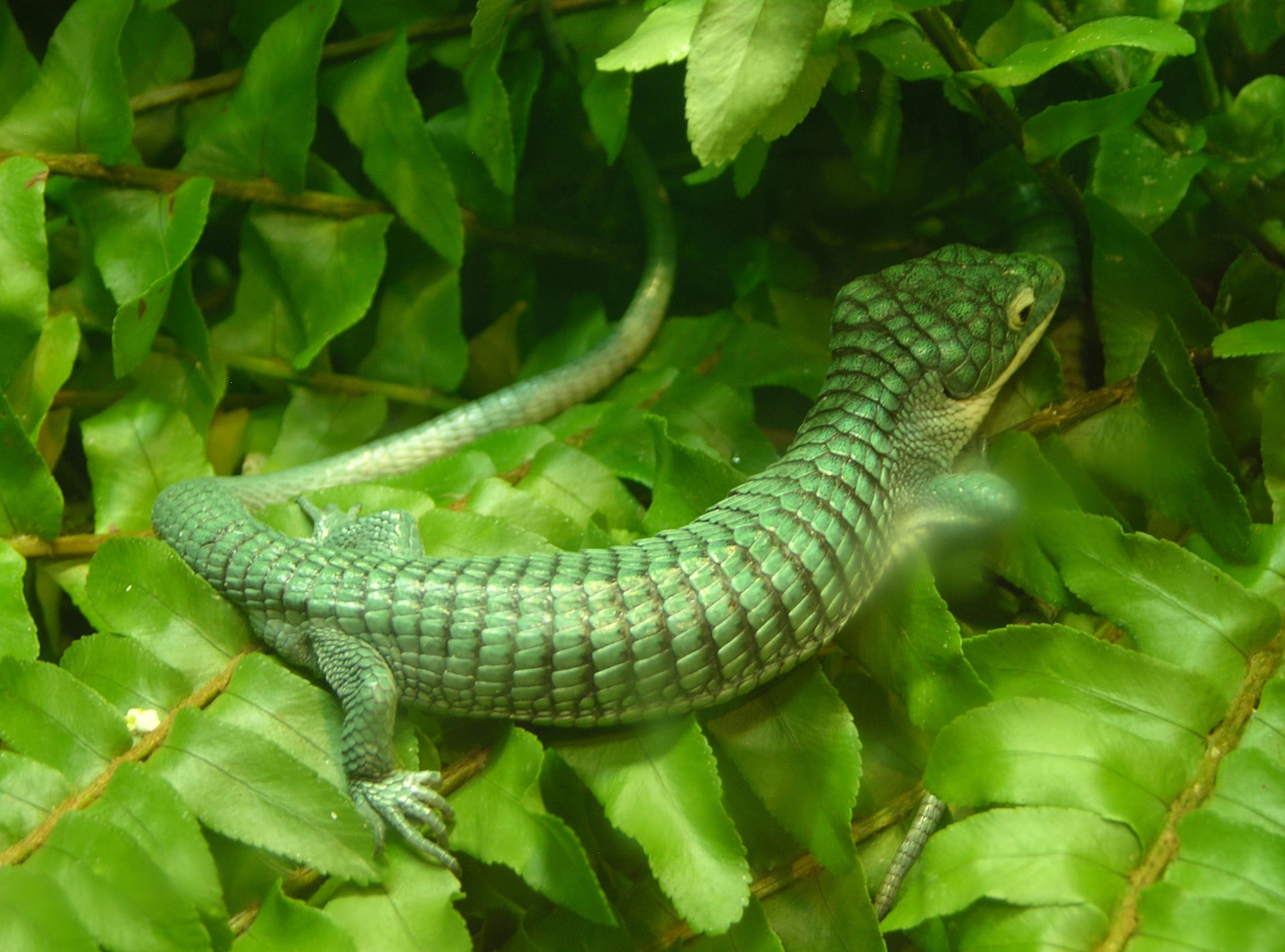
 © Photo (c)2007 Derek Ramsey ( Ram-Man ) / CC BY-SA 2.5
Mexican Alligator Lizard
The Mexican Alligator Lizard (Abronia) is an arboreal lizard prized for its striking coloration, ranging from vivid emerald green to deep blue-green. Compact in size — about 10.6 to 11 cm in snout-vent length, roughly 16 cm tail length, and around 21 g in weight — it has a sturdy head and a prehensile tail well suited to gripping branches. Juveniles start out pale brown with dark crossbands, gradually developing their vivid adult coloring over time. Because they are sensitive to changes in their environment, this species is best suited to experienced reptile keepers rather than beginners.
View Mexican Alligator Lizard encyclopedia →0% commission on your first sales!Register by September 30, 2026 and your first 2 sales are commission-free!
Breeder Wanted!
List on BreederDirect and sell directly to customers nationwide!
6 Transparency Promises from Br-Choku
Every Reptiles & Amphibians from verified Breeder breeders includes complete information: morph, genetics, feeding requirements, and temperament details.
- Morph Information
- Actual Photos
- Feeding Information
- Temperament Information
- Genetics Information
- Age (Months)
Browse all 280 breeds
Difficulty Level
Feeding Type
Temperament
No listings match your filters
Adjust your filters, or get notified when new listings arrive.
Getting alerts is free with a member account. When new listings match your saved search, we'll notify you by email and in-app.
Browse other categories
Verified breeders (preview)
Are you raising reptiles & amphibians?
Register as a breeder and connect with buyers directly.
Apply as a breederMexican Alligator Lizard key facts
- Care level
- Advanced
- Lifespan
- 10-15 years
- Size
- SVL 10.6-11cm with a tail of about 16cm (around 21g)
- Diet
- Carnivorous: a variety of insects
- Temperature & Humidity
- It lives in montane cloud forest at 1,350-2,743 m, in a temperate, humid climate with summer rains and large daily temperature swings. Assume it is intolerant of heat and provide cool, humid conditions with a clear day-night difference.
- Enclosure
- An arboreal species that shelters among canopy bromeliads, so use a tall enclosure furnished with branches and epiphytes to create retreats. Planting living bromeliads reproduces its natural resting sites and helps stabilise humidity. Design for good ventilation while holding humidity.
- Diet & Feeding
- It feeds on a variety of insects. In captivity offer crickets, roaches and flies scaled to its size, dusted with calcium and vitamin supplements. Because it forages in the canopy, it responds better when food is offered at height.
- Temperament
- Timid, spending long periods hidden in bromeliad axils and similar retreats. Avoid handling; this is a species for display and breeding rather than interaction. It is viviparous with a long gestation of five to ten months, so breeding demands sustained management.
- Notes
- Listed on CITES Appendix II as Abronia spp. since 2 January 2017, excluding the species on Appendix I, and with a zero export quota for wild specimens of A. aurita, A. gaiophantasma, A. montecristoi, A. salvadorensis and A. vasconcelosii. Being Appendix II, it needs no Japanese registration certificate. The IUCN assesses it as Endangered, with illegal collection for the pet trade cited as a threat, so it is important to choose animals of documented provenance. It does not appear on the schedule of designated dangerous animals under the Order for Enforcement of the Act on Welfare and Management of Animals.
About Mexican Alligator Lizard
A striking green-hued arboreal lizard, the Mexican Alligator Lizard (Abronia) measures about 10.6-11 cm in body length with a roughly 16 cm tail. Its delicate constitution makes it a species best suited to experienced keepers.
7 things to know before welcoming a Mexican Alligator Lizard
1Set Up an Arboreal Habitat
Because Mexican Alligator Lizards are tree-dwelling, their enclosure needs sturdy climbing branches and vertical space to move through. Provide several branches thick enough to grip so the lizard can settle in comfortably.
2Keep Humidity High
This species comes from humid forest habitats, so the enclosure should maintain consistently high humidity. Regular misting and moisture-retentive substrate help keep the environment from drying out.
3Avoid High Temperatures
Native to cool highland areas, this lizard doesn't tolerate heat well. Take care to prevent temperature spikes, especially in summer, and choose a placement that stays on the cooler side.
4Shy, Nervous Temperament
These lizards are not easily tamed and tend to retreat when startled. Frequent handling should be avoided in favor of quiet observation.
5Juveniles Look Different
Juveniles have pale brown bodies with dark crossbands, gradually developing their vivid green coloring as they mature. Keep in mind that appearance can vary considerably depending on the age of the individual.
6An Advanced-Level Species
Due to their sensitivity to environmental change and delicate constitution, this species is recommended for experienced reptile keepers. Learning about their needs thoroughly before bringing one home is essential.
7Prepare the Habitat First
Before bringing your lizard home, set up climbing branches, humidity control, and a thermometer in advance. Once it's settled in, avoid excessive handling and keep its environment calm and quiet.
Frequently asked questions about Mexican Alligator Lizard
- Q.Is this species suitable for beginner keepers?
- A.Because it's sensitive to environmental changes and requires careful humidity and temperature control, it's considered an advanced-level species. It's recommended for keepers with prior reptile-keeping experience.
- Q.How big does this lizard get?
- A.Snout-vent length is about 10.6 to 11 cm, with a tail length of roughly 16 cm. Body weight is around 21 g, making it a fairly small lizard.
- Q.Does its coloring change as it grows?
- A.Yes, juveniles start out pale brown with dark crossbands, and gradually develop emerald green to deep blue-green coloring as they mature.
- Q.Is it aggressive, or does it bond with people?
- A.It tends to be shy and nervous, and doesn't tame easily. Gentle observation rather than frequent handling suits this species better.
- Q.Are there any legal restrictions on this species?
- A.Mexican Alligator Lizard is listed in CITES Appendix II. International trade requires a permit from the exporting country, but as far as CITES is concerned, no registration is needed to buy or sell individuals already legally in Japan.
Useful tools for Mexican Alligator Lizard care
Learn more about Mexican Alligator Lizard in the encyclopedia
View Mexican Alligator Lizard encyclopedia entry →
Care difficulty, lifespan, size and diet — all basics covered.
More in this category
Can't find the one you're looking for?
Post your wishes for free and breeders with matching animals will contact you with introductions.