 © Flaac / CC BY-SA 3.0
Great Plains Rat Snake
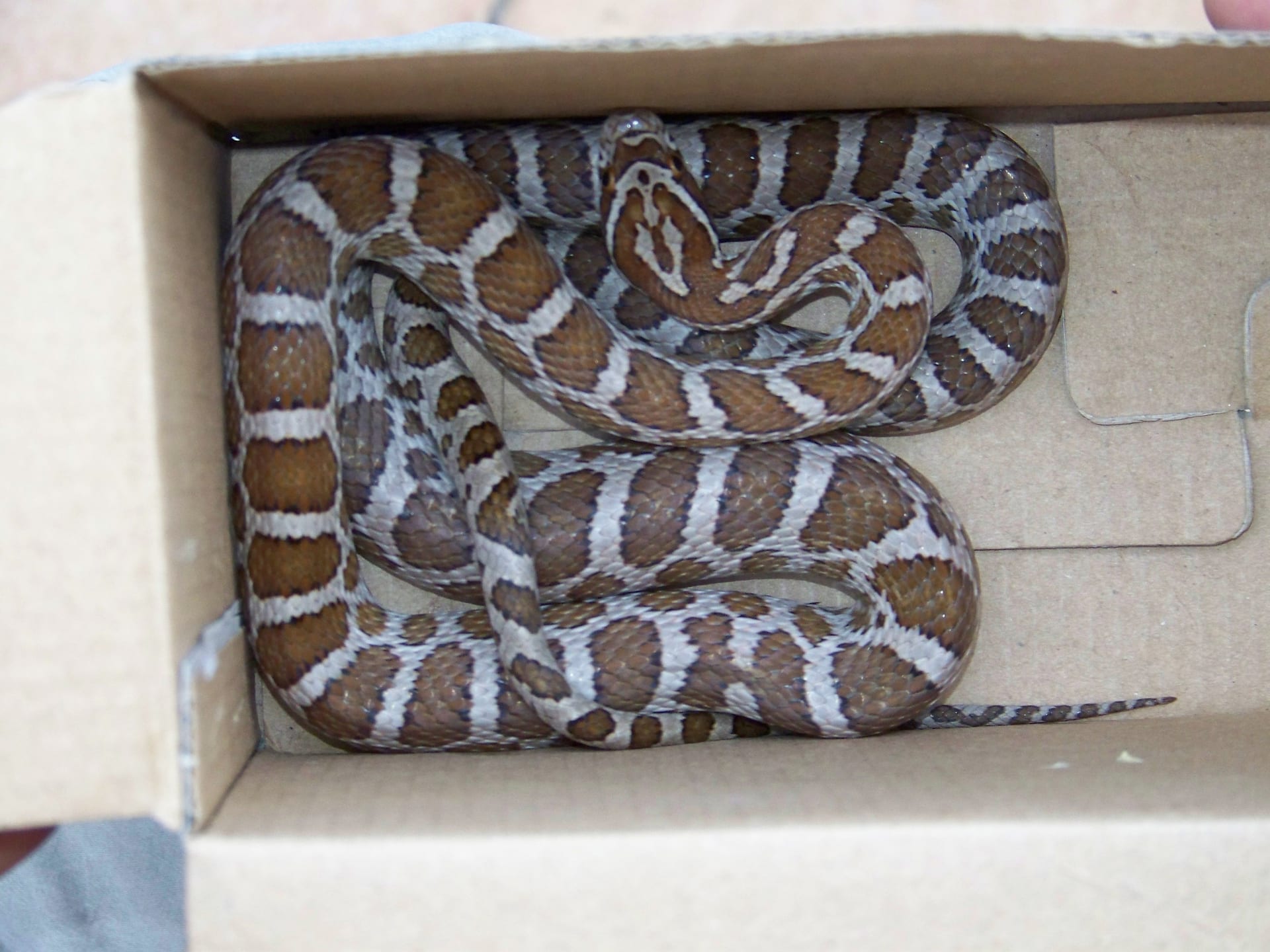
The Great Plains Ratsnake hails from the grassland regions of central North America. Its pale gray to tan body is marked with rows of dark gray-brown blotches, and the stripes running from each side of its head meet between the eyes to form a distinctive arrow-like point — a key identification feature, with patterns varying nicely from snake to snake. Naturally calm and quick to settle in, this species is often recommended for reptile keepers starting out. With stable temperatures and a well-set-up enclosure, day-to-day care stays straightforward, making it a great way to learn the fundamentals of snake keeping.
View Great Plains Rat Snake encyclopedia →0% commission on your first sales!Register by September 30, 2026 and your first 2 sales are commission-free!
Breeder Wanted!
List on BreederDirect and sell directly to customers nationwide!
6 Transparency Promises from Br-Choku
Every Reptiles & Amphibians from verified Breeder breeders includes complete information: morph, genetics, feeding requirements, and temperament details.
- Morph Information
- Actual Photos
- Feeding Information
- Temperament Information
- Genetics Information
- Age (Months)
Browse all 280 breeds
Difficulty Level
Feeding Type
Temperament
No listings match your filters
Adjust your filters, or get notified when new listings arrive.
Getting alerts is free with a member account. When new listings match your saved search, we'll notify you by email and in-app.
Browse other categories
Verified breeders (preview)
Are you raising reptiles & amphibians?
Register as a breeder and connect with buyers directly.
Apply as a breederGreat Plains Rat Snake key facts
- Care level
- Beginner-friendly
- Lifespan
- 15-20 years
- Size
- 91-152cm
- Diet
- Thawed frozen mice and rats
- Temperature & Humidity
- Its habitat ranges from open grassland to semi-arid country and rocky hills. Place a heat source at one end of the enclosure to create a gradient, keep the enclosure out of direct sunlight, and adjust from measured readings.
- Enclosure
- It grows to between one and one and a half metres, so use a front-opening enclosure with enough floor space to stretch out. Although it lives in open country, hides are essential: place one on the warm side and one on the cool. Remove faeces and soiled substrate promptly.
- Diet & Feeding
- In the wild it hunts mainly rodents and is often found on farmland following mice. In captivity offer thawed frozen mice or rats sized to the snake. Leave it undisturbed for a while after a meal to avoid regurgitation.
- Temperament
- Closely related to the corn snake and among the more manageable rat snakes. Keep it singly. Activity tends to pick up around dusk.
- Notes
- It is not listed in the CITES appendices, and it is neither a specified animal nor an invasive alien species under Japanese law. The IUCN Red List assesses it as Least Concern. Texas rat snake is sometimes given as one of its common names, but that name properly refers to a colour form of Pantherophis obsoletus, so the two are easily confused; confirm the scientific name Pantherophis emoryi when buying.
About Great Plains Rat Snake
A calm, hardy ratsnake from the grasslands of central North America, known for its pale blotched pattern and arrow-marked head — a great choice for first-time snake keepers.
7 things to know before welcoming a Great Plains Rat Snake
1Enclosure Sized for Growth
Adults reach roughly 91 to 152 cm in length, so plan for an enclosure with enough length and depth to match. Adding a hide box helps the snake feel secure and settle in comfortably.
2Maintaining a Temperature Gradient
Set up both a warm and a cooler area within the enclosure so the snake can regulate its own body temperature day to day. Avoid extremes of dryness or humidity, and keep airflow reasonably well balanced.
3A Calm, Manageable Temperament
This species tends to acclimate well to handling, which is part of why it's considered suitable for beginners. Even so, avoid handling right after bringing one home — give it time to settle into its new environment first.
4Feeding Basics
Feeding thawed frozen mice on a regular schedule is the typical approach. Keep an eye on leftover food and stool condition as an everyday way to monitor overall health.
5Recognizing Shedding Signs
A dulling of body color and a bluish, cloudy look to the eyes signal that shedding is approaching. The snake often stays hidden during this period, so it's best left undisturbed.
6Planning for Adult Size
Since adults grow to 91–152 cm, it helps to plan enclosure sizing with that future length in mind, even while the snake is still young. Revisit the setup as it grows to keep it appropriately sized.
7Setting Up Before You Bring One Home
Having a thermometer, hygrometer, hide box, and substrate ready in advance makes it much easier to create a stable environment from day one. Confirming care details with a trusted breeder beforehand is also a good idea.
Frequently asked questions about Great Plains Rat Snake
- Q.Is this species suitable for beginners?
- A.The Great Plains Ratsnake is generally considered a beginner-friendly species. As long as you keep up with basic temperature management and a consistent feeding routine, it's an approachable snake to start with.
- Q.Is its temperament docile?
- A.Overall, this species is known for a calm temperament and tends to acclimate well to handling. Individual personalities do vary, so it's best to let a newly arrived snake settle in without rushing.
- Q.How large does it grow?
- A.Adults typically reach a total length of about 91 to 152 cm. It's a good idea to think ahead about enclosure size to accommodate this eventual growth.
- Q.What are the key identification features?
- A.Its coloring features rows of dark gray-brown blotches on a pale gray or tan background. A key identifying trait is the stripe running from each side of the head that joins between the eyes to form a pointed mark.
- Q.Is this species subject to any trade regulations?
- A.The Great Plains Ratsnake is not listed under CITES.
Useful tools for Great Plains Rat Snake care
Learn more about Great Plains Rat Snake in the encyclopedia
View Great Plains Rat Snake encyclopedia entry →
Care difficulty, lifespan, size and diet — all basics covered.
More in this category
Can't find the one you're looking for?
Post your wishes for free and breeders with matching animals will contact you with introductions.