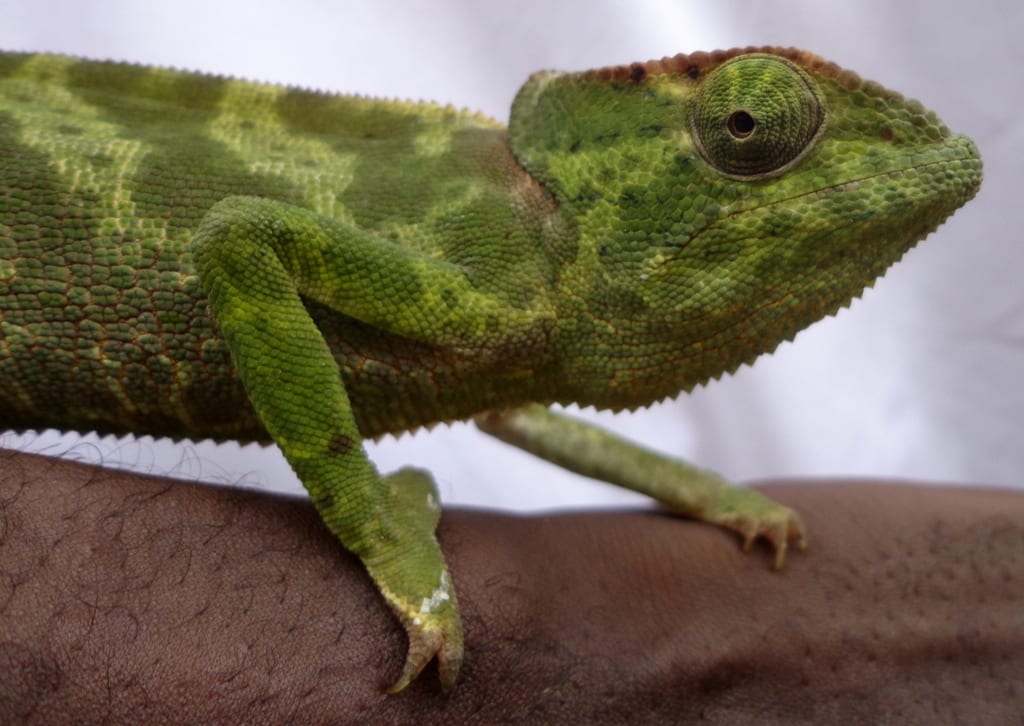
 © Dotun55 / CC BY-SA 3.0
Graceful Chameleon
The Graceful Chameleon is a slender chameleon species native to a wide range of sub-Saharan Africa. Its body shows shades of green, yellow, and brown, accented with a distinctive green stripe along each flank. As a diurnal species, it is most active during the cooler hours of morning and evening, resting quietly in the shade through the hottest part of the day. Graceful Chameleons are solitary by nature and are generally kept alone to avoid stress from contact with other individuals. Adults typically reach about 30.5 cm in length, occasionally up to 38 cm, and can live up to 10 years in captivity under proper care. Because they require careful attention to temperature, humidity, and UV lighting, this species suits keepers with some reptile-keeping experience — but its ever-shifting colors and unhurried, deliberate movements make it a rewarding animal to observe.
View Graceful Chameleon encyclopedia →0% commission on your first sales!Register by September 30, 2026 and your first 2 sales are commission-free!
Breeder Wanted!
List on BreederDirect and sell directly to customers nationwide!
6 Transparency Promises from Br-Choku
Every Reptiles & Amphibians from verified Breeder breeders includes complete information: morph, genetics, feeding requirements, and temperament details.
- Morph Information
- Actual Photos
- Feeding Information
- Temperament Information
- Genetics Information
- Age (Months)
Browse all 280 breeds
Difficulty Level
Feeding Type
Temperament
No listings match your filters
Adjust your filters, or get notified when new listings arrive.
Getting alerts is free with a member account. When new listings match your saved search, we'll notify you by email and in-app.
Browse other categories
Verified breeders (preview)
Are you raising reptiles & amphibians?
Register as a breeder and connect with buyers directly.
Apply as a breederGraceful Chameleon key facts
- Care level
- Intermediate
- Lifespan
- Up to 10 years in captivity
- Size
- About 30.5cm, up to 38cm
- Diet
- Crickets, dubia roaches and other insects
- Temperature & Humidity
- In the wild it spends the hottest hours in shade, so always provide both a basking spot and permanently shaded areas and let the animal choose. Adjust from measured readings.
- Enclosure
- As an arboreal chameleon of about 30 cm it needs a screen or glass enclosure with generous height. Add live plants and branches of varying diameter at different heights. It adapts to habitats from forest to scrub, but planting that provides shade is essential.
- Diet & Feeding
- It is insectivorous; use crickets and dubia roaches as the staple. It hunts most actively in the morning and evening, so feeding at those times suits it. Gut-load and dust the feeders with calcium. It takes water from misting droplets.
- Temperament
- Males are strongly territorial and threaten rivals with colourful displays. Keep it singly and never house males together. Handle as little as possible.
- Notes
- Listed on CITES Appendix II as Chamaeleonidae spp. since 4 February 1977, so no registration certificate is required. Its abundance means it is heavily collected for the pet trade, and wild-caught animals should always be checked for parasites and dehydration. The IUCN Red List assesses it as Least Concern.
About Graceful Chameleon
A slender chameleon native to sub-Saharan Africa, with green, yellow, and brown coloring and a green flank stripe; active by day, mainly at dawn and dusk. Adults reach about 30.5 cm (up to 38 cm) and live up to 10 years in captivity — an intermediate-level species to keep.
7 things to know before welcoming a Graceful Chameleon
1Solitary Housing Required
Graceful Chameleons are territorial and do not tolerate cage-mates well. House each individual in its own enclosure to avoid stress and conflict.
2Temperature Gradient
As a diurnal species active in the morning and evening, it rests in shade during the hottest part of the day. Provide both a basking spot and shaded areas in the enclosure to recreate this natural temperature gradient.
3UVB Lighting Is Essential
Chameleons need UVB exposure for proper calcium metabolism. Indoor enclosures require a dedicated UVB lamp that should be replaced on a regular schedule.
4Limited Handling
Like most chameleons, handling causes significant stress. They are best enjoyed as an animal to observe, with direct contact kept to occasions like feeding or health checks.
5Live Insect Diet
The primary diet consists of insects such as crickets, dusted with calcium and vitamin supplements for balanced nutrition. Set up a reliable supply of feeder insects before bringing one home.
6Color as a Health Cue
Its green, yellow, and brown coloring can shift with stress, health, or mood. A prolonged change in color from the norm is a cue to review temperature, humidity, and feeding.
7Best for Intermediate Keepers
Because it requires careful temperature, humidity, and UV management, this species suits keepers with some reptile experience. Prepare the enclosure and review care requirements before bringing one home.
Frequently asked questions about Graceful Chameleon
- Q.Can beginners keep a Graceful Chameleon?
- A.This species is generally considered suitable for intermediate keepers. Because it requires careful temperature, humidity, and UVB management, some prior reptile-keeping experience is recommended before bringing one home.
- Q.How large does a Graceful Chameleon grow?
- A.Adults typically reach around 30.5 cm in total length, with larger individuals reaching up to 38 cm. Growth varies somewhat by sex and individual.
- Q.How long do Graceful Chameleons live?
- A.In captivity, they can live up to around 10 years. Daily care quality — including temperature, humidity, and diet — has a strong influence on lifespan.
- Q.Can multiple Graceful Chameleons be housed together?
- A.This species is solitary and territorial, making cohabitation unsuitable. Each individual should be kept in its own separate enclosure to avoid stress and conflict.
- Q.Is the Graceful Chameleon subject to CITES regulations?
- A.Graceful Chameleon is listed in CITES Appendix II. International trade requires a permit from the exporting country, but as far as CITES is concerned, no registration is needed to buy or sell individuals already legally in Japan.
Useful tools for Graceful Chameleon care
Learn more about Graceful Chameleon in the encyclopedia
View Graceful Chameleon encyclopedia entry →
Care difficulty, lifespan, size and diet — all basics covered.
More in this category
Can't find the one you're looking for?
Post your wishes for free and breeders with matching animals will contact you with introductions.