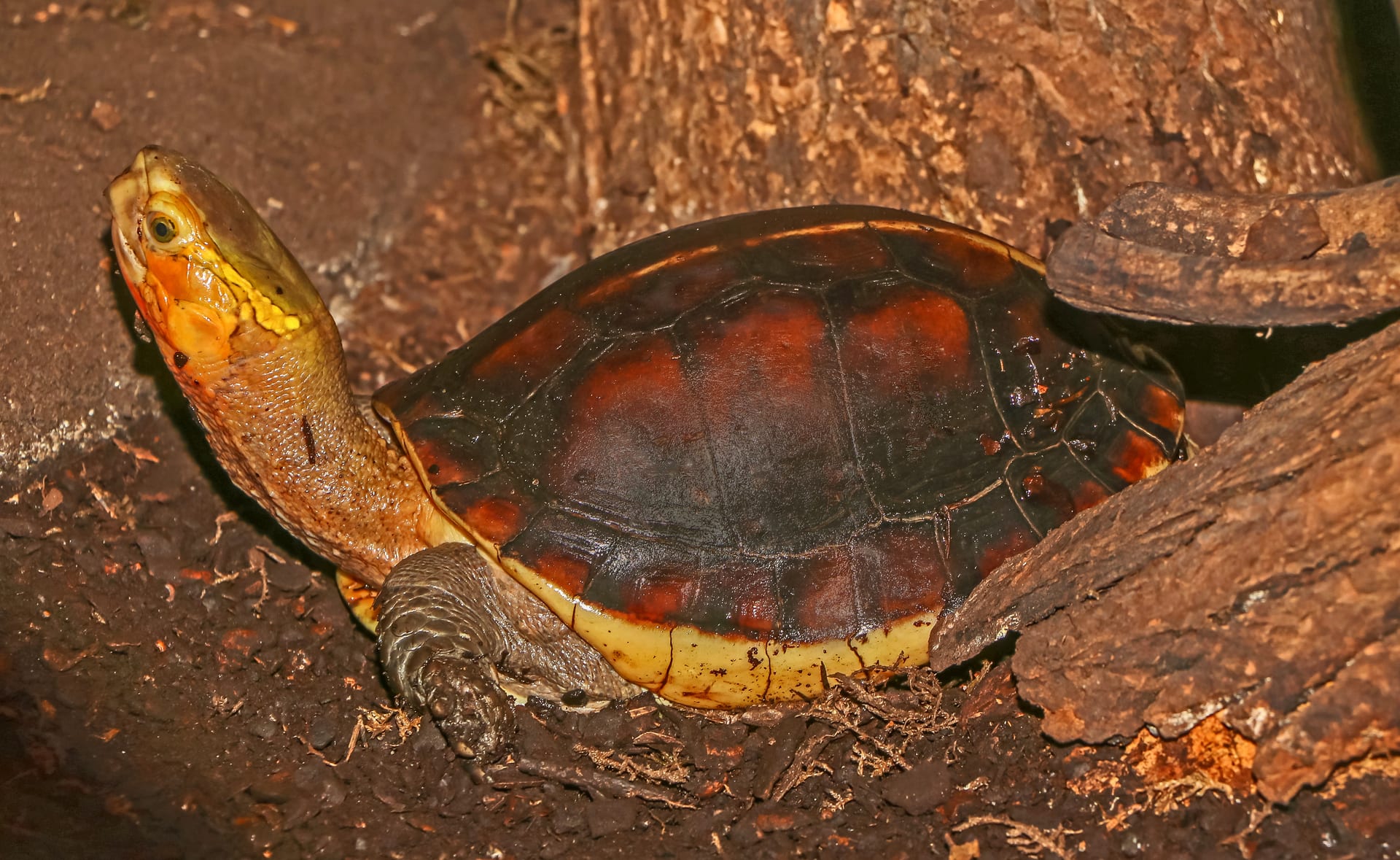
 © H. Zell / CC BY-SA 3.0
Chinese Box Turtle
The Chinese box turtle is a terrestrial turtle known for its distinctively domed carapace and a hinged plastron that closes completely when the animal feels threatened. Its species name means "yellow-margined," referring to the yellow trim along the lower edge of the shell. With a maximum shell length of about 19.5 cm, it stays compact and manageable, and individuals tend to be calm and quiet, making them well suited to keepers who enjoy observing a reptile at its own pace. Because proper temperature, humidity, and hide setup are essential, it's considered a turtle for intermediate keepers, but with turtles known to live for many years under human care, it can become a long-term companion for those ready for the commitment.
View Chinese Box Turtle encyclopedia →0% commission on your first sales!Register by September 30, 2026 and your first 2 sales are commission-free!
Breeder Wanted!
List on BreederDirect and sell directly to customers nationwide!
6 Transparency Promises from Br-Choku
Every Reptiles & Amphibians from verified Breeder breeders includes complete information: morph, genetics, feeding requirements, and temperament details.
- Morph Information
- Actual Photos
- Feeding Information
- Temperament Information
- Genetics Information
- Age (Months)
Browse all 280 breeds
Difficulty Level
Feeding Type
Temperament
No listings match your filters
Adjust your filters, or get notified when new listings arrive.
Getting alerts is free with a member account. When new listings match your saved search, we'll notify you by email and in-app.
Browse other categories
Verified breeders (preview)
Are you raising reptiles & amphibians?
Register as a breeder and connect with buyers directly.
Apply as a breederChinese Box Turtle key facts
- Care level
- Intermediate
- Lifespan
- Maximum recorded longevity in captivity is 19 years
- Size
- Carapace up to 19.5cm
- Diet
- Insects, spiders, land snails, earthworms, fruit and prepared pellets
- Temperature & Humidity
- It lives in broadleaf forest at 800-950 m in China and below 400 m in Japan. It favours humid forest, so do not let the enclosure dry out and keep moisture in the substrate.
- Enclosure
- Terrestrial, so keep it in a terrarium. It is not a large species but it is active and soils the enclosure quickly, so provide a roomy cage, substrate deep enough to burrow into, and a shallow water dish.
- Diet & Feeding
- Omnivorous, taking insects, spiders, land snails, earthworms and fruit. A monotonous diet can stunt growth, so offer a varied, balanced range of foods.
- Temperament
- Bad tempered: it bites other animals and will even eat a weakened cage mate, so house it singly as a rule.
- Notes
- The genus Cuora was listed on CITES Appendix II in 2000, the current listing effective 23 February 2023, and this species carries a zero export quota for wild specimens traded commercially. Appendix II species need no individual registration certificate in Japan. The endemic Japanese subspecies was designated a national natural monument in 1972 and its capture, keeping and transfer are restricted under the Act on Protection of Cultural Properties. Trade is supplied mainly by captive-bred animals of the nominate subspecies.
About Chinese Box Turtle
A terrestrial box turtle with a domed shell and a fully closing hinged plastron. Reaching up to 19.5 cm, it suits intermediate keepers seeking a long-term companion.
7 things to know before welcoming a Chinese Box Turtle
1A Fully Closing Plastron
The Chinese box turtle's defining trait is a hinged plastron that can close completely shut when it senses danger. Shy individuals may retreat into their shell at sudden noises or movement, so setting up a calm, low-stress environment matters.
2A Mostly Terrestrial Setup
Unlike aquatic turtles, this species is largely terrestrial, so the enclosure should combine a shallow water dish with moist substrate rather than a large pool. Letting the habitat dry out too much can lead to shell and skin problems, so daily humidity checks are important.
3Providing Hides and Cover
Since many individuals are shy and easily startled, providing several hides—shelters, leaf litter, or sphagnum moss—helps them settle in comfortably. Too few hiding spots can lead to stress-related appetite loss.
4Temperature and Humidity Control
As a terrestrial box turtle, it needs both temperature and humidity kept within an appropriate range, typically achieved with a thermal gradient offering a basking spot alongside cooler retreat areas. The added complexity compared to aquatic species is part of why this turtle is considered better suited to intermediate keepers.
5An Omnivorous, Varied Diet
This species is omnivorous, and its diet should ideally balance animal protein such as insects with plant matter like vegetables and fruit. Varying the menu rather than relying on a single food helps keep the turtle in good condition.
6Committing to Long-Term Care
The longest recorded lifespan in captivity for this species is 19 years, so prospective keepers should plan their setup and lifestyle around a long-term commitment rather than just a few years. It's also worth thinking ahead about care arrangements for travel or moving.
7Making Health Checks a Habit
Regularly observing shell condition, appetite, and activity level helps you catch early signs of trouble, such as a softening or discoloration of the shell or uneaten food building up. If anything seems off, it's best to consult a reptile-experienced veterinarian promptly.
Frequently asked questions about Chinese Box Turtle
- Q.Can beginners keep a Chinese box turtle?
- A.This species is considered suitable for intermediate keepers. It requires the kind of temperature, humidity, and hide management specific to terrestrial box turtles, so some prior reptile-keeping experience is recommended.
- Q.How large does this turtle grow?
- A.The maximum shell length is about 19.5 cm, which is a relatively compact size among box turtles.
- Q.How long can this turtle live?
- A.The longest recorded lifespan in captivity is 19 years, so it's important to plan for long-term care before bringing one home.
- Q.Is this species regulated under CITES?
- A.Chinese Box Turtle is listed in CITES Appendix II. International trade requires a permit from the exporting country, but as far as CITES is concerned, no registration is needed to buy or sell individuals already legally in Japan.
- Q.Does it need a large water tank like an aquatic turtle?
- A.Since this species is largely terrestrial, a shallow water dish combined with moist substrate is the basic setup rather than a large aquatic tank. Maintaining humidity to prevent the habitat from drying out is the more important concern.
Useful tools for Chinese Box Turtle care
Learn more about Chinese Box Turtle in the encyclopedia
View Chinese Box Turtle encyclopedia entry →
Care difficulty, lifespan, size and diet — all basics covered.
More in this category
Can't find the one you're looking for?
Post your wishes for free and breeders with matching animals will contact you with introductions.