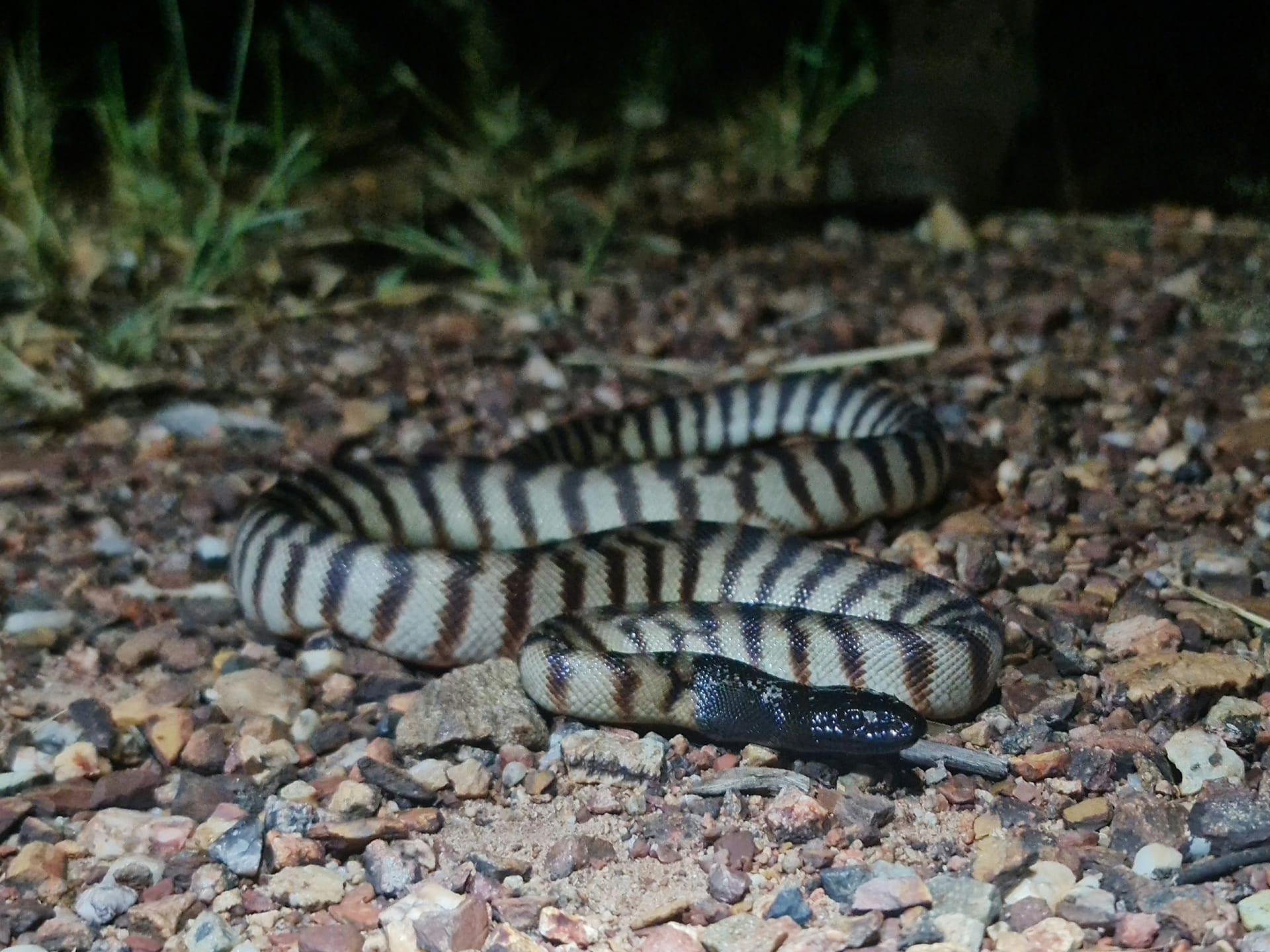
 © Max Tibby / CC0
Black-Headed Python
The Black-Headed Python gets its name from the glossy, jet-black head that extends a few centimeters down the neck and throat, creating a striking contrast with its lighter body. Native to Australia, it's an unusual member of the python family that lacks heat-sensing pits, and it favors other reptiles, including snakes, as prey. Many individuals develop a fairly calm demeanor in captivity, making their bold coloring and confident presence part of the appeal. Adults typically reach 1.5 to 2 meters in length, giving keepers a substantial, eye-catching snake to care for.
View Black-Headed Python encyclopedia →0% commission on your first sales!Register by September 30, 2026 and your first 2 sales are commission-free!
Breeder Wanted!
List on BreederDirect and sell directly to customers nationwide!
6 Transparency Promises from Br-Choku
Every Reptiles & Amphibians from verified Breeder breeders includes complete information: morph, genetics, feeding requirements, and temperament details.
- Morph Information
- Actual Photos
- Feeding Information
- Temperament Information
- Genetics Information
- Age (Months)
Browse all 280 breeds
Difficulty Level
Feeding Type
Temperament
No listings match your filters
Adjust your filters, or get notified when new listings arrive.
Getting alerts is free with a member account. When new listings match your saved search, we'll notify you by email and in-app.
Browse other categories
Verified breeders (preview)
Are you raising reptiles & amphibians?
Register as a breeder and connect with buyers directly.
Apply as a breederAbout Black-Headed Python
The Black-Headed Python is an Australian native prized for its glossy black head, unusual pit-less senses, and preference for preying on other reptiles. This intermediate-level species grows to 1.5-2 meters.
7 things to know before welcoming a Black-Headed Python
1Plan for Adult Size
Adults typically reach 1.5 to 2 meters, with some individuals reported up to 3.5 meters. Set up a spacious enclosure with room for a proper thermal gradient before bringing one home.
2Never House With Other Snakes
Black-Headed Pythons naturally prey on other reptiles, including snakes, so cohabitation carries a real risk. Keep them housed individually to avoid injury or cannibalism.
3No Heat-Sensing Pits
Unlike most pythons, this species lacks heat-sensing pit organs. It relies more on sight and smell to locate prey, so feeding responses can look different from other python species.
4Australian-Style Husbandry
As an Australian native adapted to a drier climate, this python does best with a clear temperature gradient across the enclosure. Let the snake choose its preferred zone rather than keeping the whole space at one temperature.
5Temperament Varies by Individual
Many individuals settle into a fairly calm temperament, but personality varies snake to snake. Give a new arrival time to acclimate, then introduce handling gradually and at its own pace.
6A 20-30 Year Commitment
In captivity, this species can live 20 to 30 years, far longer than most household pets. Consider how future life changes, like moving or shifting routines, might affect long-term care before bringing one home.
7Watch for Health Changes
As an intermediate-level species, catching issues like appetite loss or incomplete sheds early depends on regular observation. If something seems off, consult a reptile-experienced veterinarian rather than guessing at a fix.
Frequently asked questions about Black-Headed Python
- Q.How big does a Black-Headed Python get?
- A.Adults typically reach 1.5 to 2 meters in length, with some individuals recorded up to 3.5 meters. Captive-bred snakes most often settle in the 1.8 to 2.4 meter range.
- Q.Is this a good snake for beginners?
- A.This species is generally considered suited to keepers with some prior experience rather than absolute beginners. It helps to have the basics of temperature management and feeding decisions down before taking one on.
- Q.What does a Black-Headed Python eat?
- A.In the wild, its diet centers on other reptiles, including snakes, which sets it apart from most pythons. For captive feeding specifics, it's worth checking with an experienced keeper or specialty retailer.
- Q.How long does a Black-Headed Python live?
- A.In captivity, this species can live 20 to 30 years, so it's a genuinely long-term commitment. Think through how your lifestyle might change over that span before bringing one home.
- Q.Is this species covered by CITES?
- A.The Black-Headed Python is not subject to CITES.
Useful tools for Black-Headed Python care
Learn more about Black-Headed Python in the encyclopedia
View Black-Headed Python encyclopedia entry →
Care difficulty, lifespan, size and diet — all basics covered.
More in this category
Can't find the one you're looking for?
Post your wishes for free and breeders with matching animals will contact you with introductions.