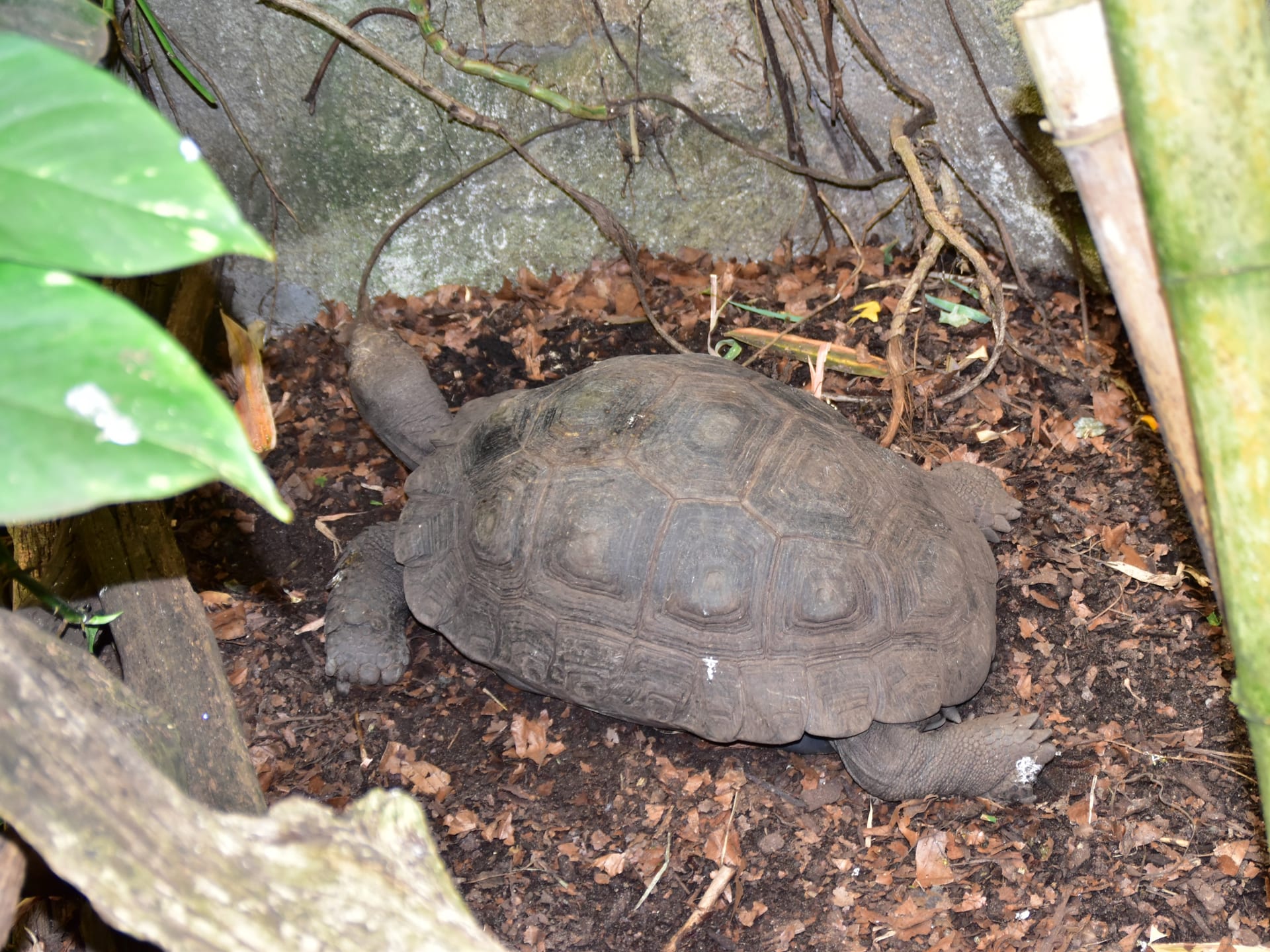
 © NasserHalaweh / CC BY-SA 4.0
Asian Forest Tortoise
The Asian Forest Tortoise is one of the largest tortoises native to Eurasia, with a shell that can reach up to 60cm in length. Its name comes from the prominent spur-like scales between the hind legs and tail, which can look like a sixth limb. Many individuals are calm and composed, rewarding keepers who enjoy building a long-term relationship with their animal, but their eventual size means a spacious enclosure and serious long-term planning are essential. Longevity is remarkable too — the longest documented captive record is 20 years, with some suggesting they may live well beyond that — making this a true lifetime companion suited to experienced keepers.
View Asian Forest Tortoise encyclopedia →0% commission on your first sales!Register by September 30, 2026 and your first 2 sales are commission-free!
Breeder Wanted!
List on BreederDirect and sell directly to customers nationwide!
6 Transparency Promises from Br-Choku
Every Reptiles & Amphibians from verified Breeder breeders includes complete information: morph, genetics, feeding requirements, and temperament details.
- Morph Information
- Actual Photos
- Feeding Information
- Temperament Information
- Genetics Information
- Age (Months)
Browse all 280 breeds
Difficulty Level
Feeding Type
Temperament
No listings match your filters
Adjust your filters, or get notified when new listings arrive.
Getting alerts is free with a member account. When new listings match your saved search, we'll notify you by email and in-app.
Browse other categories
Verified breeders (preview)
Are you raising reptiles & amphibians?
Register as a breeder and connect with buyers directly.
Apply as a breederAsian Forest Tortoise key facts
- Care level
- Advanced
- Lifespan
- Maximum recorded longevity in captivity is 20 years, though animals may well live over 60
- Size
- Carapace up to 60cm
- Temperature
- Humidity
- Diet
- Leafy greens, fruit, mushrooms, grasses and tortoise diet
- Temperature & Humidity
- Set a basking lamp at one end of the enclosure to give a hot spot of about 29 C and keep the cool end around 21 C. It lives in humid forest, so aim for about 80 per cent humidity and maintain it with regular misting.
- Enclosure
- It is large and needs space: a subadult of about 30 cm wants an enclosure of at least roughly 1.2 by 1.8 metres, and something like 3.6 by 3.6 metres is much better. Indoors, fit a UVB lamp of around five per cent output.
- Diet & Feeding
- Omnivorous with a strong plant bias: feed leafy greens, fruit, mushrooms and grasses. Captive animals also take prepared tortoise diets.
- Temperament
- Large but comparatively placid. Maintaining humidity is the key to keeping it, and animals decline in dry conditions.
- Notes
- The family Testudinidae was listed on CITES Appendix II in 1977, the current listing effective 2 January 2017. Appendix II species need no individual registration certificate in Japan, and the tortoise is neither a designated dangerous animal nor an invasive alien species.
About Asian Forest Tortoise
Learn about the Asian Forest Tortoise, a large tortoise reaching 60cm in shell length — its traits, temperament, and what to know before bringing one home.
7 things to know before welcoming a Asian Forest Tortoise
1Grows Very Large
Its shell can reach up to 60cm, making it one of the largest tortoises native to Eurasia. Plan your enclosure around the space needed at full adult size, not just the size the tortoise arrives at.
2An Exceptionally Long Lifespan
The longest documented captive record is 20 years, and some suggest the species may live well beyond that. Bringing one home is a commitment that can span decades, so consider how your own future circumstances might change.
3Recommended for Experienced Keepers
This species is considered suitable for experienced keepers. Maintaining proper temperature and humidity along with a spacious setup requires a higher level of care, so prior tortoise-keeping experience is recommended before bringing one home.
4The Scales Behind Its Name
Prominent spur-like scales between the hind legs and tail can resemble a sixth limb, which is said to be the origin of its Japanese name (meaning "six legs"). It's a distinctive feature to look for when observing your tortoise.
5Providing Ample Space
Given the adult size, an enclosure with ample floor space is needed even for indoor keeping. It helps to plan a step-by-step expansion of the enclosure as the tortoise grows.
6Temperature and Humidity Setup
As a forest-dwelling tortoise, it is sensitive to dryness and needs an environment that maintains consistent humidity. Set up a temperature gradient and humidity-control equipment before your tortoise arrives.
7Research Before You Commit
Given its large adult size, long lifespan, and higher care requirements, it's important to thoroughly research the enclosure setup and daily care involved before bringing one home, and to consider carefully whether you can sustain it long-term.
Frequently asked questions about Asian Forest Tortoise
- Q.Can beginners keep an Asian Forest Tortoise?
- A.This species is generally considered suitable for experienced keepers. It requires solid knowledge of temperature and humidity management as well as preparation for its eventual large size, so prior tortoise-keeping experience is recommended.
- Q.How large does it eventually grow?
- A.Its shell can reach up to 60cm in length, making it one of the largest tortoises native to Eurasia. It's important to plan your enclosure around the space it will need once fully grown.
- Q.How long can I expect to live with one?
- A.The longest documented captive record is 20 years, with some suggesting the species may live even longer. Consider that this is likely to be a very long-term companion before bringing one home.
- Q.What does the name "Mutsuashi" (six legs) refer to?
- A.It refers to the prominent spur-like scales between the hind legs and tail, which can resemble a sixth limb. The tortoise actually has four legs — the name describes this distinctive scale feature rather than an extra limb.
- Q.Are there legal regulations for keeping an Asian Forest Tortoise?
- A.Asian Forest Tortoise is listed in CITES Appendix II. International trade requires a permit from the exporting country, but as far as CITES is concerned, no registration is needed to buy or sell individuals already legally in Japan.
Useful tools for Asian Forest Tortoise care
Learn more about Asian Forest Tortoise in the encyclopedia
View Asian Forest Tortoise encyclopedia entry →
Care difficulty, lifespan, size and diet — all basics covered.
More in this category
Can't find the one you're looking for?
Post your wishes for free and breeders with matching animals will contact you with introductions.