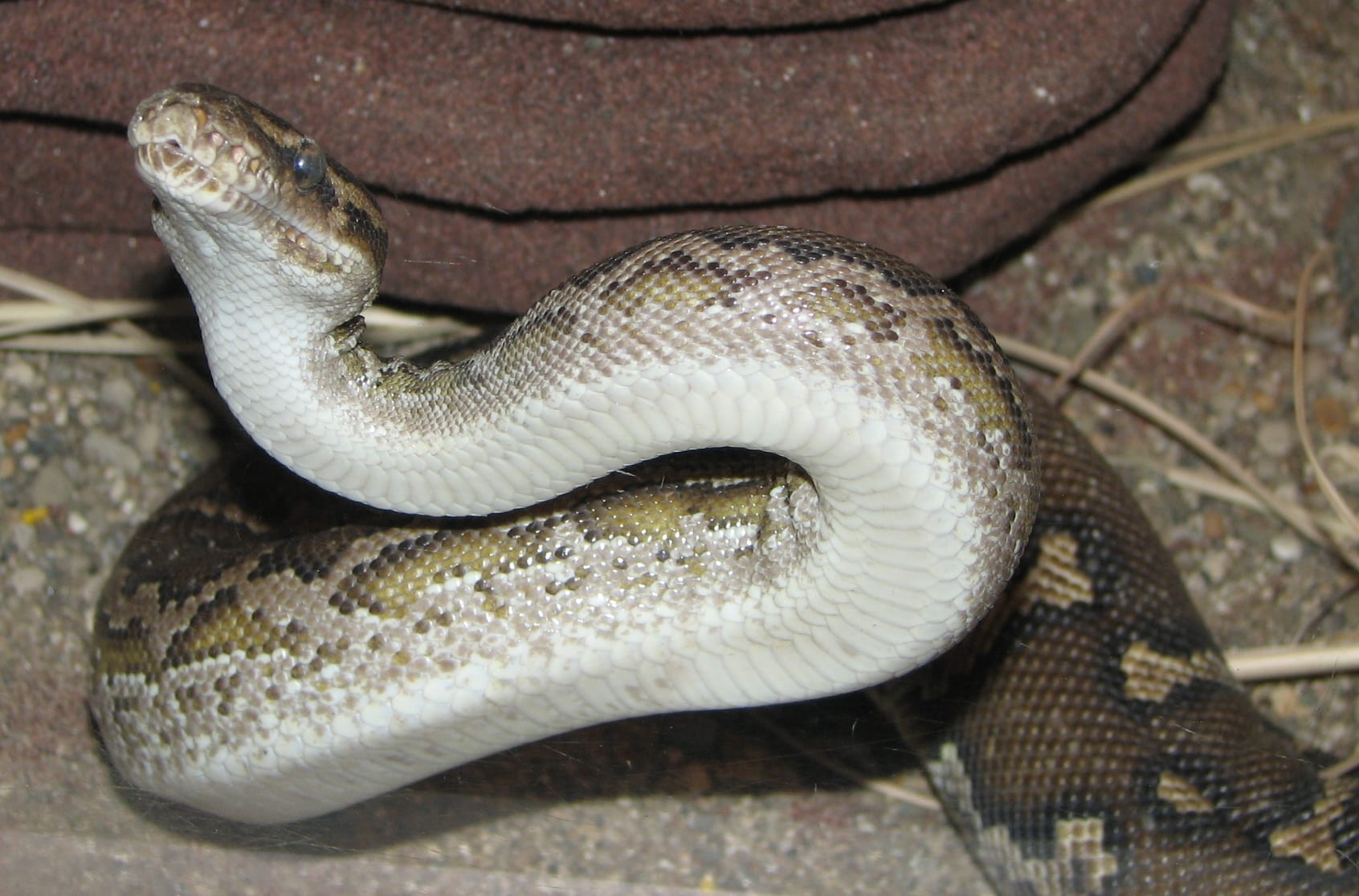
 © Ltshears / Public domain
Angolan Python
The Angolan python is a small python species native to the rocky terrain of southern Angola and northern Namibia. Its body ranges from reddish-brown to near-black, patterned with white bands and blotches, and it's the only python known for the raised, bead-like scales covering its head — a texture unlike any other python. Reaching just 120 to 180 cm as an adult, it stays a manageable size while still carrying a distinctive, sculptural look. Naturally secretive and fond of tucking into hides, it has become a popular pick for keepers looking to step up from more common python species.
View Angolan Python encyclopedia →0% commission on your first sales!Register by September 30, 2026 and your first 2 sales are commission-free!
Breeder Wanted!
List on BreederDirect and sell directly to customers nationwide!
6 Transparency Promises from Br-Choku
Every Reptiles & Amphibians from verified Breeder breeders includes complete information: morph, genetics, feeding requirements, and temperament details.
- Morph Information
- Actual Photos
- Feeding Information
- Temperament Information
- Genetics Information
- Age (Months)
Browse all 280 breeds
Difficulty Level
Feeding Type
Temperament
No listings match your filters
Adjust your filters, or get notified when new listings arrive.
Getting alerts is free with a member account. When new listings match your saved search, we'll notify you by email and in-app.
Browse other categories
Verified breeders (preview)
Are you raising reptiles & amphibians?
Register as a breeder and connect with buyers directly.
Apply as a breederAngolan Python key facts
- Care level
- Intermediate
- Lifespan
- 20-25 years
- Size
- 120-180cm
- Temperature
- 26〜27℃
- Diet
- Mice and rats, frozen-thawed or freshly killed
- Temperature & Humidity
- Hold the ambient temperature at 26-27 C with a hot spot at one end no warmer than 32 C. Maintain this year round with no night-time drop. It is an arid-land species, so keep the substrate dry.
- Enclosure
- House singly in at least 60 x 60 x 60 cm. Provide 10-13 cm of dry absorbent bedding such as aspen shavings so it can burrow. It is small but powerful, so anchor rocks and furnishings. Always provide a water bowl big enough to soak in.
- Diet & Feeding
- Feed frozen-thawed mice or rats. A couple of mice every ten days suits adults, and one small weaned mouse a week suits juveniles. It puts on fat easily, so do not overfeed. Never leave live prey unattended.
- Temperament
- Shy and fond of hiding, its threat display is mostly bluffing hisses. It is nocturnal and hunts from ambush using the heat pits on its upper lips.
- Notes
- It is a pythonid and therefore on CITES Appendix II. Japan's list of designated dangerous animals names only five pythons (amethystine, Australian scrub, Indian, reticulated and African rock), and this species is not among them.
About Angolan Python
A small python from the rocky terrain of southern Angola and northern Namibia, known for its bead-like head scales and reddish-brown to near-black coloring with white markings. Adults reach 120–180 cm; suited to intermediate keepers.
7 things to know before welcoming a Angolan Python
1Recreate its rocky habitat
Coming from rocky, semi-arid terrain, Angolan pythons settle in best with a cage layout that includes rock formations, cork bark, and multiple hides to climb into and burrow under. Keep the substrate on the dry side overall, with a slightly more humid microclimate near the hide.
2A shy, secretive temperament
This species tends to stay hidden for long stretches and rarely comes out on display. Rather than forcing frequent handling, let the snake set the pace and build trust gradually over time.
3A manageable adult size
Adults typically reach only about 120 to 180 cm, a relatively compact size for a python. This makes enclosure planning and space requirements more manageable than with larger python species.
4Distinctive bead-like head scales
The most striking feature is the raised, bead-like texture of the head scales, unlike anything seen in other python species. Make it a habit to check this scale texture and shedding progress during routine observation.
5Feed at a pace that suits the individual
Feeding size and frequency should be adjusted to each individual's body condition. If a snake refuses food, start by reviewing enclosure conditions such as temperature, humidity, and hide placement.
6Why it suits intermediate keepers
Because it requires replicating a specialized rocky habitat and calls for patience with a shy temperament, this species is generally considered better suited to keepers with some prior reptile experience than to absolute beginners.
7Think long term before bringing one home
Pythons as a group tend to be long-lived reptiles. Before bringing one home, think beyond the present and consider whether you can commit the space and time needed for years of care ahead.
Frequently asked questions about Angolan Python
- Q.Can beginners keep an Angolan python?
- A.This species is generally recommended for keepers with some prior reptile experience, as it's classified as suited to intermediate keepers. Replicating its rocky, semi-arid habitat requires different care than typical beginner species.
- Q.How big does an Angolan python get as an adult?
- A.Adults typically reach around 120 to 180 cm in length, which is relatively compact for a python species.
- Q.Is the Angolan python listed under CITES?
- A.Angolan Python is listed in CITES Appendix II. International trade requires a permit from the exporting country, but as far as CITES is concerned, no registration is needed to buy or sell individuals already legally in Japan.
- Q.What is the Angolan python's temperament like?
- A.It tends to be a shy, secretive snake that spends much of its time hidden away rather than out in the open. Handling is best introduced gradually rather than all at once.
- Q.What kind of enclosure setup does it need?
- A.A layout with rock formations and multiple hides that mimics its native rocky terrain works well. Keep the overall environment on the drier side while maintaining a bit more humidity near the hide.
Useful tools for Angolan Python care
Learn more about Angolan Python in the encyclopedia
View Angolan Python encyclopedia entry →
Care difficulty, lifespan, size and diet — all basics covered.
More in this category
Can't find the one you're looking for?
Post your wishes for free and breeders with matching animals will contact you with introductions.