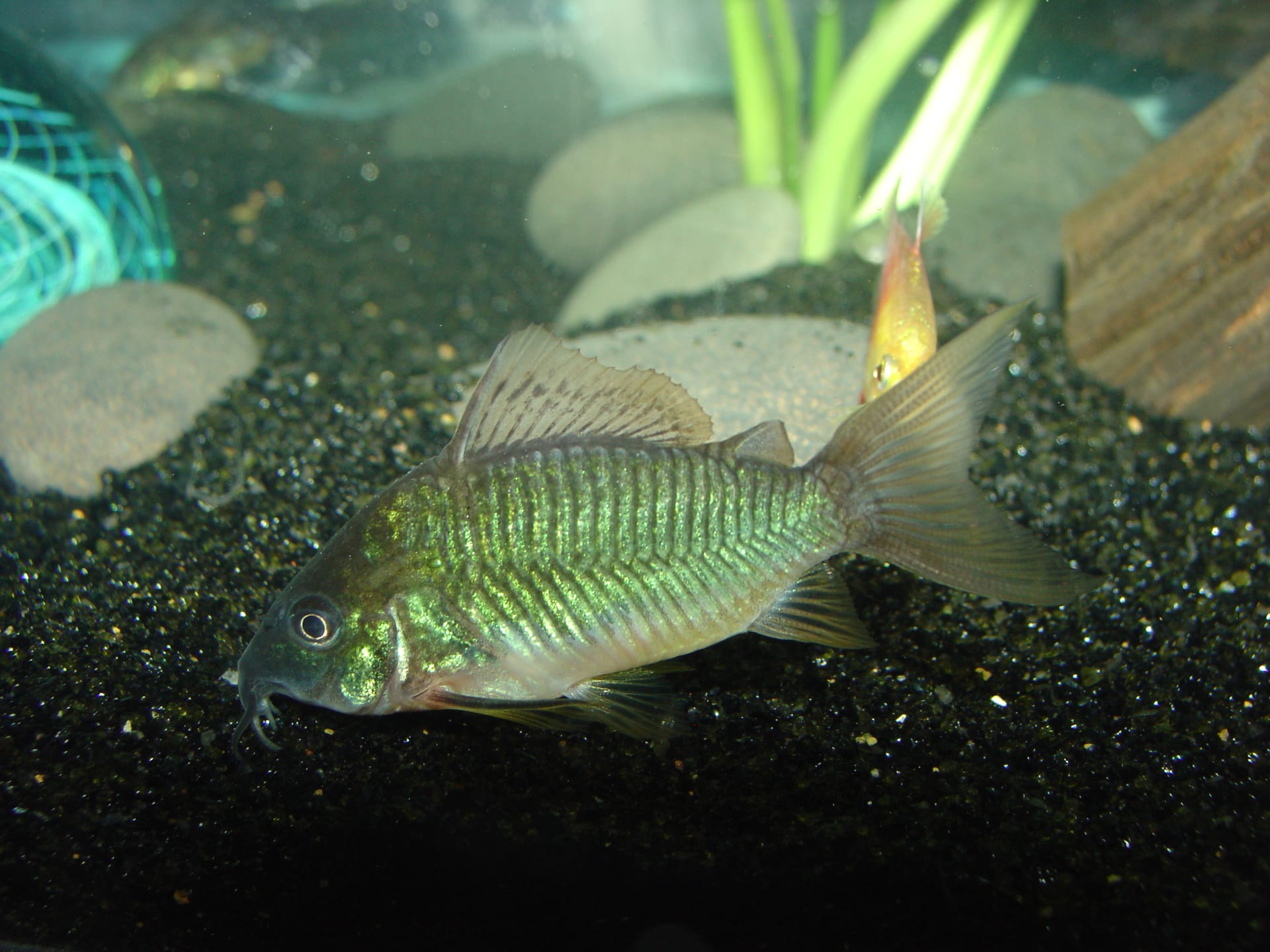
 © NonstickRon / CC BY-SA 2.0
Emerald Catfish
The Emerald Catfish (Brochis) is a striking tropical fish prized for its tall, rounded body and metallic emerald-green sheen that shifts with the light. Though often grouped with corydoras, it's technically set apart by having more dorsal fin rays than true Corydoras species. Calm and easygoing by nature, it's a schooling fish that settles in nicely when kept in a small group rather than alone. Hardy and forgiving, it suits first-time keepers well, but since adults grow into a substantial, deep-bodied fish, they appreciate a tank with generous floor space.
View Emerald Catfish encyclopedia →Breeder Wanted!
List on BreederDirect and sell directly to customers nationwide!
BreederDirect's 6 Transparency Commitments
All Tropical Fish listings include water quality, temperament, and tank size information from verified Breeder.
- Origin Disclosed
- Real Photos
- Water Quality Disclosed
- Recommended Tank Size
- Temperament Disclosed
- Breed Line Disclosed
Browse all 341 breeds
Water Type
Care Level
No listings match your filters
Adjust your filters, or get notified when new listings arrive.
Getting alerts is free with a member account. When new listings match your saved search, we'll notify you by email and in-app.
Browse other categories
Verified breeders (preview)
Are you raising tropical fish?
Register as a breeder and connect with buyers directly.
Apply as a breederEmerald Catfish key facts
- Care level
- Beginner-friendly
- Lifespan
- 5-7 years
- Size
- 8-10cm
- Temperature
- 20〜28℃
- Diet
- Sinking dried foods, frozen bloodworm, Tubifex
- Tank
- A 120 x 45cm base of about 243 litres is the minimum. It is large and active, so prioritise floor area over volume.
- Water Temperature & Quality
- 20-28C, pH 5.0-8.0 and 2-15dGH. Tolerance is broad but it suffers in low oxygen and high nitrate.
- Tank Mates
- Peaceful and gregarious; keep six to eight or more. It suits community tanks of similarly sized peaceful fish.
- Diet & Feeding
- A foraging omnivore. Base the diet on sinking dried food with frozen bloodworm and Tubifex; its size means larger rations.
- Breeding & Spawning
- Eggs are laid close to the water surface and are easy to move elsewhere for rearing.
- Health & Notes
- It surfaces regularly to gulp air for intestinal respiration, so never block its route to the surface. IUCN status is Least Concern.
About Emerald Catfish
A tall-bodied Corydoras relative with a striking metallic emerald-green sheen. Hardy and beginner-friendly, though its adult size calls for a tank with generous floor space.
7 things to know before welcoming a Emerald Catfish
1Give It Floor Space
Because this fish grows large and deep-bodied, it needs a tank with plenty of floor space to turn around comfortably. Like other corydoras relatives, prioritize footprint over swimming height when choosing a tank.
2Best Kept in Groups
This is a schooling fish that tends to settle down and behave more naturally when kept with others of its kind. It won't necessarily struggle if kept alone, but a group of three or more lets you see its calmer, more natural behavior.
3Calm, Community-Friendly
Its temperament is gentle, and it rarely bothers other fish. It pairs well with similarly sized, peaceful tropical fish and is a popular choice for the bottom layer of a community tank.
4Hardy and Beginner-Friendly
This species is considered beginner-friendly and tolerates some fluctuation in water conditions. That said, its hardiness shouldn't be an excuse to skip basic care like regular water changes.
5Choose a Soft Substrate
It forages along the substrate using its barbels to find food, so sharp gravel should be avoided. A fine, rounded sand substrate helps protect its barbels and belly from irritation.
6Avoid Sudden Water Changes
Despite being hardy, it can be sensitive to sudden shifts in temperature or water chemistry. Match the water temperature and change water gradually, in small amounts, to keep it stress-free.
7Plan for Adult Size
Adults reach about 8 to 10 cm in length and become noticeably deeper-bodied as they mature. When bringing one home, plan ahead for a tank sized to fit its adult proportions, not just its size as a juvenile.
Frequently asked questions about Emerald Catfish
- Q.How is Brochis different from Corydoras?
- A.It looks very similar to true Corydoras and is often grouped with them, but it's classified separately as Brochis because it has more dorsal fin rays. In terms of care, it's kept much the same way as common Corydoras species.
- Q.Is this a good fish for a first tropical tank?
- A.Yes — it's considered a beginner-friendly species thanks to its hardy, easygoing nature. Just keep in mind that adults grow into a fairly deep-bodied fish, so give the tank plenty of floor space as it matures.
- Q.Can I keep just one on its own?
- A.A single fish can be kept, but this species naturally lives in groups. Keeping several together lets it display calmer, more natural schooling behavior.
- Q.Does it get along with other fish?
- A.Yes, its temperament is calm and it rarely bothers tankmates. It mixes well with other peaceful, similarly sized tropical fish and works nicely as a bottom-dwelling addition to a community tank.
- Q.Does the emerald sheen vary between individuals?
- A.The intensity and tone of the green sheen can vary somewhat depending on lighting, the individual fish, and its condition. A vibrant sheen is often a good sign of a healthy fish, so it's worth watching for changes over time.
Useful tools for Emerald Catfish care
Learn more about Emerald Catfish in the encyclopedia
View Emerald Catfish encyclopedia entry →
Care difficulty, lifespan, size and diet — all basics covered.
More in this category
Can't find the one you're looking for?
Post your wishes for free and breeders with matching animals will contact you with introductions.