 © Whaldener Endo / CC0
Banded Leporinus
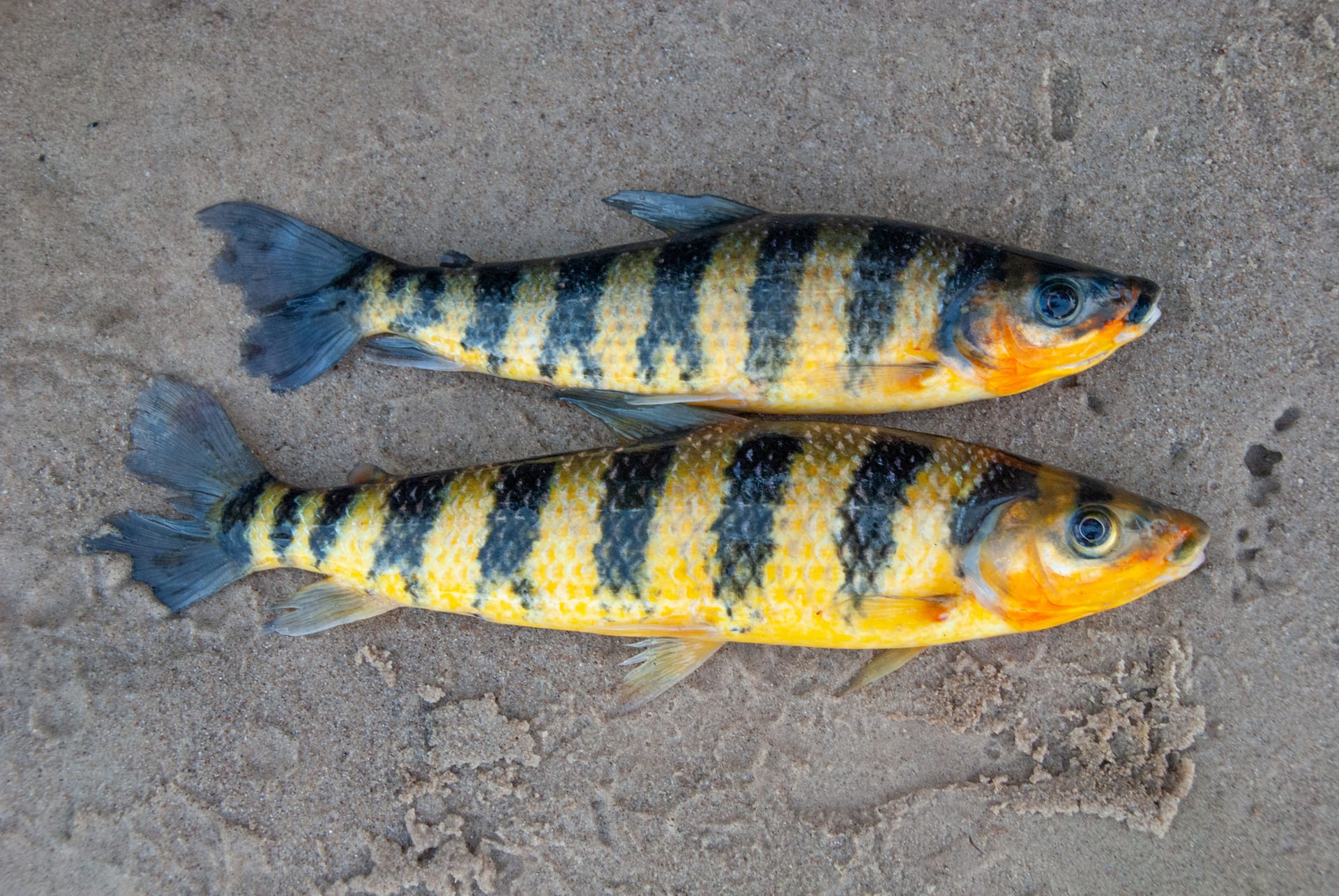
The Banded Leporinus is a striking large characin, its yellow body marked with bold black bands. Charming as juveniles, they grow into a much larger fish reaching roughly 27 to 37 cm, with powerful swimming ability to match. As omnivores with a taste for plant matter, they may nibble at live plants in the aquarium. Their assertive temperament also calls for careful thought about tankmates and layout. Because of their eventual size, activity level, and need for consistently good water quality, this is a species best suited to experienced keepers with a spacious tank.
View Banded Leporinus encyclopedia →0% commission on your first sales!Register by September 30, 2026 and your first 2 sales are commission-free!
Breeder Wanted!
List on BreederDirect and sell directly to customers nationwide!
BreederDirect's 6 Transparency Commitments
All Tropical Fish listings include water quality, temperament, and tank size information from verified Breeder.
- Origin Disclosed
- Real Photos
- Water Quality Disclosed
- Recommended Tank Size
- Temperament Disclosed
- Breed Line Disclosed
Browse all 341 breeds
Water Type
Care Level
No listings match your filters
Adjust your filters, or get notified when new listings arrive.
Getting alerts is free with a member account. When new listings match your saved search, we'll notify you by email and in-app.
Browse other categories
Verified breeders (preview)
Are you raising tropical fish?
Register as a breeder and connect with buyers directly.
Apply as a breederBanded Leporinus key facts
- Care level
- Advanced
- Lifespan
- 5-10 years
- Size
- About 27-37cm
- Temperature
- 20〜28℃
- Diet
- Prepared foods including vegetable and algal content, plus frozen fare (avoid a high-protein diet)
- Tank
- Seriously Fish suggests a base of at least 210 by 60cm, about 378 litres at 30cm depth. Given enough space and oxygenation, decor hardly matters and maintenance is straightforward. For a natural look, use a sandy substrate with leaf litter plus large driftwood branches and roots.
- Water Temperature & Quality
- Seriously Fish gives 20-28C, pH 5.0-7.5 and 1-15 dGH; FishBase gives 22-26C, pH 5.5-7.5 and 2-20 dH. Water quality is of the first importance, and the fish should never be introduced to a biologically immature aquarium.
- Tank Mates
- It is territorial, and Seriously Fish treats a single specimen as the default while noting that groups of six or more can be held in a large enough tank. Any community should be built of peaceful medium to large fishes: larger characids, loricariids, doradids and peaceful cichlids, rheophilic species in particular. Much smaller tank mates are likely to be eaten.
- Diet & Feeding
- Leporinus species are predominantly benthic omnivores in the wild, feeding on algae, invertebrates and organic detritus. In the aquarium the fish is unfussy and takes most things, but foods high in protein are best avoided; build the diet around prepared foods with vegetable and algal content.
- Breeding & Spawning
- FishBase records that it is oviparous and that distinct pairs breed in densely vegetated places.
- Health & Notes
- FishBase lists it as IUCN Least Concern, not on the CITES appendices and harmless to people. The real problem is that juveniles are sold without any account of the fish they become. It reaches around 30cm and swims hard, so settle the tank's length, width and filtration before taking one on, and never release or abandon a fish you can no longer keep.
About Banded Leporinus
The Banded Leporinus is a large characin with bold black bands on a yellow body. Growing to roughly 27-37 cm with strong swimming power, it needs a spacious tank and stable water quality, best suited to experienced aquarists.
7 things to know before welcoming a Banded Leporinus
1Needs a Large Tank as an Adult
Banded Leporinus grow to roughly 27-37 cm as adults and are powerful swimmers. Plan for their eventual size and set up a spacious tank before bringing one home.
2Juveniles Look Very Different From Adults
Juveniles are small and endearing, but both their length and body depth increase substantially as they mature. Don't size your tank based on their cute juvenile appearance alone.
3Watch for an Assertive Temperament
They tend to be territorial and can have an assertive temperament. If keeping them with other fish, carefully match size and personality, and provide hiding spots in the layout.
4Omnivorous, With a Taste for Plants
They are omnivores that readily eat plant matter as well as animal-based foods. If you plan to plant live plants, expect that they may get nibbled on or eaten.
5Stable Water Quality Is Essential
As a large fish, they produce a lot of waste and water quality can decline quickly. Use ample filtration capacity and regular water changes to maintain consistently good, well-established conditions.
6Give Them Room to Swim
They are strong, active swimmers. Choose a tank with generous length and width so they have plenty of open space to move around freely.
7Best Suited to Experienced Keepers
Given their size, swimming power, and water quality demands, this species is considered suitable for experienced keepers. It's best suited to those with prior large-fish experience and a long-term care plan.
Frequently asked questions about Banded Leporinus
- Q.Is this fish suitable for beginners?
- A.The Banded Leporinus is generally considered suitable for experienced aquarists rather than beginners. Its eventual size and demanding water quality needs call for prior experience keeping large fish.
- Q.How big a tank do I need?
- A.Adults reach roughly 27 to 37 cm and are strong swimmers, so a spacious, large-capacity tank is required. Set this up in advance with their eventual size in mind.
- Q.Can it be kept with other fish?
- A.Many individuals have an assertive, territorial temperament, so tankmates need careful consideration. Check size and personality compatibility, and provide hiding spots in the layout.
- Q.What does it eat?
- A.It's an omnivore that eats both animal and plant matter. Since it may nibble on live plants, choose a layout with planting that can tolerate some grazing.
- Q.Is this species regulated under CITES?
- A.The Banded Leporinus is not listed under CITES.
Useful tools for Banded Leporinus care
Learn more about Banded Leporinus in the encyclopedia
View Banded Leporinus encyclopedia entry →
Care difficulty, lifespan, size and diet — all basics covered.
More in this category
Can't find the one you're looking for?
Post your wishes for free and breeders with matching animals will contact you with introductions.