Source: Wikimedia Commons
Banded Leporinus
AdvancedLeporinus fasciatus
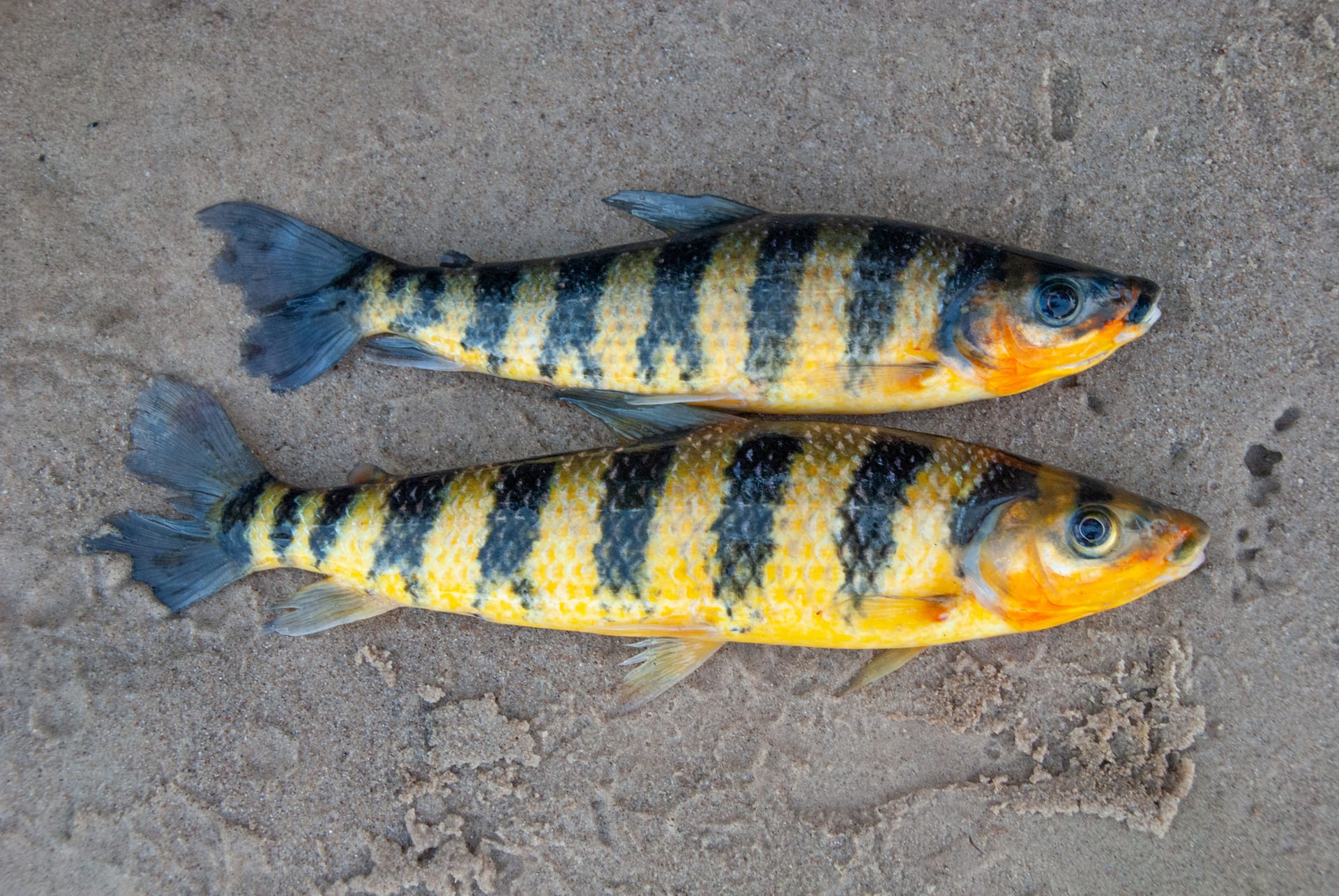
A large characin, yellow with bold black bands. Appealing as a juvenile, it grows to around 30cm and swims powerfully, so it needs a very large tank and water of good quality.
Difficulty
Advanced
Temperature
20〜28℃
Lifespan
5-10 years
Size
About 27-37cm
Diet
Prepared foods including vegetable and algal content, plus frozen fare (avoid a high-protein diet)
About
Leporinus fasciatus is a large characin found widely through the Amazon and Orinoco systems and their major tributaries. FishBase gives 37.0cm TL, pH 5.5-7.5, 2-20 dH and 22-26C, and places adults in rocky stretches of fast water, while Seriously Fish gives 27.0cm SL, 20-28C, pH 5.0-7.5, 1-15 dGH and a base of at least 210 by 60cm. Bold black bands on a yellow body distinguish it, though across so wide a range both form and, especially, colour vary by locality. It is a habitat generalist, taken from main channels, smaller tributaries, oxbows and floodplain lakes alike. Juveniles are often sold with no warning of the size or the housing they will need, which is why the species turns up so regularly in public aquarium displays. Water quality matters above all, and it should never be introduced to a biologically immature tank.
Source: Wikipedia (CC BY-SA 4.0)
Lifespan of the Banded Leporinus
The Banded Leporinus lives 5-10 years.
Size of the Banded Leporinus
The Banded Leporinus grows to About 27-37cm.
Temperature & humidity for the Banded Leporinus
The ideal temperature for the Banded Leporinus is 20〜28℃.
Basic Info
Origin
South America (the Amazon and Orinoco systems and their major tributaries, in Brazil and beyond)
Lifespan
5-10 years
Care Specifications
- pH
- 5–7.5
- Hardness (GH)
- 1–15 dGH
- Water Temp.
- 20–28℃
- Min. Tank
- 378 L
Semi-aggressiveSolitary
Sources: Seriously Fish / FishBase
References & Sources
Edited & verified by: BreederDirect editorial team
The taxonomic, regulatory, and husbandry data on this page are compiled and verified against the authoritative primary sources below.
Taxonomy & Authority
Regulations & Conservation Status
Not CITES-listedIUCN LC · Least Concern
Sources: CITES Appendices (species not listed) / IUCN Red List
Regulations may change. Always verify the latest information with the relevant authorities.
Banded Leporinus Listings
Loading latest listingsFind listings for this species