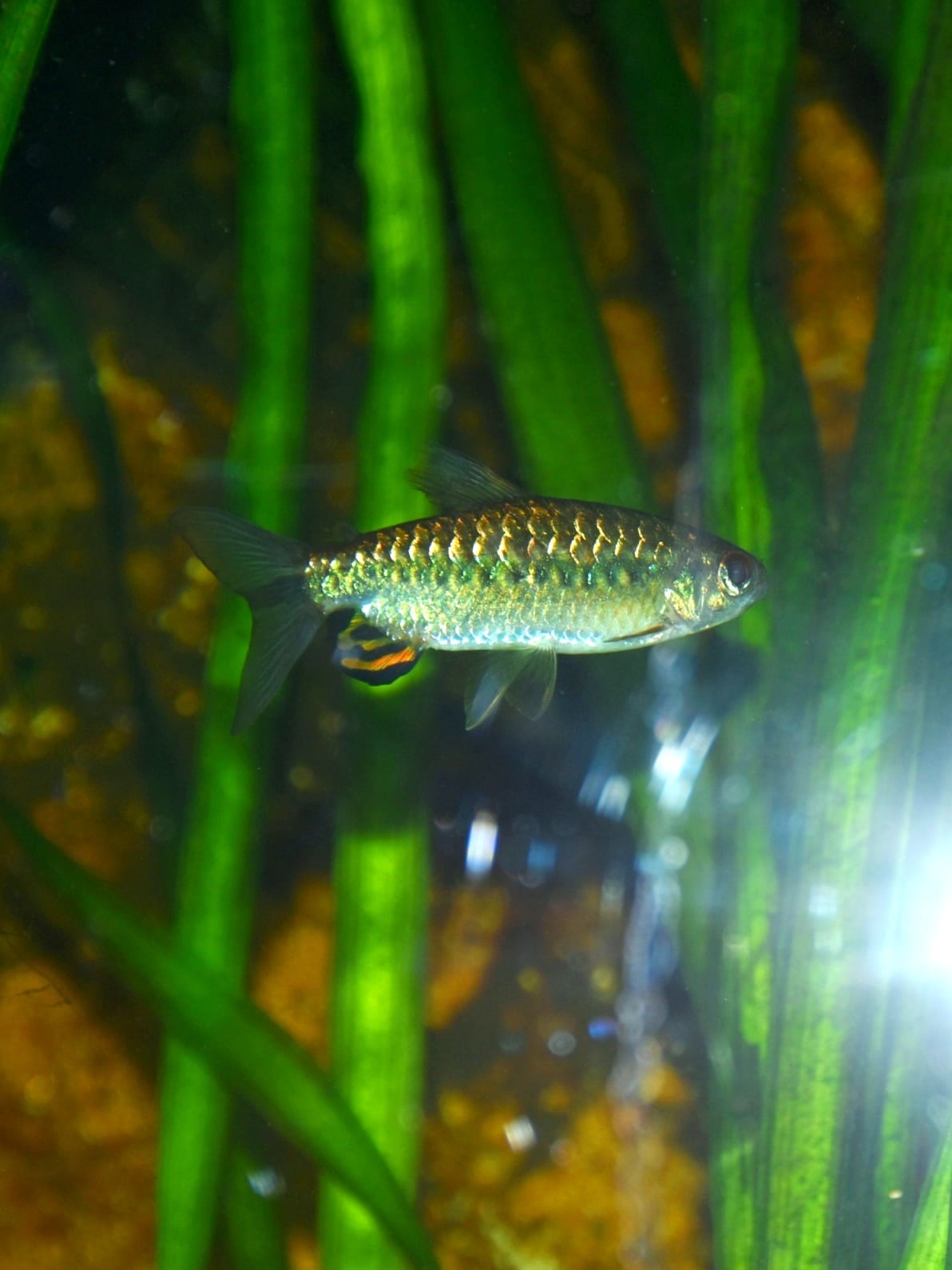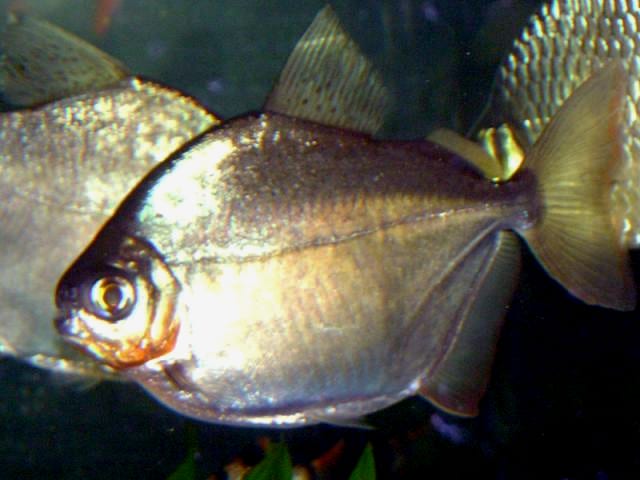
Source: Wikimedia Commons
Silver Dollar
AdvancedMetynnis argenteus
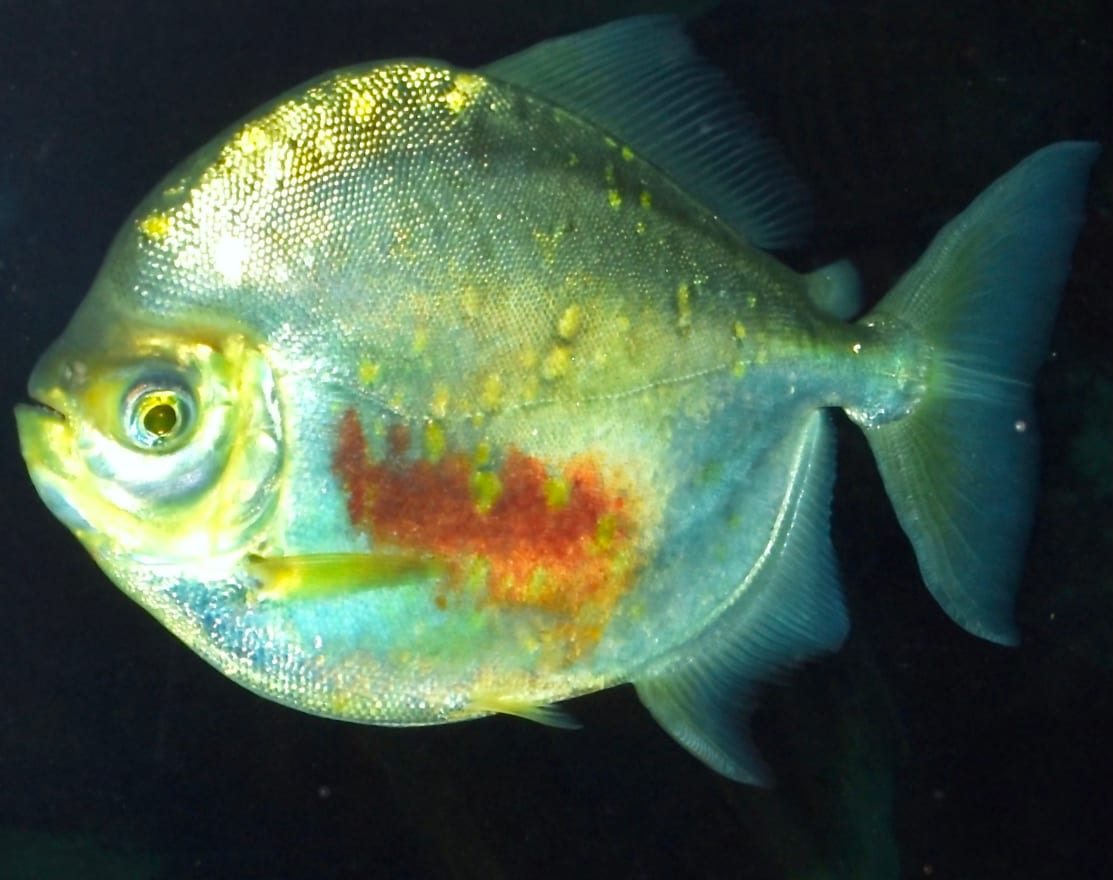
A large characin shaped like a silver disc. It reaches nearly 15cm and needs a long tank, and its appetite for plants makes it hard to combine with a planted aquarium.
Difficulty
Advanced
Temperature
24〜28℃
Lifespan
6-10 years
Size
About 14-15cm
Diet
Chiefly plant matter (courgette, cucumber, peas, greens, vegetable flake) with frozen bloodworm and brine shrimp
About
Metynnis argenteus is a large characin of the Tapajos basin in Brazil. FishBase gives 14.0cm SL, pH 5.0-7.0, hardness to 15 dH and 24-28C, and places it in weedy side arms of the river, while Seriously Fish gives 15.0cm SL, 24-28C, pH 6.0-7.0, 0-10 dGH and a base of at least 180 by 38cm, noting that length and width matter more than height. The name comes from the silver, disc-shaped body. The congeneric M. hypsauchen is sold under the same name and is near enough identical in both looks and care. It lives among dense plants in the wild, yet it is itself an avid plant-eater, which makes that habitat hard to reproduce in a tank: even hardy plants need replacing regularly, and artificial ones are an option. It occupies the middle and upper water.
Source: Wikipedia (CC BY-SA 4.0)
Lifespan of the Silver Dollar
The Silver Dollar lives 6-10 years.
Size of the Silver Dollar
The Silver Dollar grows to About 14-15cm.
Temperature & humidity for the Silver Dollar
The ideal temperature for the Silver Dollar is 24〜28℃.
Basic Info
Origin
South America (the Tapajos river basin in Brazil)
Lifespan
6-10 years
Size
About 14-15cm
Care Specifications
- pH
- 6–7
- Hardness (GH)
- 0–10 dGH
- Water Temp.
- 24–28℃
- Min. Tank
- 205 L
Semi-aggressiveGroupBreeding: Hard
Sources: Seriously Fish / FishBase
References & Sources
Edited & verified by: BreederDirect editorial team
The taxonomic, regulatory, and husbandry data on this page are compiled and verified against the authoritative primary sources below.
Taxonomy & Authority
Regulations & Conservation Status
Not CITES-listedIUCN LC · Least Concern
Sources: CITES Appendices (species not listed) / IUCN Red List
Regulations may change. Always verify the latest information with the relevant authorities.
Silver Dollar Listings
Loading latest listingsFind listings for this species