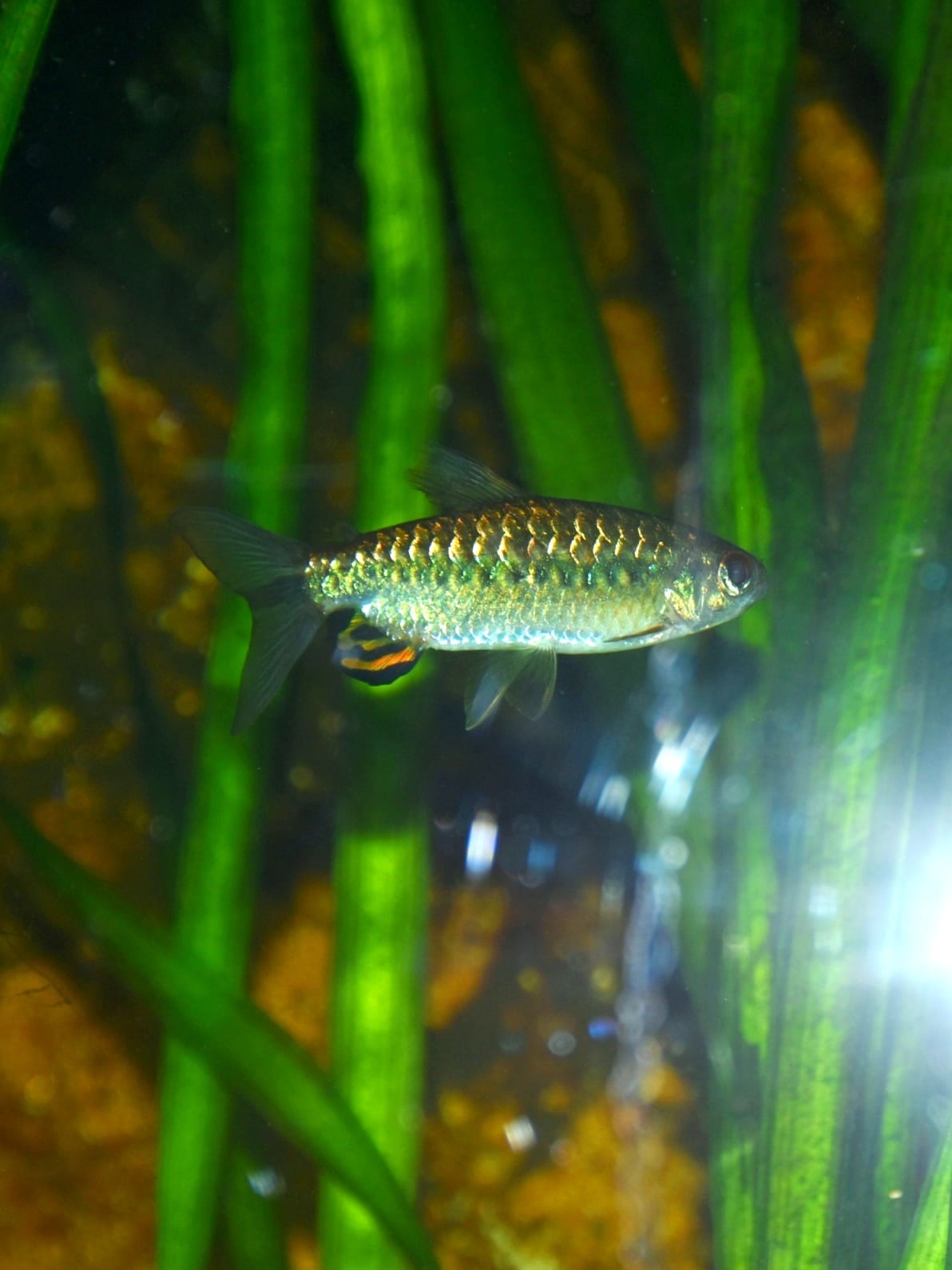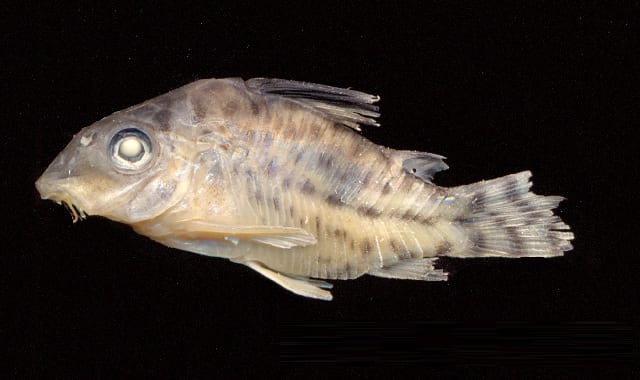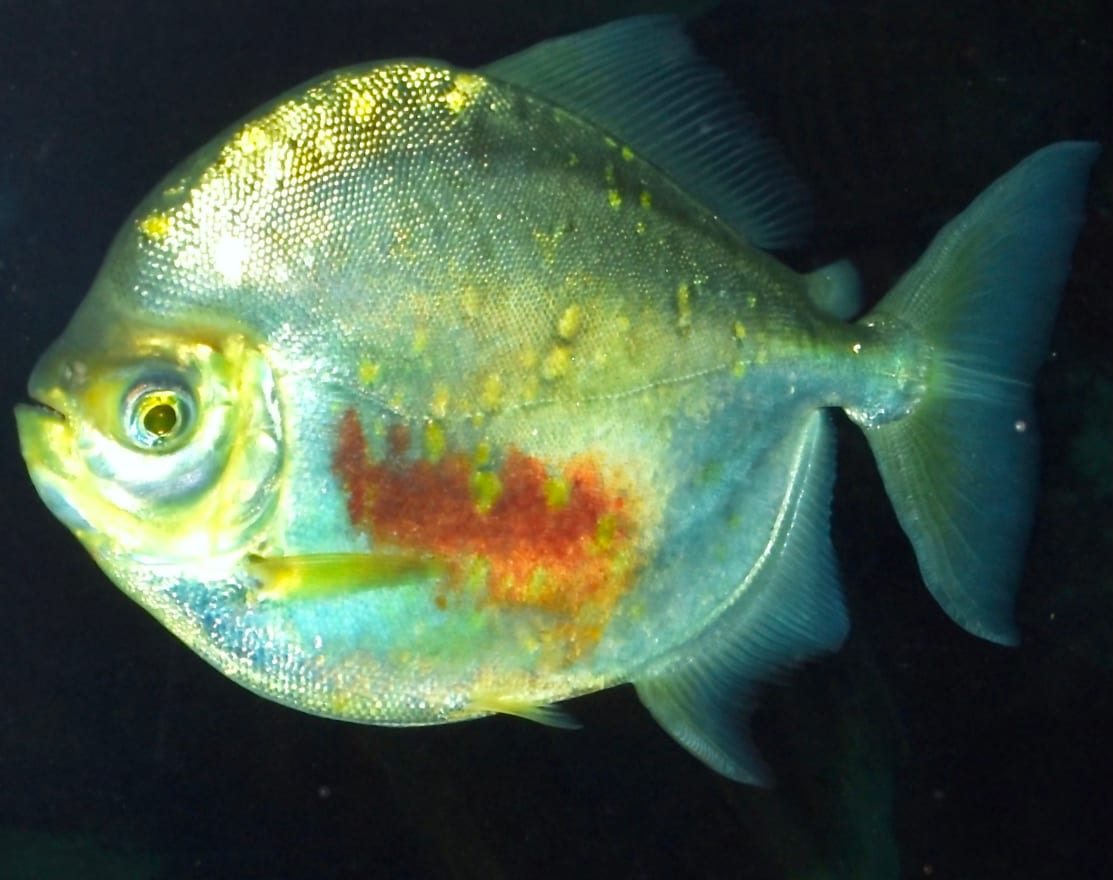
Source: Wikimedia Commons
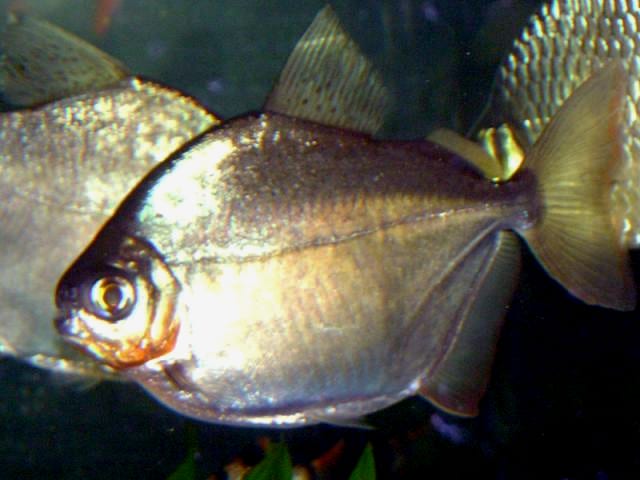
Redhook Myleus
AdvancedMyloplus rubripinnis
A large characin marked by a red, black-trimmed anal fin. It grows far beyond the Metynnis species sold as silver dollars, feeds heavily on plants, and needs a very large tank.
Difficulty
Advanced
Temperature
23〜27℃
Lifespan
5-8 years
Size
About 25-41.5cm
Diet
Chiefly plant matter (courgette, cucumber, peas, greens, vegetable flake) with frozen bloodworm and brine shrimp
About
Myloplus rubripinnis is a large characin found widely through the Amazon and Orinoco basins. FishBase records 41.5cm TL and 2.5kg, gives pH 5.0-7.0, hardness to 15 dH and 23-27C, and describes it as gregarious and non-aggressive, preferring calm stretches of the main rivers where bankside vegetation overhangs the water. Seriously Fish gives 25.0cm SL, 23-27C, pH 6.0-7.0, 0-10 dGH and a base of at least 180 by 38cm. The red, black-trimmed anal fin is what separates it from the Metynnis species sold as silver dollars. In the wild it feeds chiefly on the leaves of submerged, marginal and even terrestrial plants, and it eats aquarium plants just as readily, so a planted display is hard to maintain alongside it. It is sometimes called a difficult fish, but given a large enough tank, the right food and good water it presents few problems.
Source: Wikipedia (CC BY-SA 4.0)
Lifespan of the Redhook Myleus
The Redhook Myleus lives 5-8 years.
Size of the Redhook Myleus
The Redhook Myleus grows to About 25-41.5cm.
Temperature & humidity for the Redhook Myleus
The ideal temperature for the Redhook Myleus is 23〜27℃.
Basic Info
Origin
South America (the Amazon and Orinoco basins)
Lifespan
5-8 years
Care Specifications
- pH
- 6–7
- Hardness (GH)
- 0–10 dGH
- Water Temp.
- 23–27℃
- Min. Tank
- 205 L
Semi-aggressiveGroup
Sources: Seriously Fish / FishBase
References & Sources
Edited & verified by: BreederDirect editorial team
The taxonomic, regulatory, and husbandry data on this page are compiled and verified against the authoritative primary sources below.
Taxonomy & Authority
Regulations & Conservation Status
Not CITES-listedIUCN LC · Least Concern
Sources: CITES Appendices (species not listed) / IUCN Red List
Regulations may change. Always verify the latest information with the relevant authorities.
Redhook Myleus Listings
Loading latest listingsFind listings for this species