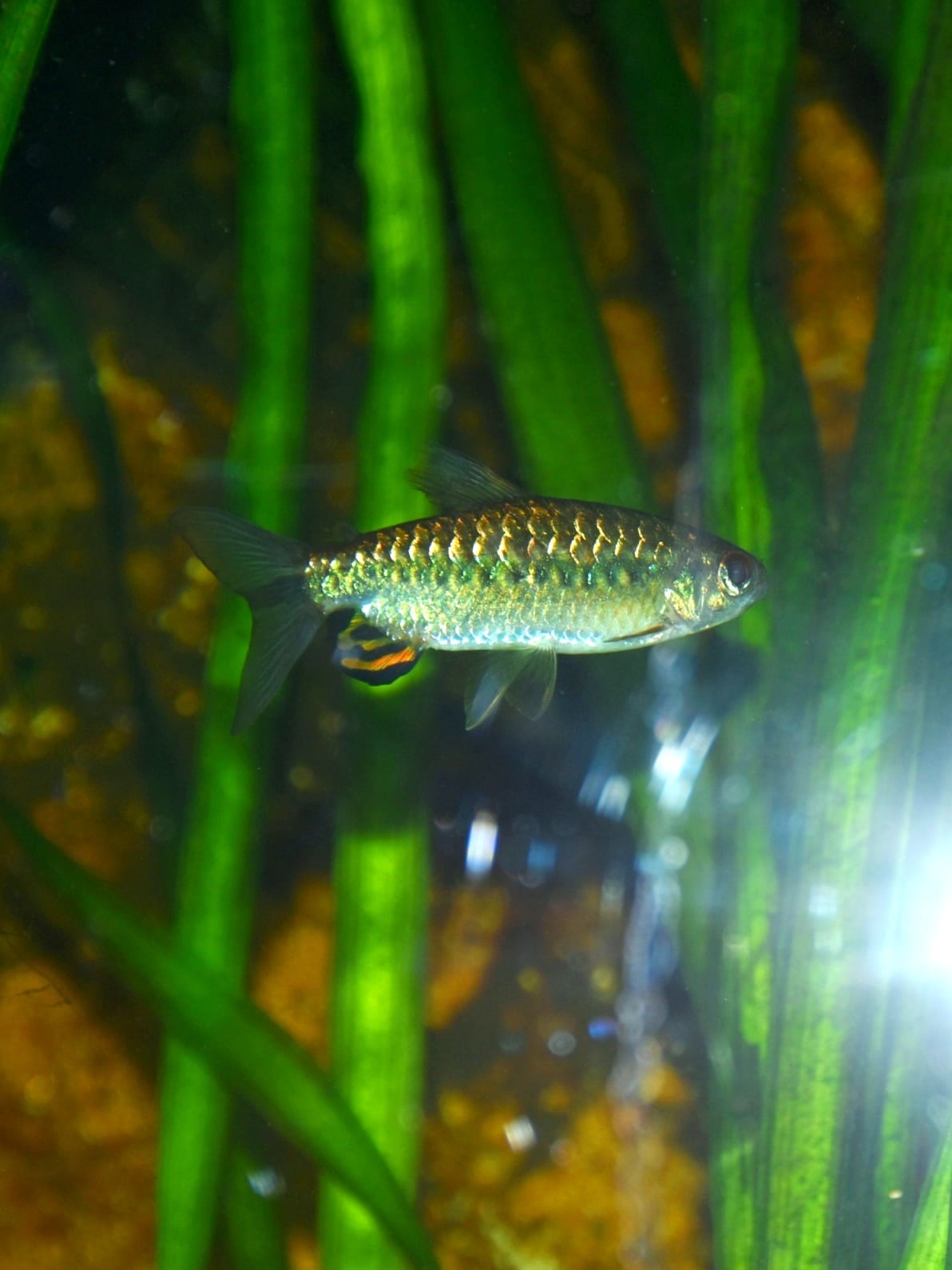
 © NasserHalaweh / CC BY-SA 4.0
African Red-eyed Tetra
The African Red-eyed Tetra is a striking characin native to a handful of river systems in Nigeria, known for its gleaming silver body and vivid red-rimmed eyes. Growing to nearly 10cm, it's a fast, active swimmer that does best in a long tank with plenty of horizontal swimming room. Peaceful by nature, it thrives in a shoal, and watching a group move together shows off its shimmering scales beautifully. Because of its energetic swimming style and specific space needs, it's generally considered a fish for keepers with some prior aquarium experience.
View African Red-eyed Tetra encyclopedia →Breeder Wanted!
List on BreederDirect and sell directly to customers nationwide!
BreederDirect's 6 Transparency Commitments
All Tropical Fish listings include water quality, temperament, and tank size information from verified Breeder.
- Origin Disclosed
- Real Photos
- Water Quality Disclosed
- Recommended Tank Size
- Temperament Disclosed
- Breed Line Disclosed
Browse all 341 breeds
Water Type
Care Level
No listings match your filters
Adjust your filters, or get notified when new listings arrive.
Getting alerts is free with a member account. When new listings match your saved search, we'll notify you by email and in-app.
Browse other categories
Verified breeders (preview)
Are you raising tropical fish?
Register as a breeder and connect with buyers directly.
Apply as a breederAfrican Red-eyed Tetra key facts
- Care level
- Intermediate
- Lifespan
- 5-8 years
- Size
- About 9.6-10cm
- Temperature
- 24〜27℃
- Diet
- Dried foods, frozen bloodworm, brine shrimp, Daphnia
- Tank
- Seriously Fish suggests a base of at least 120 by 30cm, about 108 litres at 30cm depth. Driftwood, roots, smooth stones and plants all suit it, but leave plenty of open water for such an active swimmer.
- Water Temperature & Quality
- Seriously Fish gives 24-27C, pH 6.0-7.5 and 1-15 dGH; FishBase gives a slightly wider 23-28C, pH 6.0-8.0 and 5-19 dH. Once settled it is hardy and, kept properly, lives for a number of years.
- Tank Mates
- Peaceful but very active, so keep it away from shy species. It suits a West African community built around other alestids. It is a shoaling fish and should be kept in a proper group.
- Diet & Feeding
- It is unfussy and takes most foods, but is especially keen on small live and frozen fare, which brings it into the best condition.
- Breeding & Spawning
- Breeding is possible but seldom attempted. Condition the fish on live and frozen foods, pick the best-coloured male and the fullest female, and move them to a small tank with a mesh base so the eggs fall through out of reach. Keep the lighting subdued and the water soft with a lowish pH. After vigorous driving by the male the pair spawn side by side with a quivering motion, and a single female may deposit up to 1,000 eggs, which hatch in about thirty hours.
- Health & Notes
- The IUCN Red List assesses it as Endangered. Popular as it is in the hobby, it is known in the wild from fewer than ten localities in a region losing forest and taking on pollution. It is not on the CITES appendices, and FishBase records it as harmless to people. Choose captive-bred fish where possible, and do not size the tank as though for a small characin: this one reaches nearly 10cm.
About African Red-eyed Tetra
Meet the African Red-eyed Tetra, a silver-scaled characin from Nigeria with striking red eyes. Growing to about 10cm, this fast-swimming intermediate-level fish shines when kept in a shoal.
7 things to know before welcoming a African Red-eyed Tetra
1Needs a long tank
Growing to nearly 10cm and a powerful swimmer, this tetra needs plenty of horizontal swimming space. A tank that's too short can leave it with nowhere to stretch out, which adds stress.
2Keep it in a shoal
Keeping a decent-sized group helps this fish settle in and behave naturally. A shoal is more likely to show its natural swimming patterns than a lone individual.
3Match tankmates by size
It's peaceful by nature, but its size and fast swimming can overwhelm much smaller fish. Tankmates of a similar size and activity level make for a calmer community tank.
4Best for experienced keepers
This species is generally rated as intermediate difficulty. Some prior experience with water quality management and shoaling fish will make the transition smoother.
5Stick to basic water care
It doesn't demand an unusual setup, but with a shoal in the tank, water quality can decline faster. Regular water changes help keep the environment stable.
6Watch the red eyes
The bright red rim around the eyes that gives this fish its name can be a useful health indicator. Keep an eye on eye color and scale shine as part of your regular checks.
7Plan the tank before you buy
Since this fish can reach nearly 10cm as an adult, it's worth setting up a suitably long tank with some cover before bringing juveniles home.
Frequently asked questions about African Red-eyed Tetra
- Q.How big a tank do I need?
- A.Since it can grow to nearly 10cm and swims fast, a longer tank with plenty of horizontal space works better than a deep one. If you're keeping a shoal, give them as much room as you reasonably can.
- Q.Can it live with other fish?
- A.It's fairly peaceful and generally suited to a community tank, but its size and speed can overwhelm much smaller fish. Choosing tankmates of a similar size helps keep things calm.
- Q.Is this a good fish for beginners?
- A.It's generally considered an intermediate-level fish. Having some experience with water quality management and keeping shoaling fish will make things easier.
- Q.Is this species subject to CITES?
- A.The African Red-eyed Tetra is not subject to CITES.
- Q.Where does the name "Red-eyed Tetra" come from?
- A.The name comes from the vivid red rim around its eyes. That splash of color against its gleaming silver scales is one of the fish's most distinctive features.
Useful tools for African Red-eyed Tetra care
Learn more about African Red-eyed Tetra in the encyclopedia
View African Red-eyed Tetra encyclopedia entry →
Care difficulty, lifespan, size and diet — all basics covered.
More in this category
Can't find the one you're looking for?
Post your wishes for free and breeders with matching animals will contact you with introductions.