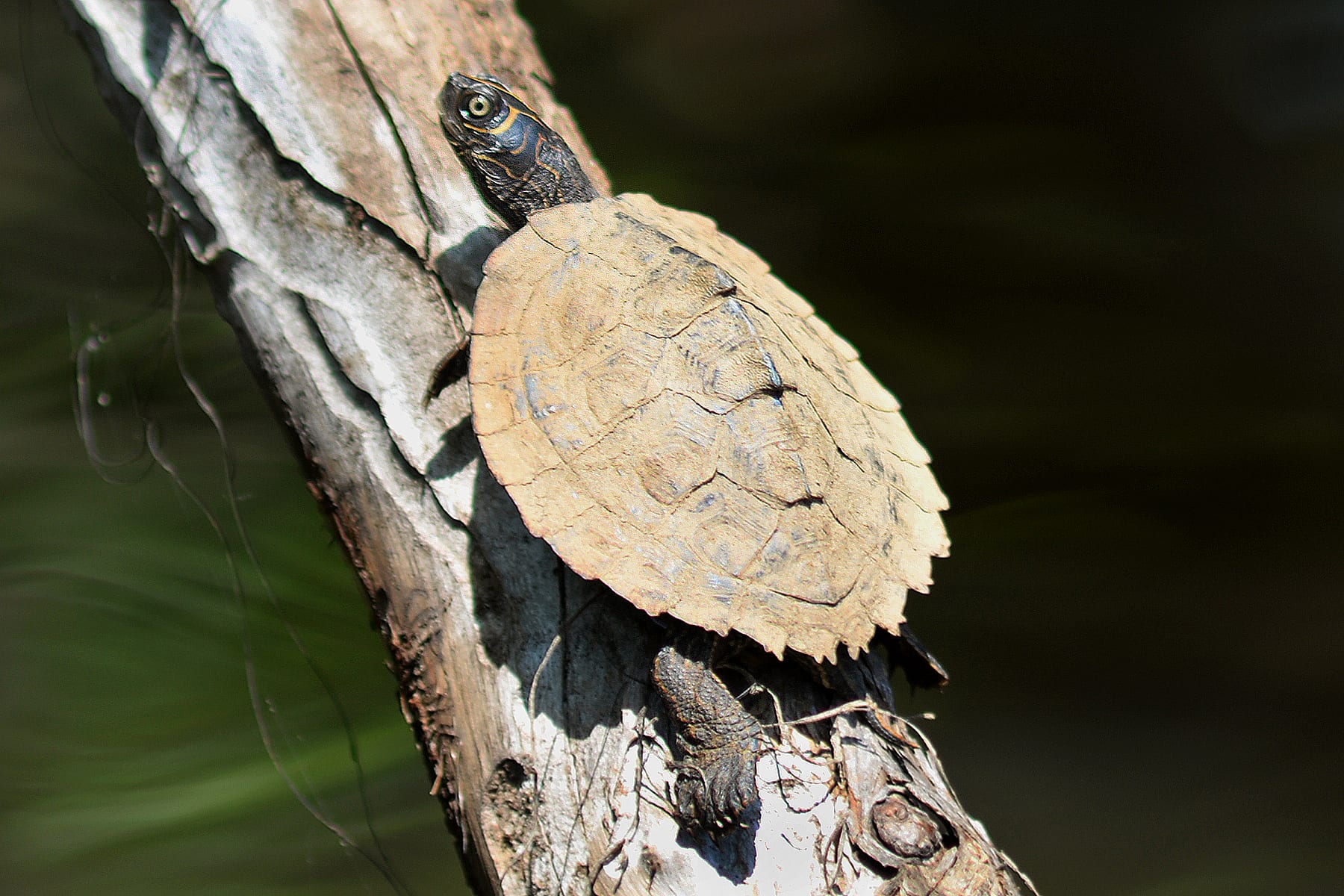
 © William L. Farr / CC BY-SA 4.0
Mississippi Map Turtle
The Mississippi Map Turtle hails from river systems across the Mississippi basin in North America, named for the fine, light contour-like lines etched across its shell that resemble a topographic map. Within its genus, it's distinguished by white or gray irises with no dark band, a handy identification cue. Active swimmers, these turtles love basking in the sun and stay alert to any movement nearby, giving them a lively, watchful personality that's fun to observe. They're considered a good choice for beginners, and adults typically reach a shell length of up to 25 cm, with females growing noticeably larger than males.
View Mississippi Map Turtle encyclopedia →0% commission on your first sales!Register by September 30, 2026 and your first 2 sales are commission-free!
Breeder Wanted!
List on BreederDirect and sell directly to customers nationwide!
6 Transparency Promises from Br-Choku
Every Reptiles & Amphibians from verified Breeder breeders includes complete information: morph, genetics, feeding requirements, and temperament details.
- Morph Information
- Actual Photos
- Feeding Information
- Temperament Information
- Genetics Information
- Age (Months)
Browse all 280 breeds
Difficulty Level
Feeding Type
Temperament
No listings match your filters
Adjust your filters, or get notified when new listings arrive.
Getting alerts is free with a member account. When new listings match your saved search, we'll notify you by email and in-app.
Browse other categories
Verified breeders (preview)
Are you raising reptiles & amphibians?
Register as a breeder and connect with buyers directly.
Apply as a breederMississippi Map Turtle key facts
- Care level
- Beginner-friendly
- Lifespan
- Maximum recorded longevity in captivity is 35 years
- Size
- Carapace up to 25cm, with females larger than males
- Temperature
- Diet
- Aquatic turtle pellets, fish, insects, crustaceans, snails and aquatic plants
- Temperature & Humidity
- Keep the water at 21-27 C, the air a few degrees warmer at 24-29 C, and the hottest point of the basking spot at 32-38 C. All of these may drop by three to five degrees at night.
- Enclosure
- It is a strong swimmer, so allow at least 19-38 litres of water per 2.5 cm of carapace length; an adult may need close to 400 litres. Combine a basking platform large enough to dry off on with powerful filtration.
- Diet & Feeding
- Omnivorous with a carnivorous bias: base the diet on aquatic turtle pellets and add fish, insects, crustaceans and snails. Unusually for a map turtle it also eats aquatic plants readily.
- Temperament
- Wary: a basking animal drops into the water as soon as someone approaches. It is not aggressive and animals of the same species and size can be kept together.
- Notes
- The whole genus Graptemys was listed on CITES Appendix III at the request of the United States with effect from 14 June 2006. Appendix III species need no individual registration certificate in Japan, but export documentation from the country of origin is required. It is neither a designated dangerous animal nor an invasive alien species there, and animals in the Japanese trade are mostly captive bred.
About Mississippi Map Turtle
Mississippi Map Turtles are known for map-like shell markings and pale irises. Native to the Mississippi basin, they're active swimmers well-suited to beginners, growing up to a 25 cm shell length.
7 things to know before welcoming a Mississippi Map Turtle
1Room to Swim
Mississippi Map Turtles are strong, active swimmers, so their enclosure needs enough space and water depth for real swimming, not just soaking. Be sure to include both a swimming area and a dry basking spot.
2UVB Light and Basking
These turtles love to bask, and a UVB light plus a heat lamp over a basking platform are essential for regulating body temperature and staying healthy. Set up the basking area right next to the water.
3Water Quality and Filtration
They eat well and produce a fair amount of waste, so the water can foul quickly. A strong aquatic filter along with regular water changes helps keep conditions clean.
4An Omnivorous Diet
In the wild they eat a mix of aquatic insects, fish, and plants. A commercial turtle pellet as a staple, supplemented with occasional live food and vegetables, makes for a balanced diet.
5Alert and a Bit Shy
They're sensitive to noise and movement and tend to dive for cover the moment they're startled. Providing hiding spots and approaching calmly will help them settle in over time.
6Females Grow Large
Adults reach a shell length of up to 25 cm, with females growing noticeably larger than males. Even if you bring home a hatchling, plan ahead for the enclosure size they'll eventually need.
7A Long-Term Commitment
The longest recorded captive lifespan is 35 years, so this is an animal you may be caring for over decades. Think through future lifestyle changes and make sure you can commit to their long-term care.
Frequently asked questions about Mississippi Map Turtle
- Q.Is this turtle suitable for beginners?
- A.Yes, the Mississippi Map Turtle is considered a hardy species that's well-suited to first-time keepers. That said, good water quality management and a spacious swimming area are still essential, so it's worth setting up the enclosure properly from the start.
- Q.How big do they get as adults?
- A.Adults reach a shell length of up to about 25 cm, with females typically growing larger than males. It's a good idea to plan for a larger enclosure as they mature.
- Q.Is this species subject to CITES?
- A.Mississippi Map Turtle is listed in CITES Appendix III (listed by the United States for its own populations). International trade needs documents such as a certificate of origin, but as far as CITES is concerned, no registration is needed to buy or sell in Japan.
- Q.How long do they live?
- A.The longest recorded captive lifespan is 35 years, making this a genuinely long-lived pet. It's worth planning for long-term care before bringing one home.
- Q.What should I feed them?
- A.They're omnivores that eat aquatic insects, fish, and plants in the wild, so a staple commercial pellet supplemented with occasional live food and vegetables works well. Aim for a balanced, varied diet.
Useful tools for Mississippi Map Turtle care
Learn more about Mississippi Map Turtle in the encyclopedia
View Mississippi Map Turtle encyclopedia entry →
Care difficulty, lifespan, size and diet — all basics covered.
More in this category
Can't find the one you're looking for?
Post your wishes for free and breeders with matching animals will contact you with introductions.