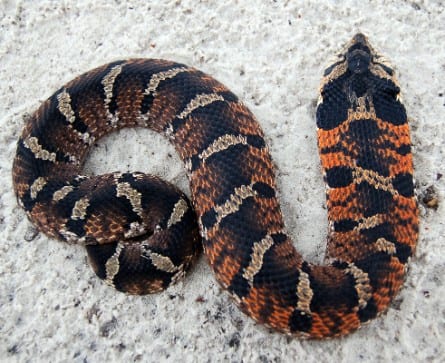
 © Bladerunner8u / CC BY-SA 3.0
Eastern Hognose Snake
The Eastern Hognose Snake is an easily recognized colubrid with an upturned, shovel-like snout and a notably thick, stocky body. Its coloration varies enormously from one individual to the next, and dark, near-black (melanistic) specimens turn up fairly often, so no two snakes look quite alike. Rows of dark blotches run down its back, giving it a bold, earthy pattern. It's also famous for its theatrical defense display: when startled, it flattens its neck like a mini cobra and hisses, and may even flop over and play dead. Its rear fangs deliver a mild venom adapted for subduing amphibian prey and are considered essentially harmless to people, adding to its quirky charm.
View Eastern Hognose Snake encyclopedia →0% commission on your first sales!Register by September 30, 2026 and your first 2 sales are commission-free!
Breeder Wanted!
List on BreederDirect and sell directly to customers nationwide!
6 Transparency Promises from Br-Choku
Every Reptiles & Amphibians from verified Breeder breeders includes complete information: morph, genetics, feeding requirements, and temperament details.
- Morph Information
- Actual Photos
- Feeding Information
- Temperament Information
- Genetics Information
- Age (Months)
Browse all 280 breeds
Difficulty Level
Feeding Type
Temperament
No listings match your filters
Adjust your filters, or get notified when new listings arrive.
Getting alerts is free with a member account. When new listings match your saved search, we'll notify you by email and in-app.
Browse other categories
Verified breeders (preview)
Are you raising reptiles & amphibians?
Register as a breeder and connect with buyers directly.
Apply as a breederEastern Hognose Snake key facts
- Care level
- Advanced
- Lifespan
- 10-15 years
- Size
- 30-80cm total length, with a maximum of 137cm
- Temperature
- Diet
- Carnivorous, feeding mainly on frogs and especially toads
- Temperature & Humidity
- Keep the basking zone at 30-31 C and the rest of the enclosure at 24-29 C, with nights no colder than 16 C. It lives where the soil is dry and loose, so keep the substrate dry and the enclosure from becoming stuffy. Note that its basking temperature is a little lower than that recommended for the western hognose.
- Enclosure
- It burrows strongly, so use a substrate it can dig into such as wood chips or shavings. Paper towel is acceptable where ease of maintenance matters more, but change it frequently. As an animal of sandy soils it needs dry conditions. Choose an enclosure it cannot escape from and secure the lid firmly.
- Diet & Feeding
- In the wild it specialises on toads, and most individuals are not established on mice and are difficult to convert. This is what makes it much harder to keep than its congeners, and sustained multi-generation captive breeding is barely known. Before considering one, make sure you can secure an appropriate food supply on a continuing basis.
- Temperament
- It almost never bites people in threat, first bluffing with closed-mouth strikes and then feigning death if that fails. It can, however, mistake a hand for food during feeding, and prolonged bites have caused local swelling, so use long forceps or leave food out overnight rather than handling the animal at feeding time.
- Notes
- Not listed on any CITES appendix. The IUCN assesses it as Least Concern. Of the Colubridae, only the genera Dispholidus, Rhabdophis, Tachymenis and Thelotornis appear on the schedule of designated dangerous animals under the Order for Enforcement of the Act on Welfare and Management of Animals, so this species is not included, nor does it appear on Japan's list of invasive alien species. Its rear-fanged venom is specialised for amphibians and is not dangerous to people, but allergic reactions have been reported, so avoid being bitten. Its narrow diet of toads makes it demanding to keep and it is not recommended for beginners. It is a different species from the far more commonly traded western hognose snake (Heterodon nasicus) and is much harder to get feeding, so care information for that snake does not transfer. The older spelling Heterodon platyrhinos is still in use, so check the scientific name.
About Eastern Hognose Snake
A stocky colubrid known for its upturned snout, highly variable coloration including melanistic morphs, and dramatic bluffing and death-feigning defenses. Best suited to experienced reptile keepers.
7 things to know before welcoming a Eastern Hognose Snake
1An Advanced-Level Species
The Eastern Hognose Snake is considered an advanced-level species, best suited to keepers who already have reptile-keeping experience. Understanding its feeding habits and maintaining proper temperature and humidity require more specialized knowledge than beginner species demand. It's worth researching its care needs thoroughly before bringing one home.
2Bluffing and Playing Dead
This species is famous for its theatrical defenses: flattening its neck cobra-style and hissing when startled, or flipping onto its back to feign death. This is a normal, species-specific defense behavior, not a sign of illness. If it happens, simply give the snake some quiet space and it will settle back down on its own.
3Feeding Can Take Extra Effort
Because this species naturally preys mainly on amphibians, some individuals are slow to accept standard mice and may need extra encouragement, such as scenting prey with frog odor. Feeding responses vary widely between individuals, so it's worth understanding this before committing. Ask about an individual's feeding history before bringing one home.
4Rear Fangs and Mild Venom
The Eastern Hognose Snake has rear fangs and mildly toxic saliva adapted to subdue amphibian prey, which is considered essentially harmless to humans. That said, a bite can still cause some physical discomfort, so avoid provoking or startling the snake during handling. If children are involved, adult supervision is recommended.
5Highly Variable Coloration
Coloration varies enormously in this species, ranging from brightly patterned individuals to near-black melanistic forms. The dark blotches running down the back differ in number and intensity from snake to snake. This means every individual has its own distinct look, even within the same species.
6A Burrowing Habit
In the wild, this species spends much of its time burrowed into soil, so providing substrate deep and loose enough to burrow into helps it feel secure in captivity. Substrate that's too shallow or too compact can be a source of stress. Choose a diggable material suited to its natural behavior.
7Housing for a Stocky Build
Adults typically reach 30 to 80 cm in length, with some individuals reaching up to 137 cm, and the body is notably thick and stocky compared to other snakes of similar length. Choose an enclosure and substrate depth generous enough to suit this stouter build. It's also a good idea to reassess the setup as the snake grows.
Frequently asked questions about Eastern Hognose Snake
- Q.Can beginners keep an Eastern Hognose Snake?
- A.This species is generally considered suitable for advanced keepers rather than beginners. Its feeding habits and temperature/humidity needs require more specialized knowledge. If you're new to snake keeping, it's best to gain experience with an easier species first.
- Q.Is playing dead a sign of illness?
- A.No, feigning death is a natural defense behavior specific to this species, not a sign of illness. When startled, it may flip onto its back and lie motionless, but it will right itself again once left undisturbed for a while.
- Q.Is its venom dangerous to humans?
- A.It does have mildly toxic saliva delivered through rear fangs, but this is adapted for subduing amphibians and is considered essentially harmless to people. A bite can still cause some physical discomfort, so handle the snake gently and calmly.
- Q.How big does this snake get?
- A.Adults typically reach around 30 to 80 cm in length, with some individuals growing as large as 137 cm. It also has a notably thick, stocky build compared to many other snake species of similar length.
- Q.Will it readily eat standard feeder mice?
- A.This varies by individual, since the species naturally favors amphibians and some snakes are slow to accept plain mice. Techniques like scenting prey with frog odor are sometimes needed, so it's worth checking an individual's feeding history beforehand.
Useful tools for Eastern Hognose Snake care
Learn more about Eastern Hognose Snake in the encyclopedia
View Eastern Hognose Snake encyclopedia entry →
Care difficulty, lifespan, size and diet — all basics covered.
More in this category
Can't find the one you're looking for?
Post your wishes for free and breeders with matching animals will contact you with introductions.