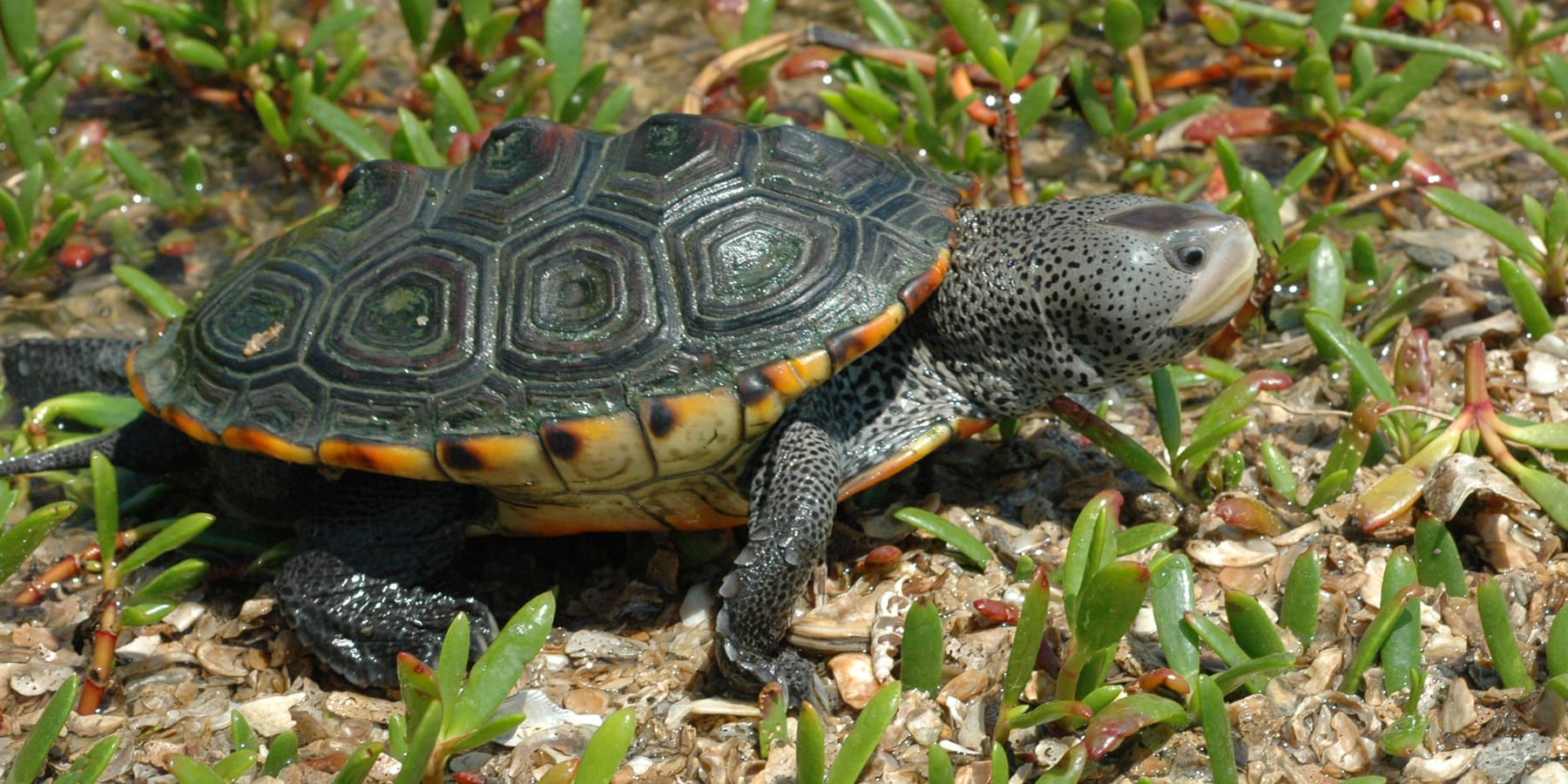
 © William L. Farr / CC BY-SA 4.0
Diamondback Terrapin
The Diamondback Terrapin is a turtle found only in the brackish estuaries along the eastern coast of North America. Its English name comes from the concentric growth rings on its carapace, which form a diamond-like pattern. Uniquely among turtles, its tear glands function as salt glands, letting it handle salty, tidal water. Temperament varies between individuals, but many become comfortable around their keepers, and with proper care they can live up to 40 years. Adults stay a manageable size, with females reaching a maximum shell length of about 23.8 cm and males topping out around 15.3 cm, making this an intermediate-level species best suited to keepers with some reptile experience.
View Diamondback Terrapin encyclopedia →0% commission on your first sales!Register by September 30, 2026 and your first 2 sales are commission-free!
Breeder Wanted!
List on BreederDirect and sell directly to customers nationwide!
6 Transparency Promises from Br-Choku
Every Reptiles & Amphibians from verified Breeder breeders includes complete information: morph, genetics, feeding requirements, and temperament details.
- Morph Information
- Actual Photos
- Feeding Information
- Temperament Information
- Genetics Information
- Age (Months)
Browse all 280 breeds
Difficulty Level
Feeding Type
Temperament
No listings match your filters
Adjust your filters, or get notified when new listings arrive.
Getting alerts is free with a member account. When new listings match your saved search, we'll notify you by email and in-app.
Browse other categories
Verified breeders (preview)
Are you raising reptiles & amphibians?
Register as a breeder and connect with buyers directly.
Apply as a breederDiamondback Terrapin key facts
- Care level
- Intermediate
- Lifespan
- Up to 40 years in captivity; about 25 years is the estimate for wild animals
- Size
- Carapace up to 23.8cm; males up to 15.3cm
- Temperature
- Diet
- Aquatic turtle pellets, snails and bivalves, crustaceans and small fish
- Temperature & Humidity
- Aim for a water temperature of 24-26 C, using a submersible tube heater for hatchlings, and hold the basking site at 29-30 C. Indoors, add full-spectrum UVB lighting.
- Enclosure
- Hatchlings can be raised together in a container with 7-10 cm of water, but they grow fast, so plan to upgrade early. A single adult female or two adult males need roughly 150 litres. Provide strong circulating filtration and a basking platform. The species is adapted to brackish water but tolerates fresh water in captivity.
- Diet & Feeding
- In the wild it feeds on periwinkles and other snails in the salt marsh. In captivity, base the diet on aquatic turtle pellets with snails, crustaceans and small fish alongside. It crushes shells, so supply plenty of calcium.
- Temperament
- It is wary: in the wild a basking terrapin drops into the water at the sight of a person. Captive animals are often nervous too, but they are not prone to biting.
- Notes
- Listed on CITES Appendix II with effect from 12 June 2013; as an Appendix II species it needs no individual registration certificate in Japan, and it is neither a designated dangerous animal nor an invasive alien species there. US states regulate collection, and bycatch in crab traps and road mortality are the main conservation problems.
About Diamondback Terrapin
The Diamondback Terrapin is a brackish-water turtle native to the U.S. East Coast, known for its diamond-patterned shell and salt-tolerant physiology; with proper care it can live up to 40 years.
7 things to know before welcoming a Diamondback Terrapin
1Brackish Water Setup
In the wild, this species lives in estuaries where fresh and salt water mix, so their setup needs water quality management beyond a simple freshwater tank. Their body is naturally adapted to tolerate some salinity.
2Unique Salt Glands
What looks like tears is actually their lacrimal glands functioning as salt glands, expelling excess salt from the body. This trait is uncommon among turtles.
3Diamond-Patterned Shell
The concentric growth rings on the carapace form a diamond-like pattern, which is the origin of the English name. Each individual's pattern differs slightly, adding to its visual appeal.
4Plan for a Long Life
In captivity, this species can live up to 40 years, and about 25 years in the wild. Before bringing one home, consider whether you can commit to its long-term care.
5Temperament Varies
Some individuals become comfortable around people, while others stay more cautious and tend to hide. Building trust takes patience and consistent, gentle handling.
6Size Differs by Sex
Adults reach a maximum shell length of about 23.8 cm, but males are smaller, topping out around 15.3 cm. Sex affects how much enclosure space you should plan for.
7Best for Intermediate Keepers
Managing water quality, temperature, and a brackish environment requires some specialized knowledge, making this species best suited to keepers with reptile or turtle experience. First-time turtle owners should research thoroughly beforehand.
Frequently asked questions about Diamondback Terrapin
- Q.How long do Diamondback Terrapins live?
- A.In captivity, they can live up to 40 years, and roughly 25 years in the wild. Since it's a long-term commitment, be prepared for many years of care before bringing one home.
- Q.Can they be kept in freshwater alone?
- A.In the wild, Diamondback Terrapins live in brackish estuaries, and their tear glands function as salt glands that let them handle salty water. Water quality management is an important part of caring for this species.
- Q.How big do adults get?
- A.Adults reach a maximum shell length of about 23.8 cm, while males are smaller, topping out around 15.3 cm. There's a clear size difference between the sexes.
- Q.Is this a good species for beginners?
- A.The Diamondback Terrapin is generally considered suited to intermediate keepers. Because it requires specialized knowledge like water quality management, it's best to gain some reptile-keeping experience first.
- Q.Is the Diamondback Terrapin listed under CITES?
- A.Diamondback Terrapin is listed in CITES Appendix II. International trade requires a permit from the exporting country, but as far as CITES is concerned, no registration is needed to buy or sell individuals already legally in Japan.
Useful tools for Diamondback Terrapin care
Learn more about Diamondback Terrapin in the encyclopedia
View Diamondback Terrapin encyclopedia entry →
Care difficulty, lifespan, size and diet — all basics covered.
More in this category
Can't find the one you're looking for?
Post your wishes for free and breeders with matching animals will contact you with introductions.