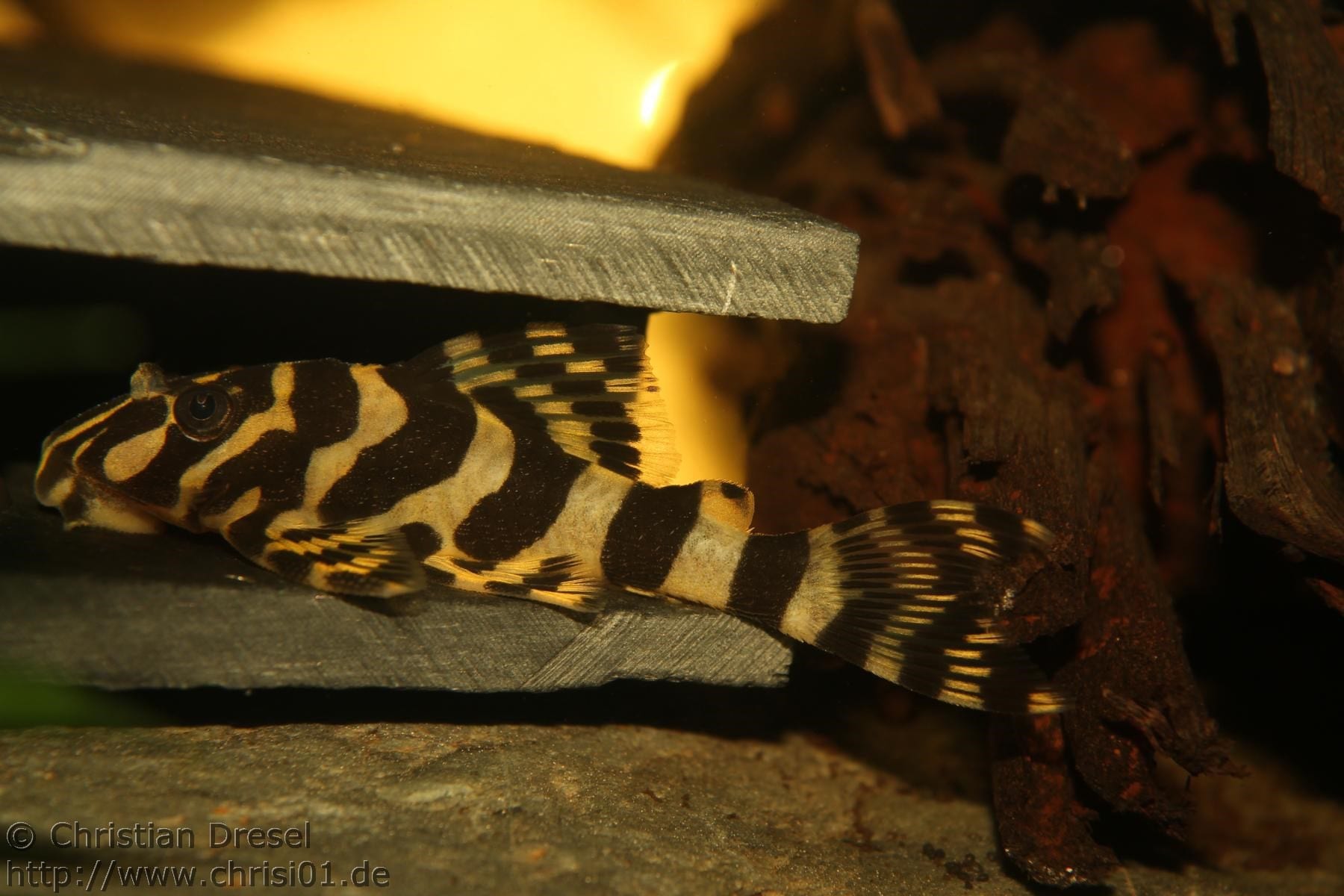
 © Christian Dresel / CC BY-SA 4.0
Leopard Frog Pleco
The Leopard Frog Pleco (L134) is a small pleco prized for its bold pattern — diagonal black bands set against a yellow body. Native to the Tapajós River system in Brazil, it stays compact even as an adult, reaching only about 6 to 7 cm in standard length. These fish tend to spend much of the day tucked away in hiding spots, becoming more active at night or once the lights go out at feeding time. They are omnivores that eat both animal and plant foods, and can be kept on sinking pellets, frozen bloodworms and vegetables, which has made them a favorite among tropical fish keepers. In the wild, hydroelectric development has put pressure on their population, and the IUCN lists the species as endangered. Considered suitable for intermediate keepers, the Leopard Frog Pleco makes a great next addition for anyone who already has some pleco-keeping experience.
View Leopard Frog Pleco encyclopedia →Breeder Wanted!
List on BreederDirect and sell directly to customers nationwide!
BreederDirect's 6 Transparency Commitments
All Tropical Fish listings include water quality, temperament, and tank size information from verified Breeder.
- Origin Disclosed
- Real Photos
- Water Quality Disclosed
- Recommended Tank Size
- Temperament Disclosed
- Breed Line Disclosed
Browse all 341 breeds
Water Type
Care Level
No listings match your filters
Adjust your filters, or get notified when new listings arrive.
Getting alerts is free with a member account. When new listings match your saved search, we'll notify you by email and in-app.
Browse other categories
Verified breeders (preview)
Are you raising tropical fish?
Register as a breeder and connect with buyers directly.
Apply as a breederLeopard Frog Pleco key facts
- Care level
- Intermediate
- Lifespan
- 5-8 years
- Size
- 6-7cm
- Diet
- Sinking dried foods, frozen bloodworm and vegetables
- Tank
- A small species of about 6cm standard length. Build cave-like retreats from rockwork over fine sand and add driftwood, providing at least one refuge per fish.
- Water Temperature & Quality
- The Tapajos, where it lives, is a clear tropical river.
- Tank Mates
- As a small bottom-dweller, pairing it with fishes that use other levels is the usual approach.
- Diet & Feeding
- Peckoltia species are omnivores that take both animal and plant foods, so combine sinking dried foods with frozen bloodworm and vegetables. The genus does not depend on wood alone.
- Breeding & Spawning
- Captive breeding has rarely been recorded, so focus first on keeping the fish settled long term in a tank with a refuge for each individual.
- Health & Notes
- The IUCN assesses it as Endangered, with habitat alteration by hydroelectric projects the main threat. It is not listed by CITES. Acclimatise new fish carefully.
About Leopard Frog Pleco
The Leopard Frog Pleco (L134) is a small, boldly patterned pleco from Brazil's Tapajós River, reaching 6–7 cm and suited to intermediate keepers.
7 things to know before welcoming a Leopard Frog Pleco
1Striking Color Pattern
L134s show a bold yellow body crossed with diagonal black bands. Individual fish vary somewhat in band thickness and color intensity, adding to the appeal of this pattern.
2Provide Plenty of Hiding Spots
This fish spends much of its time tucked away in shelter, so provide several hiding spots using driftwood or rock formations. Without enough cover, it may stay stressed and rarely show itself.
3Most Active at Night
It tends to stay hidden during the day and becomes more active at night or once the lights are off at feeding time. Not seeing it much during daylight hours doesn't necessarily mean something is wrong.
4Choosing Tankmates
This small fish stays on the bottom, so the basic approach is to pair it with fish that swim in other levels of the tank. Bottom dwellers tend to compete for the same space, so providing a hiding spot for each individual helps keep things calm.
5Driftwood for Shelter and Layout
Combining fine sand, rock formations and driftwood lets you build cave-like hiding places. This is not a wood-dependent group, so make sure to feed sinking pellets and other proper foods.
6Feed Mainly Sinking Foods
It is an omnivore that eats both animal and plant foods. Combine sinking pellets with frozen bloodworms and vegetables, checking how much it eats — mostly at night — to adjust the amount.
7A Genuinely Rare Fish
In its native Brazil, hydroelectric development has affected its population, and the IUCN lists it as endangered. If you have the chance to keep one, it's worth setting up a stable long-term environment for it.
Frequently asked questions about Leopard Frog Pleco
- Q.Can it be kept with other plecos?
- A.As a small bottom-dwelling fish, it is best paired with fish that swim in other levels. If you keep it with other plecos or bottom dwellers, space can overlap, so it helps to provide a hiding spot for each individual.
- Q.Is it suitable for beginners?
- A.It's generally considered suited to intermediate keepers rather than complete beginners. Prior experience keeping plecos or other tropical fish makes care easier.
- Q.Why doesn't it come out much during the day?
- A.It tends to hide during daylight hours and becomes more active at night or once the lights go off at feeding time. Staying hidden during the day doesn't necessarily indicate a health problem.
- Q.Does the tank need driftwood?
- A.It isn't essential, but driftwood combined with rockwork on fine sand makes cave-like hiding spots and helps the layout. This is not a wood-dependent group, so feed sinking pellets and other proper foods.
- Q.Is this species regulated under CITES?
- A.The Leopard Frog Pleco is not subject to CITES.
Useful tools for Leopard Frog Pleco care
Learn more about Leopard Frog Pleco in the encyclopedia
View Leopard Frog Pleco encyclopedia entry →
Care difficulty, lifespan, size and diet — all basics covered.
More in this category
Can't find the one you're looking for?
Post your wishes for free and breeders with matching animals will contact you with introductions.