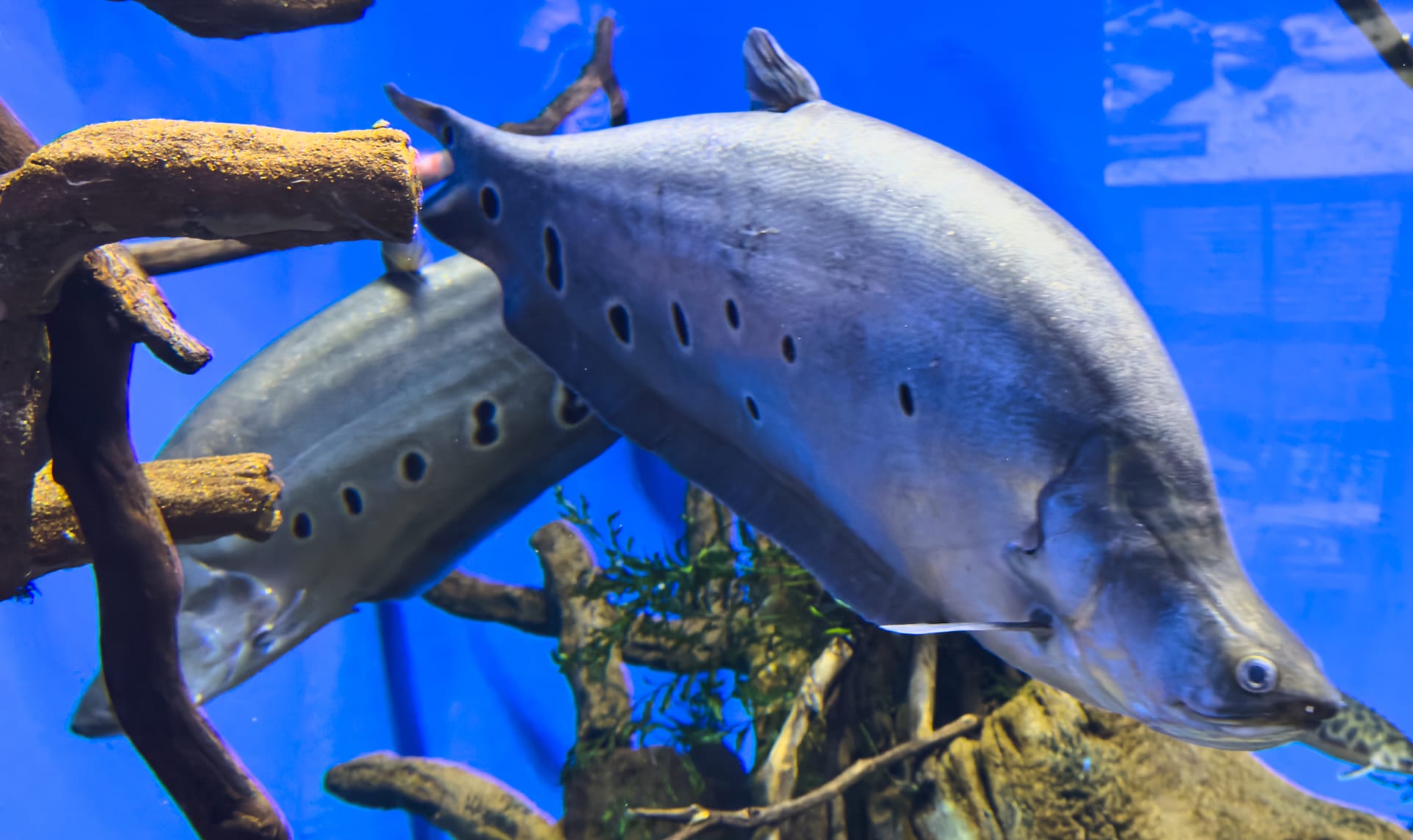
 © Vyacheslav Bukharov / CC BY-SA 4.0
Clown Knifefish
The Clown Knifefish is a large predatory fish native to Southeast Asia, instantly recognizable by the row of dark eye-like spots along its silvery-gray body. It swims in an unusual way, undulating its long anal fin to glide both forward and backward with surprising control. It is relatively peaceful toward fish too large to be swallowed, but can be territorial toward its own species and similarly shaped fish, so tankmates need careful thought. As an adult it can reach roughly one meter in length and around five kilograms in weight, meaning it ultimately needs an exceptionally large aquarium and a long-term commitment. This is considered an advanced-keeper species, best suited to those with solid experience in water quality management and feeding. Its striking appearance and agile movements make it a memorable centerpiece for keepers ready for the scale it demands.
View Clown Knifefish encyclopedia →Breeder Wanted!
List on BreederDirect and sell directly to customers nationwide!
BreederDirect's 6 Transparency Commitments
All Tropical Fish listings include water quality, temperament, and tank size information from verified Breeder.
- Origin Disclosed
- Real Photos
- Water Quality Disclosed
- Recommended Tank Size
- Temperament Disclosed
- Breed Line Disclosed
Browse all 341 breeds
Water Type
Care Level
No listings match your filters
Adjust your filters, or get notified when new listings arrive.
Getting alerts is free with a member account. When new listings match your saved search, we'll notify you by email and in-app.
Browse other categories
Verified breeders (preview)
Are you raising tropical fish?
Register as a breeder and connect with buyers directly.
Apply as a breederClown Knifefish key facts
- Care level
- Advanced
- Lifespan
- 10-15 years
- Size
- Up to about 100cm and 5kg
- Temperature
- 20〜28℃
- Diet
- Strips of fish, prawns, mussels and large earthworms
- Tank
- Because it reaches 1m, Seriously Fish rates it suitable only for public installations or the very largest specialist private aquaria. Secure a tank that can house it for life before acquiring one.
- Water Temperature & Quality
- 20-28C, pH 6.0-8.0 and 2-15 dGH. As a large predator with a heavy feeding load it needs powerful filtration and regular water changes.
- Tank Mates
- Relatively peaceful with fishes too large to be considered prey, but territorial with conspecifics and similarly shaped species, especially where space is limited.
- Diet & Feeding
- Strips of fish flesh, whole prawns, mussels, large earthworms and live river shrimp; juveniles take bloodworm and chopped prawn. Dried foods are accepted but should not be the staple.
- Breeding & Spawning
- Captive breeding is unreported. In nature males build nests of branches and leaves in flooded forest during the wet season and guard the eggs and fry. Sexual dimorphism is unreported.
- Health & Notes
- Juveniles are sold at a few centimetres but end up at 1m and 5kg. Released fish cause ecological problems, so only acquire one if you can keep it for life.
About Clown Knifefish
A large predatory fish from Southeast Asia, the Clown Knifefish has a silvery-gray body marked with dark eye-like spots and grows to about 1m and 5kg. Known for swimming both forward and backward, it is considered an advanced-keeper species.
7 things to know before welcoming a Clown Knifefish
1Needs a Very Large Tank
Clown Knifefish grow to roughly one meter in length and around five kilograms as adults. Keeping one for its full life requires an exceptionally large aquarium and sufficient space planned before you bring it home.
2Animal-Based Diet
The diet centers on animal foods such as fish fillets, shell-on shrimp, mussels, and large earthworms. Do not feed mammal or bird meat. Prepared foods are accepted but should not be the staple, so adjust food types and feeding methods to each individual.
3Swims Both Forward and Backward
By undulating its long anal fin, this fish can move backward just as easily as forward, a distinctive trait among aquarium fish. Watching it glide smoothly in either direction is one of the appeals of keeping this species.
4Create a Calm Environment
As a large predator kept for its whole life, it benefits from calm hiding spots such as driftwood, and from avoiding startling factors like sudden noises or lighting changes.
5Careful Tankmate Selection
It is relatively peaceful toward fish too large to be swallowed, but may eat smaller fish that fit in its mouth. It can be territorial toward its own species and similarly shaped fish, so consider combinations carefully, especially where tank space is limited.
6Consistent Water Quality Care
As a large fish it produces significant waste and eats a lot, so strong filtration and regular water changes are essential. Keep conditions stable within 20–28°C, pH 6.0–8.0 and 2–15 dGH; steady, attentive maintenance supports its long-term health.
7Plan Ahead Before Bringing One Home
Given its eventual size and equipment needs, it is important to think through where the tank will go and how you will maintain it long before bringing one home. As this species is considered suitable for experienced keepers, building up aquarium experience first is recommended.
Frequently asked questions about Clown Knifefish
- Q.Can beginners keep a Clown Knifefish?
- A.This species is generally considered suitable for experienced keepers, given its eventual size of about one meter and five kilograms and the very large tank needed for its whole life. It is best to build up experience with water quality management before taking one on.
- Q.How large does it grow?
- A.As an adult it can reach roughly one meter in length and around five kilograms in weight. It is best to prepare a sufficiently large tank from the start, anticipating this growth.
- Q.Can it be kept with other fish?
- A.It is relatively peaceful toward fish too large to be swallowed, but may eat fish that fit in its mouth. It can be territorial toward its own species and similarly shaped fish, so consider tankmates carefully and only in a tank with ample space.
- Q.It barely moves during the day, is something wrong?
- A.Activity levels vary with the individual and its environment, and being still alone does not necessarily mean illness. However, if you notice a lasting loss of appetite or visible changes in appearance, watch closely and consult a veterinarian or specialty shop.
- Q.How should I set up hiding spots in the tank?
- A.Driftwood, rocks, or large PVC pipes can give it a place to retreat to and help create a calm environment. Since it grows quite large, choose decor that will remain safe and sturdy even after the fish reaches full size.
Useful tools for Clown Knifefish care
Learn more about Clown Knifefish in the encyclopedia
View Clown Knifefish encyclopedia entry →
Care difficulty, lifespan, size and diet — all basics covered.
More in this category
Can't find the one you're looking for?
Post your wishes for free and breeders with matching animals will contact you with introductions.