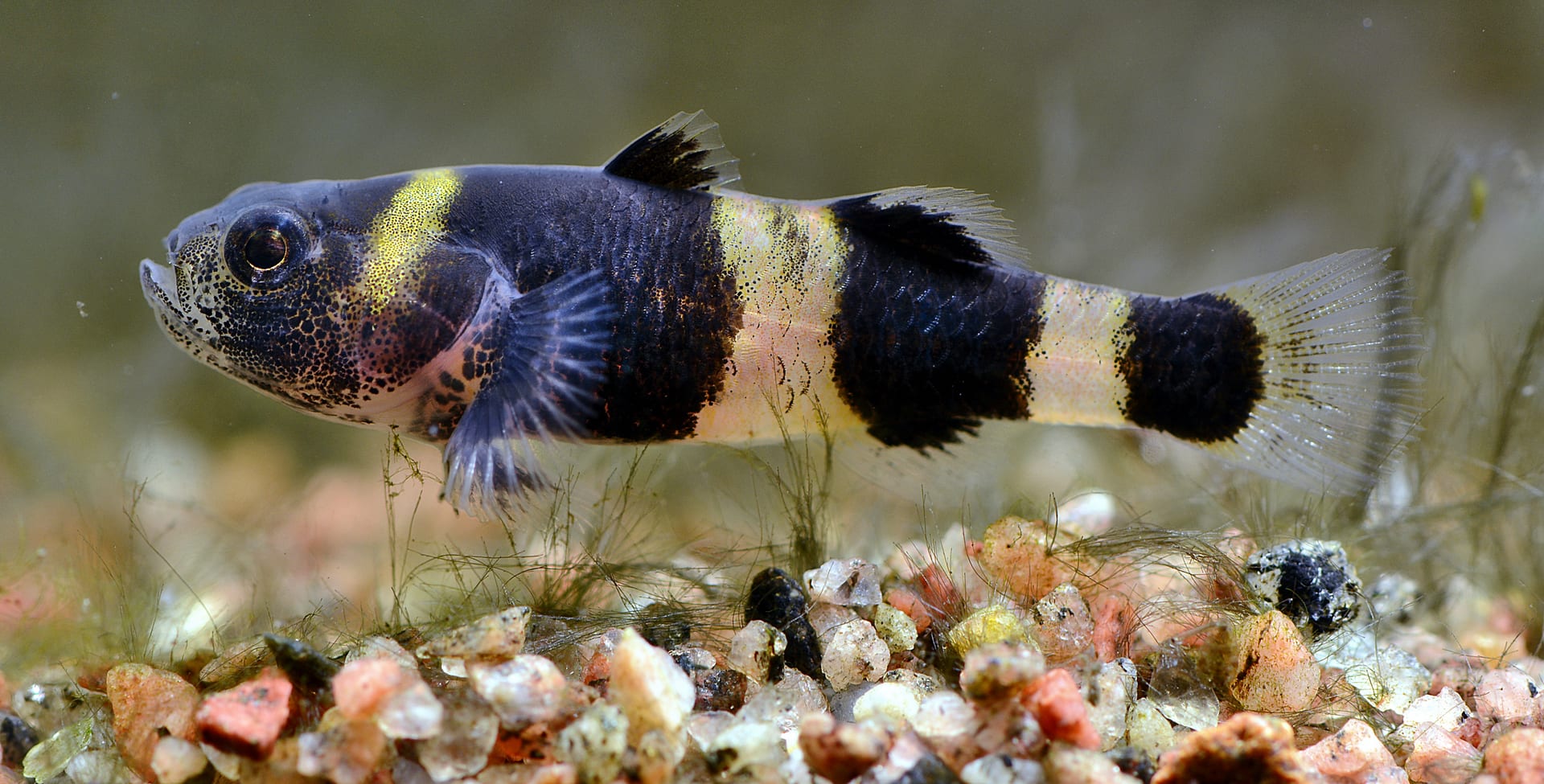
 © Sven Kullander / CC BY-SA 4.0
Bumblebee Goby
The Bumblebee Goby is a tiny freshwater fish, typically reaching just 2.5 to 4 cm, known for its bold yellow-and-black banded pattern and round, expressive face. Despite its small size, it has a feisty personality and stakes out a compact territory, so tankmates need to be chosen with care. It thrives best in hard, mineral-rich freshwater to slightly brackish conditions, making water chemistry an important consideration. One key challenge is that this species rarely accepts dry or flake food, so keepers should be prepared to offer live or frozen foods regularly. With its striking looks and particular needs, it's a rewarding pick for intermediate aquarists ready for a bit of a challenge.
View Bumblebee Goby encyclopedia →Breeder Wanted!
List on BreederDirect and sell directly to customers nationwide!
BreederDirect's 6 Transparency Commitments
All Tropical Fish listings include water quality, temperament, and tank size information from verified Breeder.
- Origin Disclosed
- Real Photos
- Water Quality Disclosed
- Recommended Tank Size
- Temperament Disclosed
- Breed Line Disclosed
Browse all 341 breeds
Water Type
Care Level
No listings match your filters
Adjust your filters, or get notified when new listings arrive.
Getting alerts is free with a member account. When new listings match your saved search, we'll notify you by email and in-app.
Browse other categories
Verified breeders (preview)
Are you raising tropical fish?
Register as a breeder and connect with buyers directly.
Apply as a breederBumblebee Goby key facts
- Care level
- Intermediate
- Lifespan
- 3-5 years
- Size
- 2.5-4cm
- Temperature
- 22〜28℃
- Diet
- Live and frozen foods such as Artemia and Daphnia
- Tank
- A 45 x 30cm base, about 41 litres, is the practical minimum. Provide plenty of cover to break lines of sight so weaker fish can escape attention, and use gentle filtration such as an air-powered sponge unit.
- Water Temperature & Quality
- Seriously Fish gives 22-28C, pH 7.0-8.5 and 8-20dGH. Crushed coral in the substrate buffers the water, or marine salt can be added at about 2 grams per litre. FishBase records pH 8.0, 9-19dH and 22-29C in the wild.
- Tank Mates
- Not an ideal community fish; a species-only tank is best. Males are territorial, so buying six or more spreads the aggression, and the fish are bolder and behave more naturally in numbers.
- Diet & Feeding
- Small live foods such as Artemia and Daphnia should be considered essential. Some individuals learn to take frozen alternatives, but dried products are normally ignored.
- Breeding & Spawning
- A cave spawner. Small flower pots, ceramic tubes or shells serve as sites. The female leaves after spawning and the male guards the 100-200 eggs, which hatch in 7-9 days. Fry need microscopic foods such as Paramecium or Brachionus.
- Health & Notes
- The trade name covers several species, and misidentification as B. nunus or B. xanthozonus, or confusion with the similar B. sabanus, is common. Fish sold under the same name may not share the same water requirements.
About Bumblebee Goby
A tiny 2.5-4cm freshwater goby with bold yellow-and-black bands. Prefers hard, mineral-rich to slightly brackish water and rarely eats dry food, making it a species suited to intermediate keepers.
7 things to know before welcoming a Bumblebee Goby
1Small Body, Big Attitude
Despite reaching only 2.5 to 4 cm, Bumblebee Gobies are territorial and will defend a small patch of space. When keeping several together or with similarly shaped fish, provide plenty of hiding spots and visual breaks in the layout to help them settle.
2Hard Water to Slightly Brackish
Bumblebee Gobies prefer hard, mineral-rich freshwater to slightly brackish conditions. They're sensitive to sudden water changes, so take extra time during acclimation and avoid abrupt shifts in water parameters.
3Live and Frozen Food Are a Must
This species rarely accepts dry food, so live or frozen foods such as brine shrimp and daphnia are essential. Some individuals do learn to take frozen food, but you should settle how you will source food before bringing them home.
4Best Suited for Intermediate Keepers
Because of the specific water chemistry and feeding requirements, this species is considered suitable for intermediate aquarists. Having some prior freshwater fishkeeping experience makes day-to-day care much smoother.
5Best Kept in a Single-Species Tank
Because they are territorial, they are not well suited to community tanks, and a single-species setup is the standard approach. Males squabble with each other, so introducing a group of six or more spreads out the aggression and helps them settle and show natural behavior.
6The Signature Yellow-and-Black Bands
The bold contrast of yellow and black bands is this fish's biggest visual draw, standing out clearly against tank decor. Watching them dart along the substrate is a constant source of entertainment.
7Prepare the Tank Before You Bring Them Home
Set up plenty of hiding spots that break lines of sight, and get water parameters stable in advance to reduce stress at introduction. Plan for a single-species tank, with a footprint of about 45 x 30 cm (roughly 41 L) as a guide.
Frequently asked questions about Bumblebee Goby
- Q.Can they be trained to eat flake food?
- A.Some individuals may occasionally accept it, but this shouldn't be relied upon. It's safer to plan on live foods like brine shrimp or frozen alternatives as their staple diet.
- Q.Do they need brackish water to thrive?
- A.They can be kept in hard freshwater. Aim for 22-28°C, pH 7.0-8.5 and 8-20 dGH, and maintain hardness by mixing coral sand into the substrate or adding about 2 g of marine salt per liter. Adjust water conditions gradually rather than all at once.
- Q.Can multiple Bumblebee Gobies be kept together?
- A.Males contest territory, so a group of six or more is recommended to spread out the aggression. Use a tank of about 45 x 30 cm (roughly 41 L) and provide plenty of hiding spots that break lines of sight so weaker fish can escape.
- Q.Can they live with other fish species?
- A.They are not well suited to community tanks, and a single-species tank is the standard approach. Because they are strongly territorial, keeping them with other fish is not recommended.
- Q.Is this species suitable for beginners?
- A.Because of the specific water chemistry needs and feeding requirements, it's considered better suited to intermediate keepers. Gaining some general freshwater fishkeeping experience first is recommended before taking one on.
Useful tools for Bumblebee Goby care
Learn more about Bumblebee Goby in the encyclopedia
View Bumblebee Goby encyclopedia entry →
Care difficulty, lifespan, size and diet — all basics covered.
More in this category
Can't find the one you're looking for?
Post your wishes for free and breeders with matching animals will contact you with introductions.