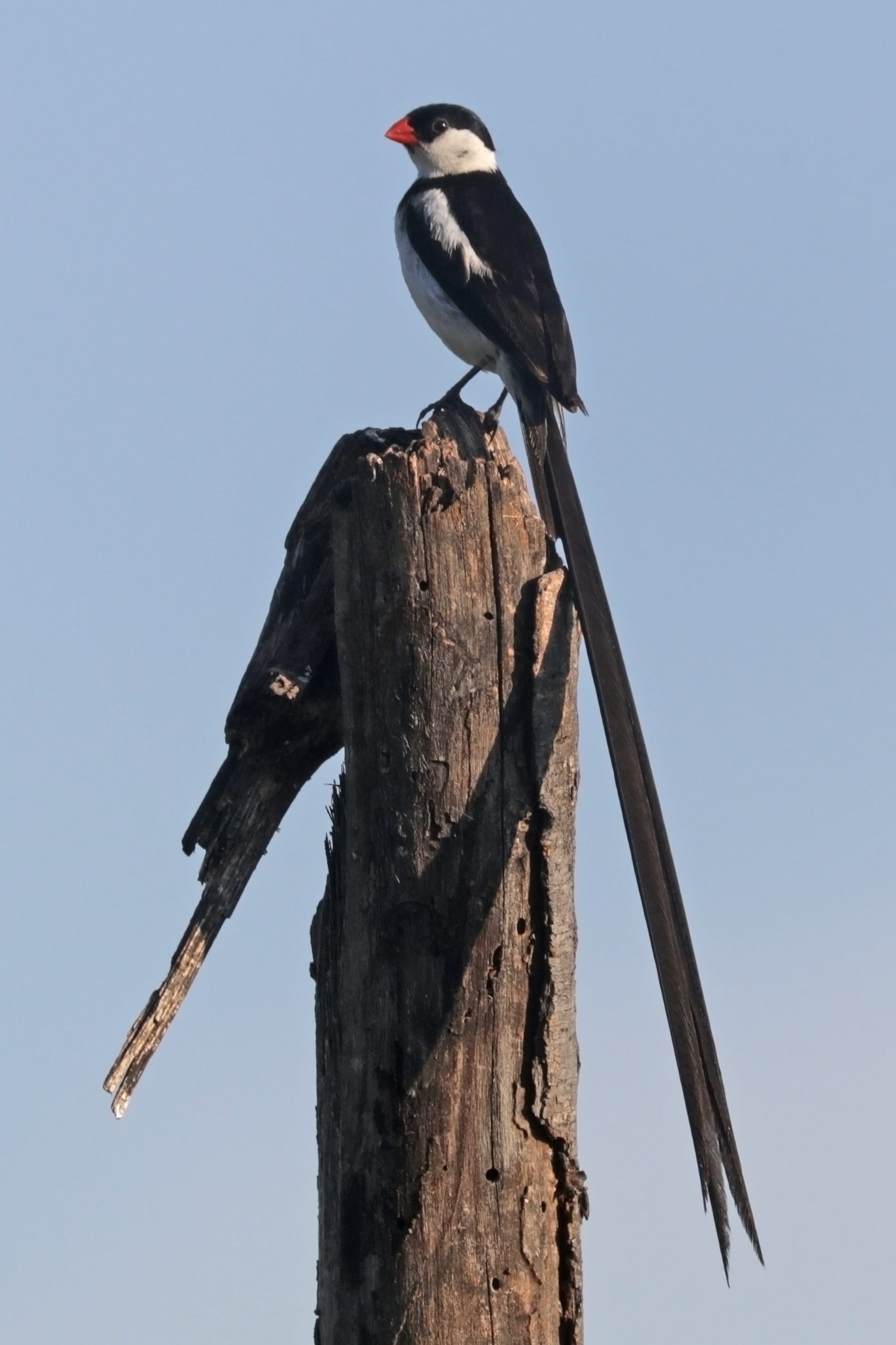
 © Charles J. Sharp / CC BY-SA 4.0
Pin-tailed Whydah
The Pin-tailed Whydah is a small African finch-like bird in the whydah family, best known for the male's dramatic breeding-season tail — a cascade of jet-black plumes that can grow more than twice his body length. Paired with a bright red bill and bold black-and-white plumage, it makes a striking impression. Uniquely, this species doesn't build its own nest: females lay their eggs in the nests of estrildid finches, leaving the host parents to raise the young. Outside the breeding season, males molt into a plain, female-like coloring, making the sexes hard to tell apart. Because of this unusual brood-parasitic biology, it is best suited to experienced bird keepers.
View Pin-tailed Whydah encyclopedia →Breeder Wanted!
List on BreederDirect and sell directly to customers nationwide!
BreederDirect's 6 Transparency Commitments
All Birds listings include complete Breeder transparency: hand-raised status, DNA sex determination, and health certification details.
- Hand-Raised
- DNA Sex-Determined
- Health Certified
- Origin Disclosed
- Color Variation Specified
- Age in Months Disclosed
Browse all 286 breeds
Care Level
No listings match your filters
Adjust your filters, or get notified when new listings arrive.
Getting alerts is free with a member account. When new listings match your saved search, we'll notify you by email and in-app.
Browse other categories
Verified breeders (preview)
Pin-tailed Whydah key facts
- Care level
- Advanced
- Lifespan
- 6-9 years
- Size
- 12-13cm, with a further 20cm of tail on the breeding male
- Diet
- Mixed seed, spray millet, greens, small livefood
- Cage
- A tall, deep aviary is needed so the long tail is not damaged, and breeding requires several pairs of the host species in the same flight.
- Temperament
- Males are strongly territorial and drive off rival males while in breeding plumage, so keep only one male.
- Vocalization
- The displaying male calls a great deal, producing complex sounds, at moderate volume.
- Notes
- As a brood parasite it will not breed as an isolated pair, and the long tail is shed at the moult, so expect a very different bird outside the breeding season.
About Pin-tailed Whydah
A small African finch known for the male's dramatic long black breeding tail, red bill, and bold black-and-white plumage. It uniquely lays its eggs in other finches' nests. Best suited to experienced keepers.
7 things to know before welcoming a Pin-tailed Whydah
1Brood Parasitism
Pin-tailed Whydahs don't build their own nests. Instead, females lay eggs in the nests of estrildid finches, leaving the host birds to raise the chicks. Because of this, you won't observe typical parent-rearing behavior, and breeding in captivity requires understanding this unusual reproductive strategy.
2Seasonal Tail Growth
The male's long black tail only grows during the breeding season, sometimes reaching more than double his body length. Once the season ends, the tail feathers molt out and he returns to a short tail. This seasonal transformation is one of the species' signature traits.
3Sexes Look Alike Off-Season
Outside the breeding season, males molt into plain brownish plumage that closely resembles females. This makes visual sexing difficult for part of the year. Keep this in mind when trying to pair birds.
4Suited to Experienced Keepers
Because of its unusual brood-parasitic breeding behavior, the Pin-tailed Whydah is considered a species for experienced keepers rather than beginners. Take time to research its specific needs and habits before bringing one home.
5Housing for a Long Tail
During the breeding season, a male's long tail needs enough space and height in the cage or aviary to avoid damage. Pay attention to perch placement so the tail feathers aren't rubbed or bent against surfaces.
6Seed-Based Diet
Like other small finches, Pin-tailed Whydahs mainly eat grass and grain seeds. Supplementing with leafy greens and calcium sources like cuttlebone helps keep their diet balanced. Fresh water should always be available.
7Preparing Before Bringing One Home
Before bringing a Pin-tailed Whydah home, think through your setup — whether to keep it alone or alongside other finches — with its brood-parasitic nature in mind. Source your bird from a reputable breeder or specialist shop, and allow a few quiet days after transport for it to settle in.
Frequently asked questions about Pin-tailed Whydah
- Q.Is the Pin-tailed Whydah regulated under CITES?
- A.No, the Pin-tailed Whydah is not listed under CITES.
- Q.Why doesn't it raise its own chicks?
- A.The Pin-tailed Whydah is a brood parasite, laying its eggs in the nests of other small finches such as estrildids and leaving them to raise the chicks. Because of this, you won't see nest-building or incubation behavior even in captivity.
- Q.How can you tell males and females apart?
- A.Breeding-season males are easy to spot with their long black tail and red bill, but once the season ends they molt into plain plumage that closely resembles females. At certain times of year, telling the sexes apart by sight alone becomes difficult.
- Q.Is this a good bird for beginners?
- A.The Pin-tailed Whydah's unusual biology, including its brood-parasitic breeding, makes it a species better suited to experienced keepers. It's worth researching its specific habits and housing needs before getting started.
- Q.How long does the male's tail get during breeding season?
- A.Adults measure about 12–13 cm in body length, but breeding males grow an additional tail of roughly 20 cm. This ornamental tail molts out once the breeding season ends.
Useful tools for Pin-tailed Whydah care
Learn more about Pin-tailed Whydah in the encyclopedia
View Pin-tailed Whydah encyclopedia entry →
Care difficulty, lifespan, size and diet — all basics covered.
More in this category
Can't find the one you're looking for?
Post your wishes for free and breeders with matching animals will contact you with introductions.