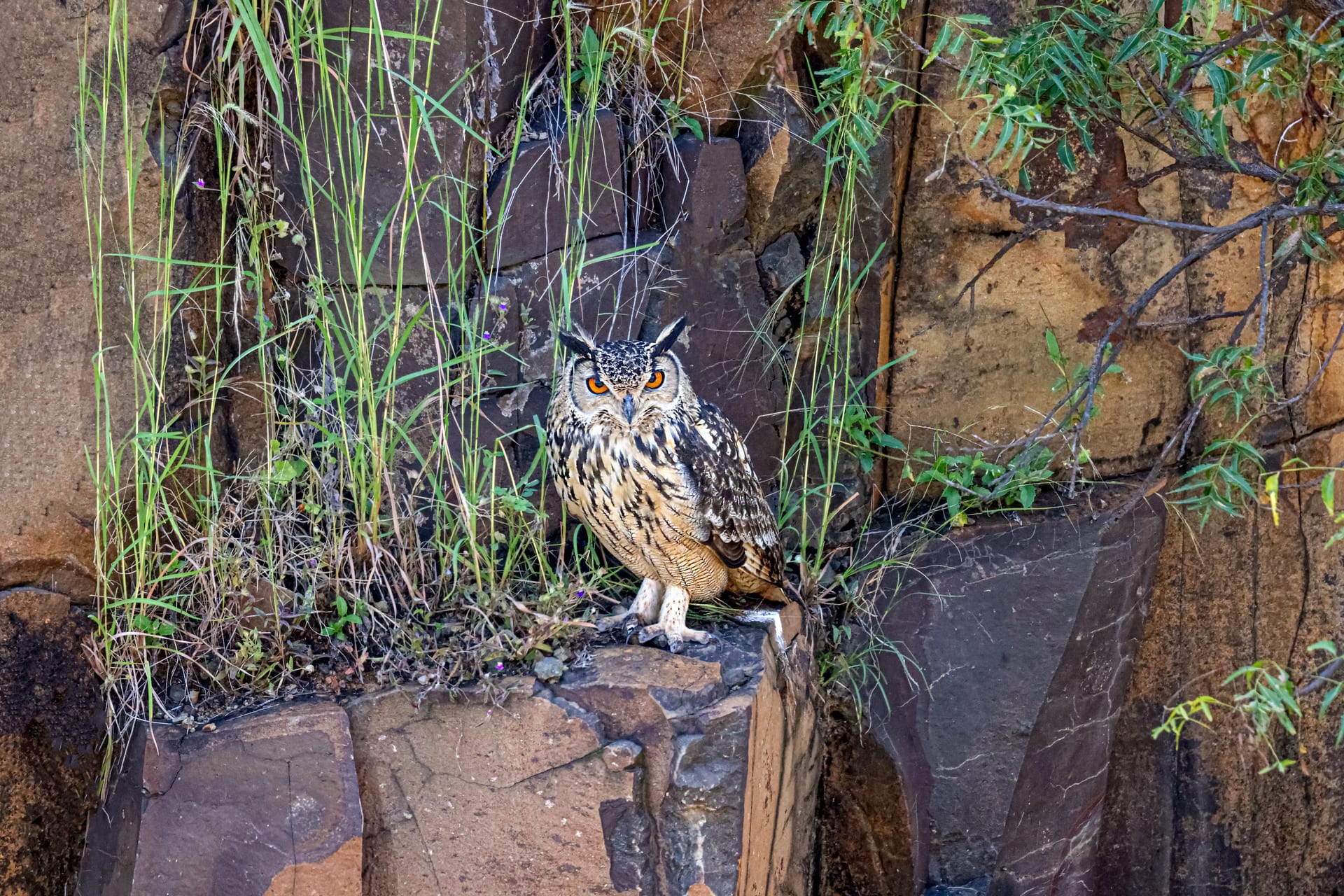
 © Drsssuresh1961 / CC BY-SA 4.0
Indian Eagle-Owl
A large, striking owl native to the rocky scrublands and light woodlands of the Indian subcontinent, the Indian Eagle-Owl (Bengal Eagle-Owl) cuts an imposing figure at 50-56 cm long and around 1,100 g in weight. Its plumage is a mottled mix of brown and grey, framing a black-rimmed, unmarked facial disc and piercing orange eyes. At dawn and dusk it announces itself with a low, two-note call, and in the wild it is typically seen in bonded pairs rather than alone. Its commanding presence and calm bearing make it a favorite among experienced keepers drawn to large owls, though its care and temperament call for real expertise, making this very much an advanced-level species.
View Indian Eagle-Owl encyclopedia →0% commission on your first sales!Register by September 30, 2026 and your first 2 sales are commission-free!
Breeder Wanted!
List on BreederDirect and sell directly to customers nationwide!
Six Transparency Commitments from BreederDirect
All Birds listings include complete Breeder transparency: hand-raised status, DNA sex determination, and health certification details.
- Hand-Raised
- DNA Sex-Determined
- Health Certified
- Origin Disclosed
- Color Variation Specified
- Age in Months Disclosed
Browse all 247 breeds
Care Level
Verified breeders wanted for Birds
Breeders are signing up now ahead of launch. Subscribe to be notified when new listings go live.
Getting alerts is free with a member account. When new listings match your saved search, we'll notify you by email and in-app.
Browse other categories
Verified breeders (preview)
Indian Eagle-Owl key facts
- Care level
- Advanced
- Lifespan
- 15+ years
- Size
- 50-56cm (about 1,100g)
- Diet
- Frozen rats, mice, quail and day-old chicks; in the wild rodents year-round, with birds taken more heavily towards winter
- Cage
- As a large eagle-owl it needs an aviary big enough to spare the feathers. Favouring rock and scrub, it benefits from cover it can hide in by day and perches at varied heights.
- Temperament
- Usually seen in pairs. When breeding, adults fly in zigzags near the nest and mob intruders, people included, so approach with care at that time.
- Vocalization
- It gives a deep resonant two-note call, the male delivering long calls at dusk in the breeding season with a February peak. The low pitch carries far, so keeping one near neighbours calls for care.
- Notes
- Listed on CITES Appendix II, so import requires an export permit. It closely resembles the Eurasian eagle-owl, so check the labelling against features such as the black-bordered facial disc and pale scapular patch when buying.
About Indian Eagle-Owl
A large owl native to the Indian subcontinent, the Indian Eagle-Owl reaches 50-56 cm and about 1,100 g, with mottled brown-grey plumage and orange eyes. Recommended for advanced keepers.
7 things to know before welcoming a Indian Eagle-Owl
1An Advanced-Level Owl
The Indian Eagle-Owl calls for real experience with raptors or owls, and is not a good first bird for a novice keeper. Its size and strength mean daily care and health monitoring require genuine expertise.
2Room to Spread Its Wings
Reaching 50-56 cm in length, this owl needs a generously sized enclosure or aviary where it can move and stretch freely. Cramped housing can lead to stress or feather damage over time.
3Recreate a Rocky Habitat
In its native range across the Indian subcontinent, this owl lives among rocky scrubland and light woodland. Adding perches and rock-like structures, along with a few sheltered spots, helps it feel more at ease.
4Vocal at Dawn and Dusk
Indian Eagle-Owls call with a low, two-note hoot at dawn and dusk. If you live somewhere noise-sensitive, like an apartment building, it is worth thinking through how you will manage this beforehand.
5A Pair-Bonding Owl
In the wild, this species is usually seen in pairs rather than alone. A single bird can still do well with attentive care, but understanding this social tendency helps you approach interaction thoughtfully.
6Watch the Face and Eyes
The black-rimmed, unmarked facial disc and bright orange eyes are distinctive features worth checking regularly. Discharge around the eyes or changes to the facial disc can be an early sign worth flagging to a specialist.
7Do Your Homework First
Because this is considered an advanced species, ask the breeder in detail about feeding, temperature management, and daily handling before bringing one home. It also helps to line up a vet experienced with owls ahead of time.
Frequently asked questions about Indian Eagle-Owl
- Q.Is this owl suitable for beginners?
- A.The Indian Eagle-Owl is considered an advanced-level species. It is best suited to keepers with prior experience handling owls or other raptors, and is not recommended as a first bird.
- Q.How large does it grow?
- A.Adults reach 50-56 cm in length and weigh around 1,100 g, making this a genuinely large owl. You will want a spacious enclosure ready before bringing one home.
- Q.Is it a noisy bird?
- A.It calls with a low, two-note hoot at dawn and dusk. If you live somewhere noise-sensitive, such as an apartment, it is worth planning ahead for this.
- Q.Can it be kept alone?
- A.In the wild it is usually seen in pairs, reflecting its social nature, but a single bird can do well with attentive care. Understanding this tendency helps you interact with it thoughtfully.
- Q.Is it subject to CITES restrictions?
- A.Indian Eagle-Owl is listed in CITES Appendix II. International trade requires a permit from the exporting country, but as far as CITES is concerned, no registration is needed to buy or sell individuals already legally in Japan.
Useful tools for Indian Eagle-Owl care
Learn more about Indian Eagle-Owl in the encyclopedia
View Indian Eagle-Owl encyclopedia entry →
Care difficulty, lifespan, size and diet — all basics covered.
More in this category
Can't find the one you're looking for?
Post your wishes for free and breeders with matching animals will contact you with introductions.