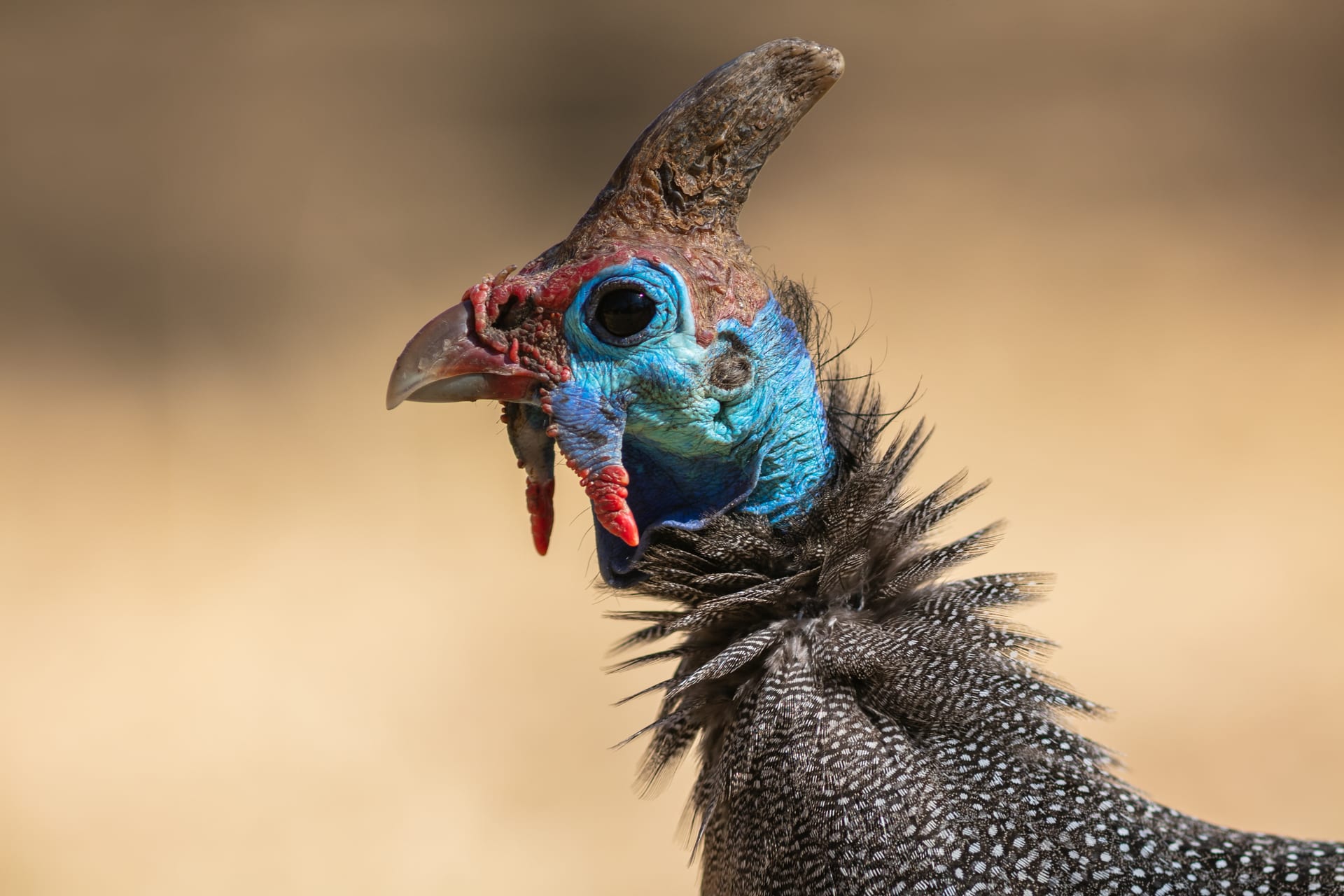
 © Diego Delso / CC BY-SA 4.0
Helmeted Guineafowl
The Helmeted Guineafowl is a striking bird from the pheasant order, known for its black plumage dotted with white spots and the bony knob crowning its bare head. Native to Africa, it has long been domesticated worldwide, valued not only as food but also for its pest-control instincts and its loud, alarm-calling nature that makes it an effective watchbird. When it senses danger, it tends to run rather than fly, reflecting its strongly ground-dwelling habits. Considered a bird for intermediate keepers, it's a lively, characterful species that shows its liveliest side when kept in a group.
View Helmeted Guineafowl encyclopedia →0% commission on your first sales!Register by September 30, 2026 and your first 2 sales are commission-free!
Breeder Wanted!
List on BreederDirect and sell directly to customers nationwide!
Six Transparency Commitments from BreederDirect
All Birds listings include complete Breeder transparency: hand-raised status, DNA sex determination, and health certification details.
- Hand-Raised
- DNA Sex-Determined
- Health Certified
- Origin Disclosed
- Color Variation Specified
- Age in Months Disclosed
Browse all 247 breeds
Care Level
Verified breeders wanted for Birds
Breeders are signing up now ahead of launch. Subscribe to be notified when new listings go live.
Getting alerts is free with a member account. When new listings match your saved search, we'll notify you by email and in-app.
Browse other categories
Verified breeders (preview)
Helmeted Guineafowl key facts
- Care level
- Intermediate
- Lifespan
- Up to 12 years in the wild
- Size
- 53-58cm (about 1.3kg)
- Diet
- Poultry feed, grain and greens; in the wild insects, arthropods, seeds and fruit
- Cage
- A strongly terrestrial bird that needs a house with a wide run. It roosts high at night, so provide covered perches, and because it can make short flights, open housing needs measures against escape.
- Temperament
- Strongly social, forming flocks of about 25 outside the breeding season. Males fight hard among themselves, so avoid keeping several males together without ample space. Its wariness makes it a useful alarm bird.
- Vocalization
- It answers intruders and noises with loud, repeated alarm calls. The volume is considerable, so keeping it in a residential area calls for care about neighbours.
- Notes
- In the wild, birds have been recorded living up to twelve years. It is valued for eating ticks on pasture, but it scratches the ground when foraging, so flower beds suffer.
About Helmeted Guineafowl
A striking pheasant-family bird with black, white-spotted plumage and a bony head knob. Native to Africa, it's kept worldwide as poultry, valued for its alertness and watchbird instincts—a species best suited to intermediate keepers.
7 things to know before welcoming a Helmeted Guineafowl
1Plenty of Space to Roam
Since Helmeted Guineafowl are active, ground-dwelling birds, they do best with a reasonably sized area to move around rather than a cramped space. If kept outdoors, secure the enclosure well at ground level, since they're more likely to run for an opening than fly over a fence.
2A Loud, Carrying Call
Guineafowl have historically been valued as watchbirds, and part of that comes from their loud, far-carrying calls. It's worth understanding this vocal habit, and considering nearby neighbors, before bringing one home.
3Happier in a Flock
These birds are naturally social and tend to settle in better when kept with others of their kind. A single bird may become lonely or stressed, so it's worth thinking about group size before adopting.
4The Bony Head Knob
A patch of bare skin and a bony knob (casque) on the head is one of the guineafowl's most distinctive features. The color and shape vary somewhat between individuals, adding to the fun of observing each bird's character.
5Runs Rather Than Flies
When startled or sensing danger, guineafowl tend to run rather than take flight. When catching or moving one, calm, steady handling works better than chasing, since startling them tends to trigger that running instinct.
6Better Suited to Experienced Keepers
This species is generally considered suited to intermediate-level keepers rather than complete beginners. Understanding its active temperament and vocal habits in advance will help you prepare for life with one.
7A Long-Term Commitment
In the wild, Helmeted Guineafowl can live up to around 12 years, so bringing one home means committing to a long-term relationship. Adults reach about 53–58 cm and roughly 1.3 kg, so plan your setup with their full adult size in mind.
Frequently asked questions about Helmeted Guineafowl
- Q.Are Helmeted Guineafowl loud?
- A.They've long been valued as watchbirds partly because of their loud, carrying calls. It's worth thinking about this in advance, especially regarding outdoor housing and nearby neighbors.
- Q.Can they be kept with other birds?
- A.Since they're naturally social and flock-oriented, keeping several together tends to help them settle in. Individual compatibility varies, so it's best to introduce new birds gradually and watch how they get along.
- Q.Do they fly away easily?
- A.They strongly prefer running over flying when they sense danger. That said, they aren't flightless, so it's still important to have a secure enclosure.
- Q.Are they suitable for beginners?
- A.This species is generally considered suited to intermediate-level keepers rather than complete beginners. It helps to understand their active temperament and vocal habits before bringing one home.
- Q.How big do they get?
- A.Adults reach about 53–58 cm in length and roughly 1.3 kg in weight. As a mid-sized, ground-dwelling bird with a sturdy build, they'll need enclosure space to match their full adult size.
Useful tools for Helmeted Guineafowl care
Learn more about Helmeted Guineafowl in the encyclopedia
View Helmeted Guineafowl encyclopedia entry →
Care difficulty, lifespan, size and diet — all basics covered.
More in this category
Can't find the one you're looking for?
Post your wishes for free and breeders with matching animals will contact you with introductions.