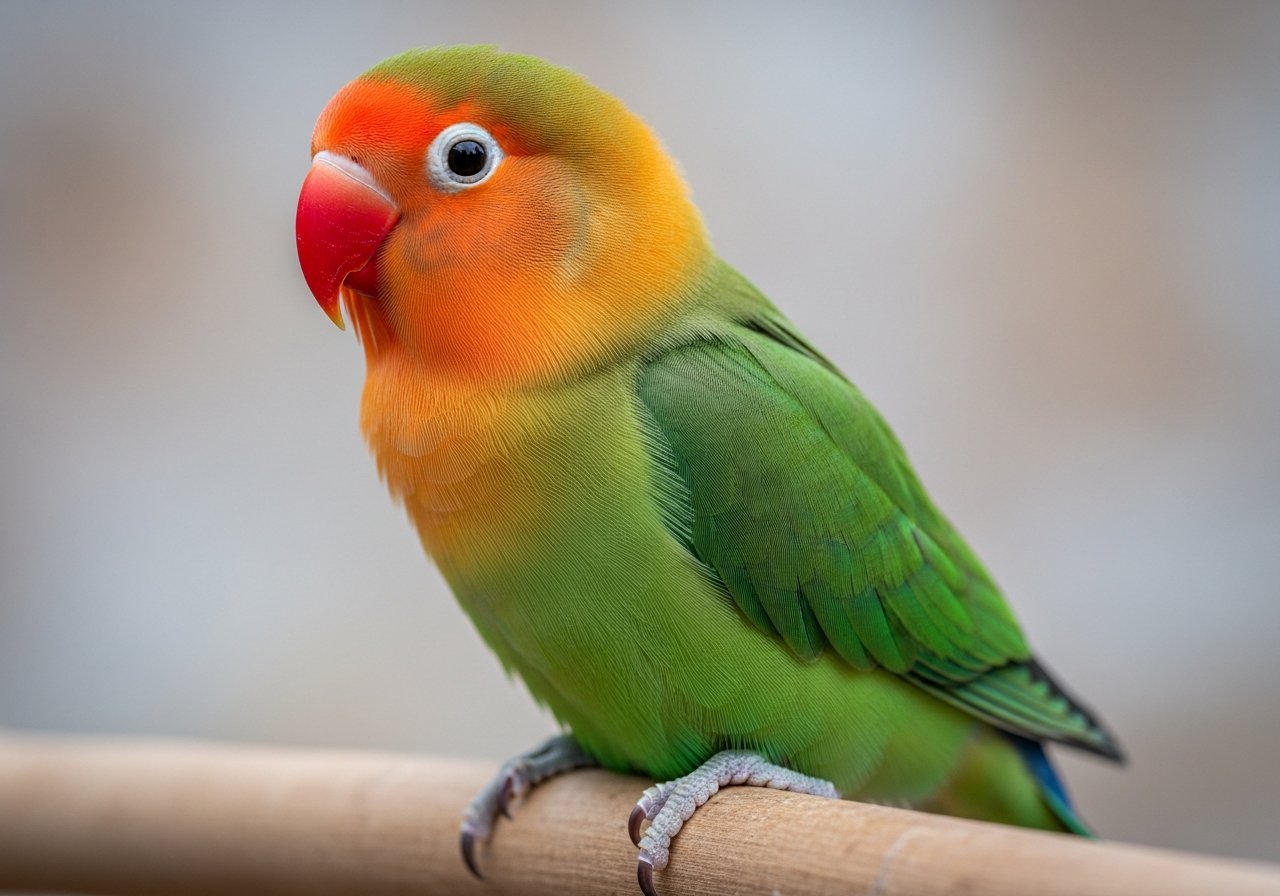
Fischer's Lovebird
Fischer's Lovebird is a small parrot known for its warm orange-red face and vivid green plumage, reaching a compact adult size of around 14 to 15 cm. Despite its small frame, it's a sturdy, energetic bird that's rarely still for long. The name "lovebird" comes from its tendency to bond closely with a partner, and hand-raised birds can become affectionate and playful companions — though they also carry a strong-willed, sometimes territorial streak. Considered a better fit for keepers with some prior bird-keeping experience, Fischer's Lovebirds do well either singly or in pairs, with each approach calling for different handling and cage setup. Prospective owners should also be ready for a loud voice and a firm bite, and plan their cage environment accordingly before bringing one home.
View Fischer's Lovebird encyclopedia →0% commission on your first sales!Register by September 30, 2026 and your first 2 sales are commission-free!
Breeder Wanted!
List on BreederDirect and sell directly to customers nationwide!
BreederDirect's 6 Transparency Commitments
All Birds listings include complete Breeder transparency: hand-raised status, DNA sex determination, and health certification details.
- Hand-Raised
- DNA Sex-Determined
- Health Certified
- Origin Disclosed
- Color Variation Specified
- Age in Months Disclosed
Browse all 286 breeds
Care Level
Verified breeders wanted for Birds
Breeders are signing up now ahead of launch. Subscribe to be notified when new listings go live.
Getting alerts is free with a member account. When new listings match your saved search, we'll notify you by email and in-app.
Browse other categories
Verified breeders (preview)
Fischer's Lovebird key facts
- Care level
- Intermediate
- Lifespan
- 10-15 years
- Size
- 14-15cm
- Diet
- Seed mix, pellets and leafy greens
- Cage
- Metal cage (chews a lot); provide chew toys
- Housing
- Set up a small to medium cage with perches, chew wood and a bathing dish, and give daily out-of-cage time and play for exercise and mental stimulation.
- Diet & Feeding
- Feed lovebird pellets as the staple with only a small amount of seed, plus greens, vegetables and fruit; avoid fatty foods.
- Care
- Bonds strongly in pairs; solo birds need attention
- Notes
- Feisty and can be aggressive; mix with caution
About Fischer's Lovebird
A small parrot with a red face and green body, Fischer's Lovebird reaches about 14–15 cm as an adult. Known for pair-bonding, hence the name "lovebird" — best suited to keepers with some experience.
7 things to know before welcoming a Fischer's Lovebird
1Pair Bonding
True to their name, Fischer's Lovebirds tend to bond tightly with a partner. They can become affectionate when kept alone, but if housing a pair, compatibility between the two birds strongly affects how smoothly they get along.
2A Strong-Willed Side
Alongside their affectionate side, Fischer's Lovebirds can be territorial and wary of change. They may act defensively toward other birds or new additions to their cage, so introductions should be handled gradually.
3A Surprisingly Loud Voice
Despite their small size, Fischer's Lovebirds have a surprisingly loud, carrying voice, especially when excited. If you live in an apartment, it's worth considering in advance whether your living situation can accommodate the noise.
4A Firm Bite
Their beak is strong, and they may bite firmly when upset or feeling threatened. Hand-taming should be introduced gradually and without rushing the bird.
5Setting Up the Cage
Being an active bird, Fischer's Lovebirds benefit from perches and toys arranged to encourage movement within the cage. If keeping more than one bird, be sure to provide enough space and places to retreat to.
6Diet Management
A balanced daily diet of pelleted feed, fresh vegetables, and seeds is the foundation of good health. Regularly check leftover food and water intake to keep track of their condition.
7Before You Bring One Home
Fischer's Lovebirds are generally considered suited to keepers with some prior experience, given their temperament, vocal nature, and tendency to bite. Think through whether a single bird or a pair fits your lifestyle before bringing one home.
Frequently asked questions about Fischer's Lovebird
- Q.Can beginners keep a Fischer's Lovebird?
- A.Fischer's Lovebirds are generally considered an intermediate-level bird to keep. Beginners can succeed with some understanding of their temperament, vocal habits, and biting tendency, but prior bird-keeping experience is an advantage.
- Q.Is it better to keep one bird or a pair?
- A.Both approaches are workable, but they call for different care. A single bird tends to bond more closely with its owner, while a pair requires attention to compatibility between the two birds and a more spacious setup.
- Q.Are they noisy birds?
- A.Fischer's Lovebirds have a surprisingly loud voice for their size and can call out loudly when excited. If you live in an apartment, it's worth checking beforehand whether your living situation can handle the noise.
- Q.Can they be housed with other birds?
- A.Some individuals are territorial and assertive, so mixing them with other bird species requires caution. If housing them together, introductions should be done gradually while monitoring how the birds interact.
- Q.How big do they get?
- A.As adults, Fischer's Lovebirds reach about 14 to 15 cm in length, making them a small parrot species. Despite their small size, they have a sturdy build and are more active than their size might suggest.
Useful tools for Fischer's Lovebird care
Learn more about Fischer's Lovebird in the encyclopedia
View Fischer's Lovebird encyclopedia entry →
Care difficulty, lifespan, size and diet — all basics covered.
Fischer's Lovebird related articles
Breeding Guide for Rosy-faced Lovebirds and Fischer's Lovebirds: Nest Boxes, Egg-laying, and Chick Rearing
A detailed guide to breeding Rosy-faced Lovebirds and Fischer's Lovebirds. Covers breeding age requirements, choosing nest boxes, managing egg-laying through hatching, and chick-rearing techniques (hand-feeding).
Lovebird (Fischer's Lovebird & Rosy-faced Lovebird) Pairing Guide
Explains lovebird pairing methods. Introduces how to determine compatibility, sex identification, signs of pair bonding, and important precautions.
More in this category
Can't find the one you're looking for?
Post your wishes for free and breeders with matching animals will contact you with introductions.