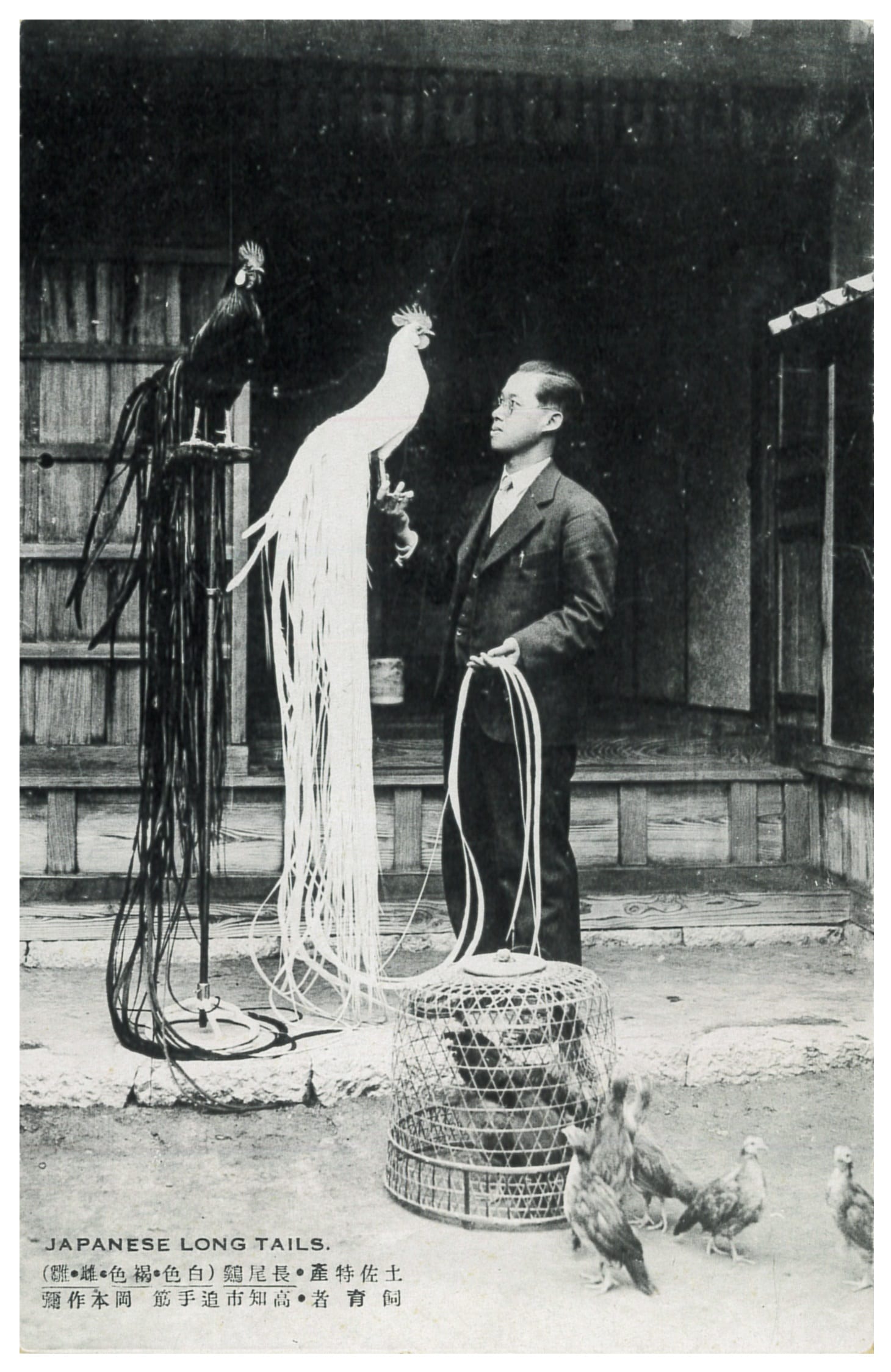
 © 岡本作彌 Sakuya Okamoto / Public domain
Onagadori
The Onagadori is a rare chicken breed native to Kochi Prefecture, Japan, prized for the rooster's tail feathers, which never molt and can grow to several meters in length. Cherished by local breeders since the Edo period, it is the only chicken breed designated a Special Natural Monument of Japan, officially known as the "Tosa no Onagadori." Its flowing, dramatic tail sets it apart from any other breed and has long made it a favorite ornamental fowl. Because the tail feathers must be protected from damage, keepers need specialized perches and housing, making this a breed best suited to experienced keepers.
View Onagadori encyclopedia →0% commission on your first sales!Register by September 30, 2026 and your first 2 sales are commission-free!
Breeder Wanted!
List on BreederDirect and sell directly to customers nationwide!
Six Transparency Commitments from BreederDirect
All Birds listings include complete Breeder transparency: hand-raised status, DNA sex determination, and health certification details.
- Hand-Raised
- DNA Sex-Determined
- Health Certified
- Origin Disclosed
- Color Variation Specified
- Age in Months Disclosed
Browse all 286 breeds
Care Level
Verified breeders wanted for Birds
Breeders are signing up now ahead of launch. Subscribe to be notified when new listings go live.
Getting alerts is free with a member account. When new listings match your saved search, we'll notify you by email and in-app.
Browse other categories
Verified breeders (preview)
Onagadori key facts
- Care level
- Advanced
- Lifespan
- Little data
- Size
- Little data
- Diet
- Chicken rations and greens; traditionally animal protein was added to support tail growth
- Housing
- Cocks are traditionally kept in tall narrow boxes (tomebako) or on high perches so the tail is not damaged, and the tail must be kept clean.
- Temperament
- A purely ornamental breed kept with restricted movement to preserve the tail, not a bird for free-ranging like ordinary chickens.
- Feeding
- Feed rations and greens with attention to nutrition for tail growth; traditionally loach and other animal protein were given.
- Breeding
- Inbreeding has reduced tail growth, so line management matters; consult preservation societies when planning matings.
- Notes
- A Special Natural Monument breed, so check transfers, exports and matings with the relevant board of education in advance. Under the Act on Domestic Animal Infectious Diseases Control, chickens are livestock subject to hygiene management standards, and anyone keeping even one bird must report the number kept to the prefecture (livestock hygiene service centre) by 15 June every year. Keepers of fewer than 100 birds file a simplified report, and those shipping no birds or eggs need no attachments.
About Onagadori
Learn about the Onagadori, a rare Kochi-native chicken whose tail feathers never molt. Japan's only Special Natural Monument chicken breed requires specialized housing and experienced keepers.
7 things to know before welcoming a Onagadori
1Ever-Growing Tail Feathers
The rooster's tail feathers stop molting after the initial growth phase and keep lengthening year after year, sometimes reaching several meters. Because of this, protecting the tail becomes a central part of everyday care.
2Tall Perches Are Essential
To keep the long tail feathers from dragging on the ground and getting damaged, an elevated, purpose-built perch or coop is necessary. Enclosure design needs to account for the tail from the very start.
3An Advanced-Level Breed
Managing the tail feathers and maintaining suitable housing calls for specialized knowledge and experience, which is why this breed is considered suitable for advanced keepers. First-time chicken owners may find it challenging.
4A Special Natural Monument — and Required Reporting
The Onagadori is designated a Special Natural Monument of Japan as the "Tosa no Onagadori." Because of this status, check with the relevant board of education before selling, exporting or cross-breeding birds. Also note that under Japan's Act on Domestic Animal Infectious Diseases Control, chickens are livestock covered by the hygiene management standards, and anyone keeping even a single bird must file an annual report of the number of birds kept with their prefecture (via the local Livestock Hygiene Service Center) by June 15 each year. With fewer than 100 birds the report is simplified, and no supporting documents are needed if you don't ship eggs or birds.
5Limited Data on Lifespan
Because the Onagadori is kept in relatively small numbers, detailed records on lifespan and adult body size are limited. When bringing one home, it helps to draw on general chicken-keeping knowledge while observing each bird's individual condition closely.
6Temperament and Handling
The Onagadori is generally considered a calm bird, but its long tail feathers mean handling requires extra care. Startling the bird or handling it roughly can easily damage the delicate tail.
7Preparing Before You Bring One Home
Before bringing an Onagadori home, it's important to prepare a spacious, tall enclosure that protects the tail feathers. Speaking directly with a trusted breeder about housing needs and the bird's condition beforehand can offer peace of mind.
Frequently asked questions about Onagadori
- Q.How long do the Onagadori's tail feathers grow?
- A.The tail feathers never molt and keep growing for the bird's entire life, sometimes reaching several meters. The exact length varies from bird to bird and depends on its care environment.
- Q.Is the Onagadori suitable for first-time keepers?
- A.The Onagadori is considered a breed for advanced keepers, since protecting the tail and setting up specialized housing requires specific knowledge. First-time keepers are encouraged to consult experienced breeders while preparing.
- Q.What should I watch out for when caring for the tail feathers?
- A.It's important to provide a tall, purpose-built perch and plenty of space so the tail doesn't rub against the floor or walls and get damaged. Handling the bird roughly or startling it suddenly can also harm the tail, so extra care is needed.
- Q.Why is the Onagadori designated a Special Natural Monument?
- A.It's recognized as the only chicken breed with a Special Natural Monument designation, as the "Tosa no Onagadori," thanks to the rooster's uniquely lifelong-growing tail and a preservation history in Kochi Prefecture dating back to the Edo period. Local enthusiasts continue conservation efforts to this day.
- Q.How long does an Onagadori live?
- A.Because the Onagadori is a rare breed kept in limited numbers, detailed lifespan data is unfortunately scarce. Anyone considering bringing one home is encouraged to ask breeders directly about their experience and the condition of individual birds.
Useful tools for Onagadori care
Learn more about Onagadori in the encyclopedia
View Onagadori encyclopedia entry →
Care difficulty, lifespan, size and diet — all basics covered.
More in this category
Can't find the one you're looking for?
Post your wishes for free and breeders with matching animals will contact you with introductions.