 © Tisha Mukherjee / CC BY-SA 4.0
Baya Weaver
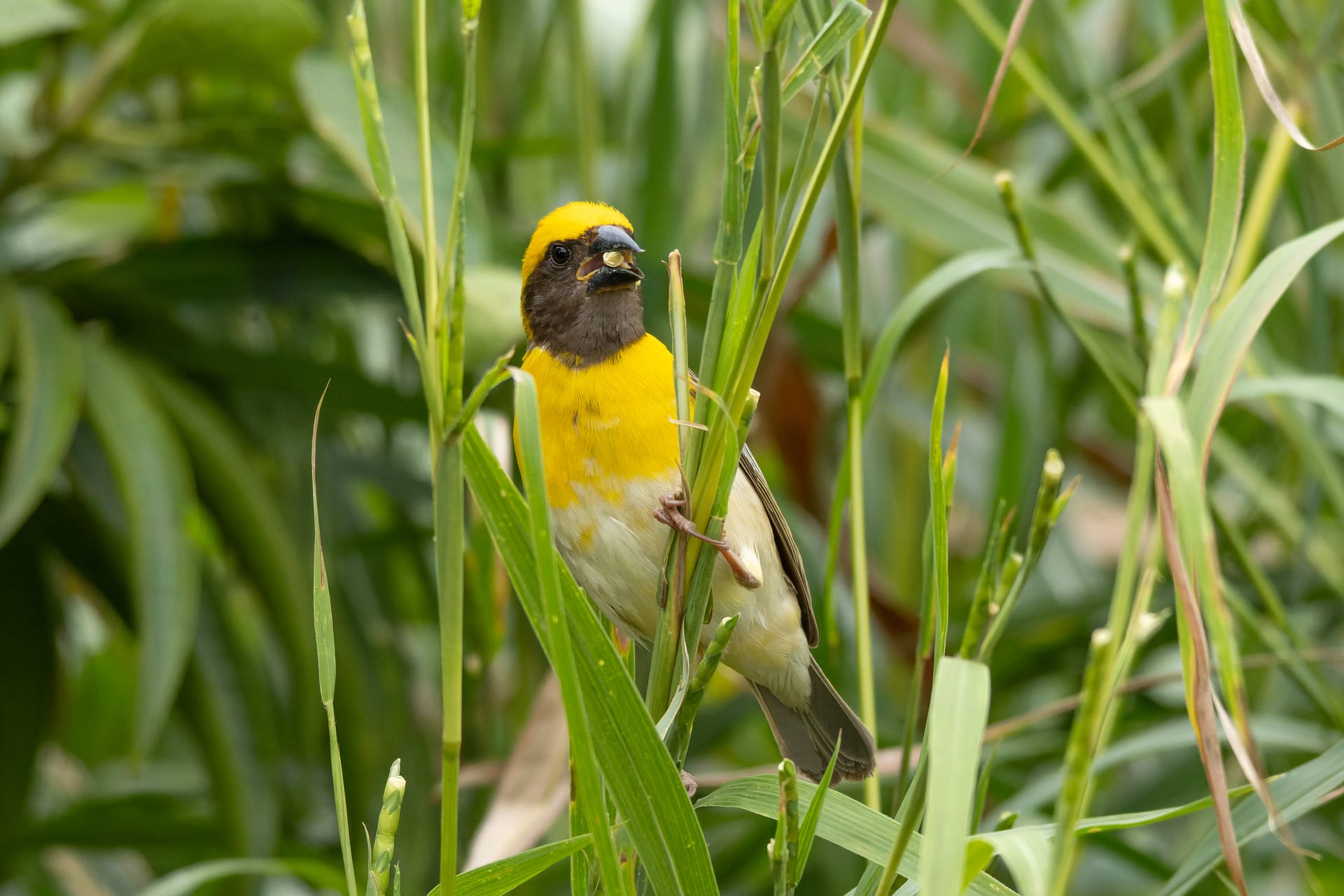
The Baya Weaver is a small member of the weaverbird family, best known for the male's remarkable skill at tearing strips from leaves and knitting them into a hanging, retort-shaped nest. During the breeding season, males transform dramatically: the crown turns a vivid yellow and the face darkens into a rich brown mask, while outside the breeding season they fade back to the same subdued plumage as the females. That seasonal transformation, paired with the spectacle of the male's nest-weaving, is a large part of the species' appeal. Adults reach roughly 15 cm in length, and keeping them well is generally considered a task better suited to intermediate keepers with some prior experience.
View Baya Weaver encyclopedia →0% commission on your first sales!Register by September 30, 2026 and your first 2 sales are commission-free!
Breeder Wanted!
List on BreederDirect and sell directly to customers nationwide!
Six Transparency Commitments from BreederDirect
All Birds listings include complete Breeder transparency: hand-raised status, DNA sex determination, and health certification details.
- Hand-Raised
- DNA Sex-Determined
- Health Certified
- Origin Disclosed
- Color Variation Specified
- Age in Months Disclosed
Browse all 247 breeds
Care Level
Verified breeders wanted for Birds
Breeders are signing up now ahead of launch. Subscribe to be notified when new listings go live.
Getting alerts is free with a member account. When new listings match your saved search, we'll notify you by email and in-app.
Browse other categories
Verified breeders (preview)
Baya Weaver key facts
- Care level
- Intermediate
- Lifespan
- 5-8 years
- Size
- About 15cm
- Diet
- Mixed seed, paddy and other grain, spray millet, greens, and small livefood when breeding
- Cage
- Nest building is the highlight of keeping it, so keep supplying long weavable grass blades and palm fibre and allow high hanging points.
- Temperament
- Strongly social, it lives in flocks, while breeding males hold territories and build several nests as polygynists.
- Vocalization
- Flocks call noisily to one another and breeding males give a sustained high call, at moderate volume.
- Notes
- Out of season the male becomes dull and female-like, so understand that the plumage does not stay the same year round.
About Baya Weaver
The Baya Weaver is a small weaverbird prized for the male's intricate hanging nest and its striking seasonal yellow crown. Adults reach about 15 cm, and the species suits intermediate-level keepers.
7 things to know before welcoming a Baya Weaver
1A distinctive woven nest
Males shred leaves into thin strips and weave them into a distinctive, flask-shaped hanging nest. Providing long, leaf-like nesting material in captivity can help bring out this natural behavior. Watching the weaving process is one of the great pleasures of keeping this species.
2A look that changes with the season
During the breeding season, males develop a vivid yellow crown and a dark brown, mask-like face. Outside the breeding season they revert to the same understated coloring as females, so keepers can enjoy the seasonal contrast.
3A sociable disposition
In the wild, this species is known for nesting in groups and is generally considered sociable. If housing more than one bird, watch how individuals get along and make sure the enclosure offers enough space and places to retreat.
4Some experience is recommended
The Baya Weaver is considered better suited to intermediate keepers, and can be somewhat demanding for a first-time bird owner. It's a good idea to build up basic knowledge of temperature, humidity control, and diet before bringing one home.
5Adult size and enclosure space
Adults reach a manageable length of about 15 cm, but they're active birds, so avoid an overly cramped cage and make sure there's enough room to stretch and move around. Perch placement is also worth thinking through.
6Thinking through the diet
In the wild this species is thought to eat a varied diet including seeds and insects. In captivity, it's important to avoid a one-sided diet and to check with a specialty shop or breeder about a suitable combination of foods.
7Prepare the environment beforehand
Before bringing your bird home, it helps to have the cage, perches, and nesting material ready in advance. Until it settles into its new surroundings, keep noise and foot traffic to a minimum and give it quiet time to adjust.
Frequently asked questions about Baya Weaver
- Q.Can beginners keep this species?
- A.The Baya Weaver is generally considered suited to intermediate keepers. Having some basic bird-keeping knowledge and experience will make it easier to care for with confidence.
- Q.How large do they grow?
- A.Adults reach a total length of about 15 cm. They don't grow especially large, so as long as you provide a suitably sized cage, they're a manageable bird to house.
- Q.How can you tell males from females?
- A.During the breeding season, males are easy to identify by their vivid yellow crown and dark brown, mask-like face. Outside the breeding season they revert to female-like coloring, making them harder to distinguish.
- Q.Can the nest-building behavior be seen in captivity?
- A.Shredding and weaving leaves into a nest is one of this species' defining behaviors. Providing suitable nesting material can allow keepers to observe at least part of this behavior in captivity.
- Q.Can it be kept alongside other birds?
- A.In the wild it's known for nesting in groups and is considered a sociable bird. If housing it with others, watch how individuals get along and make sure the enclosure has enough space and hiding spots.
Useful tools for Baya Weaver care
Learn more about Baya Weaver in the encyclopedia
View Baya Weaver encyclopedia entry →
Care difficulty, lifespan, size and diet — all basics covered.
More in this category
Can't find the one you're looking for?
Post your wishes for free and breeders with matching animals will contact you with introductions.