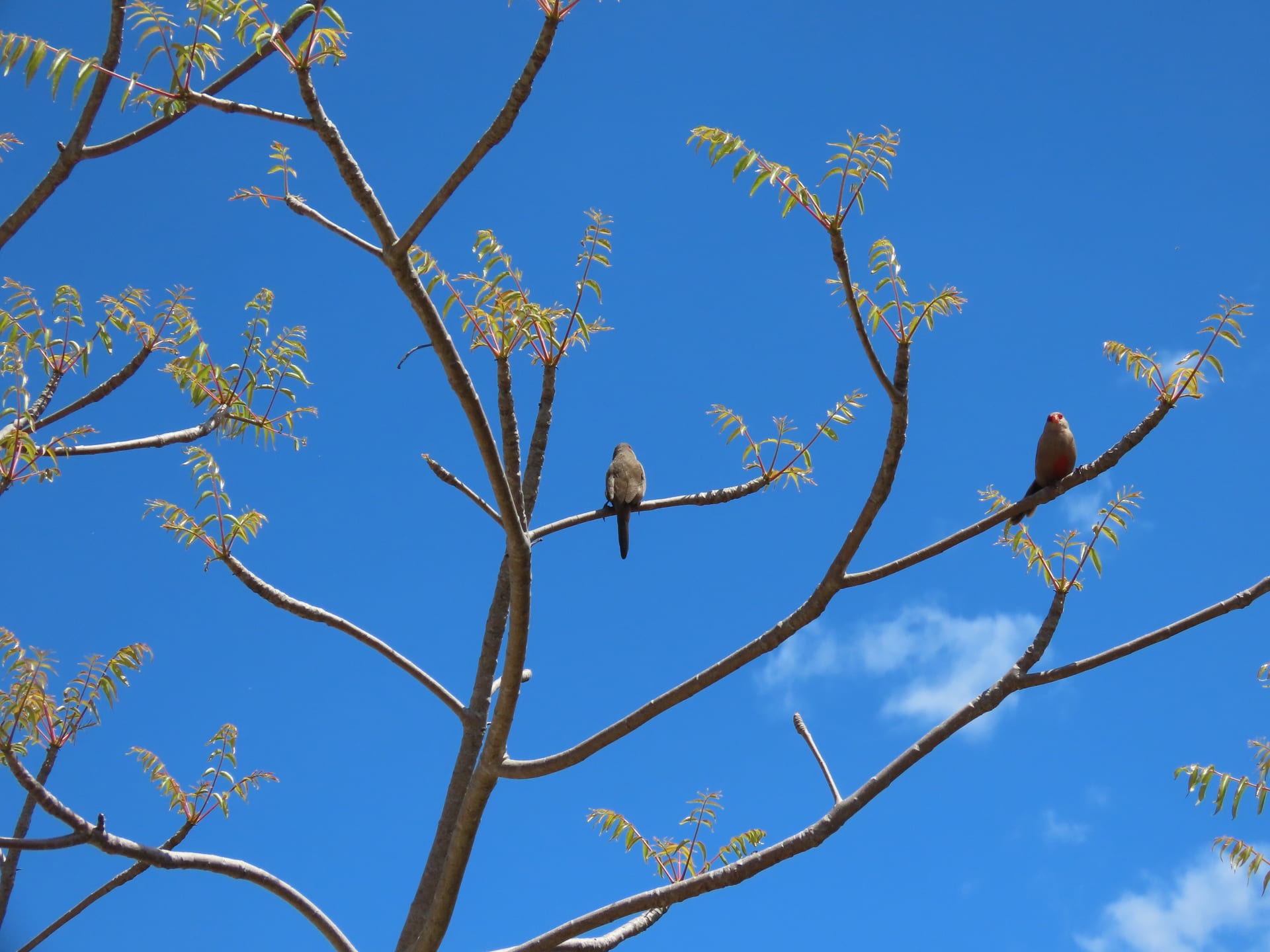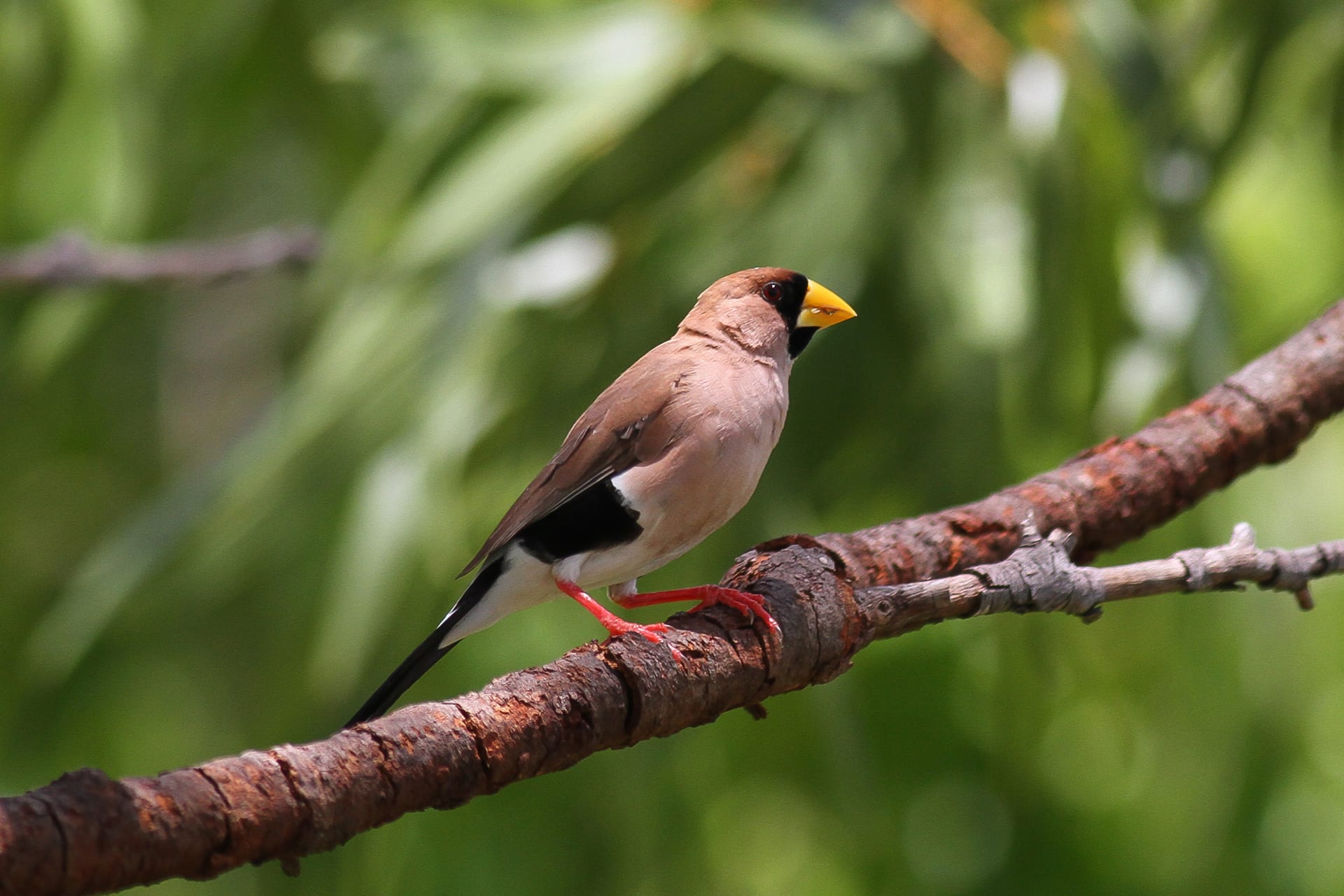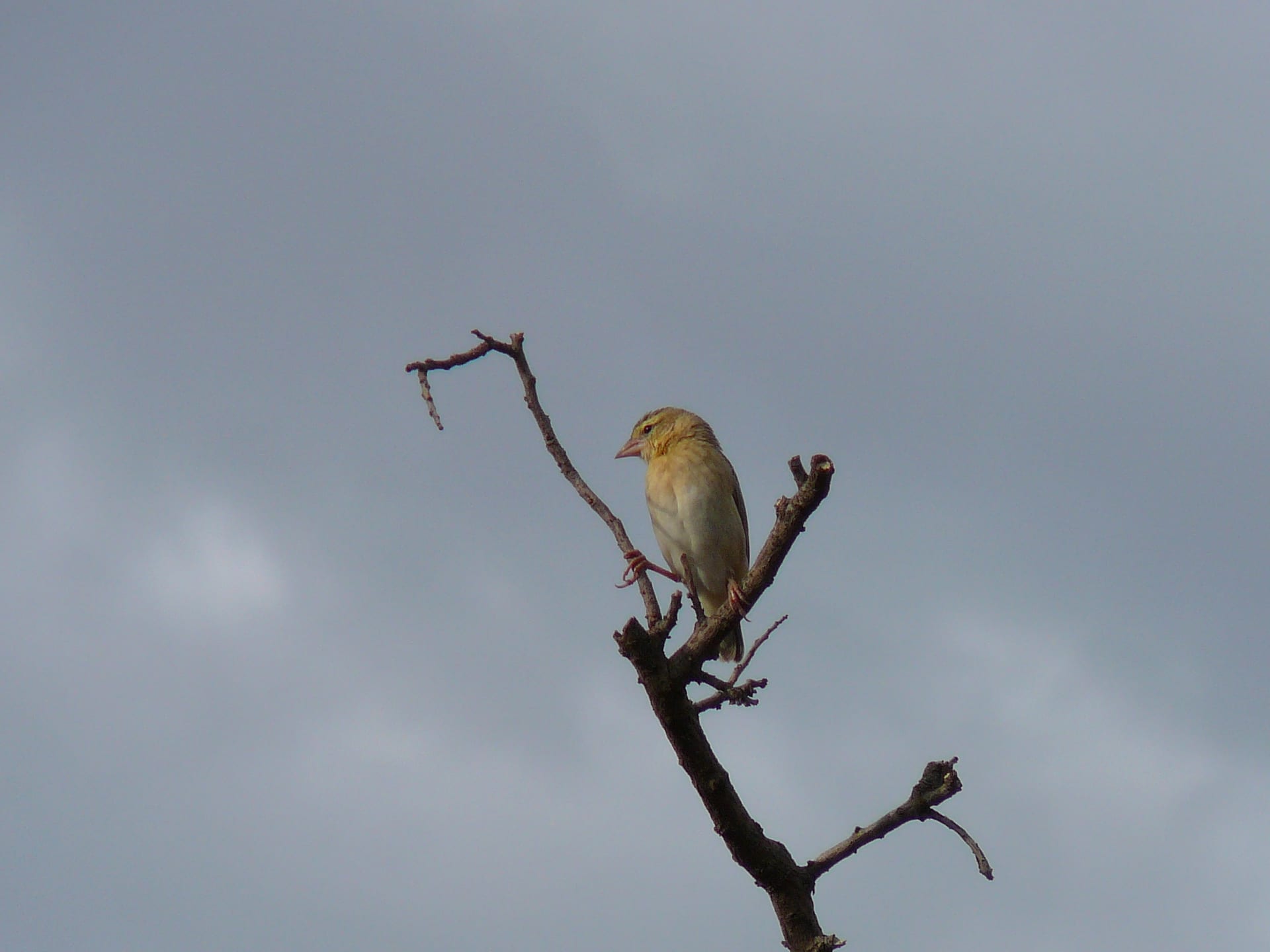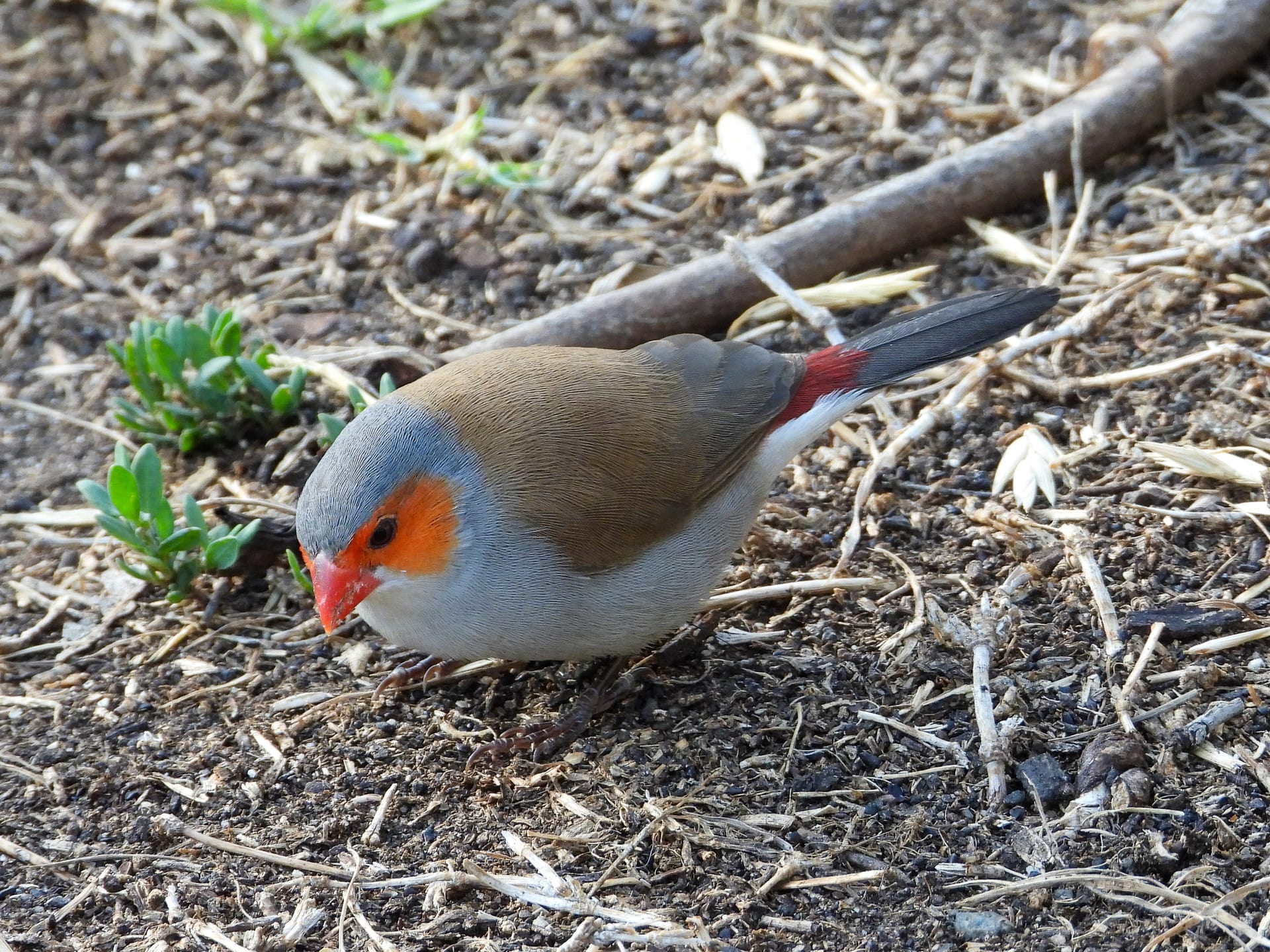
Source: Wikimedia Commons
Baya Weaver
IntermediatePloceus philippinus
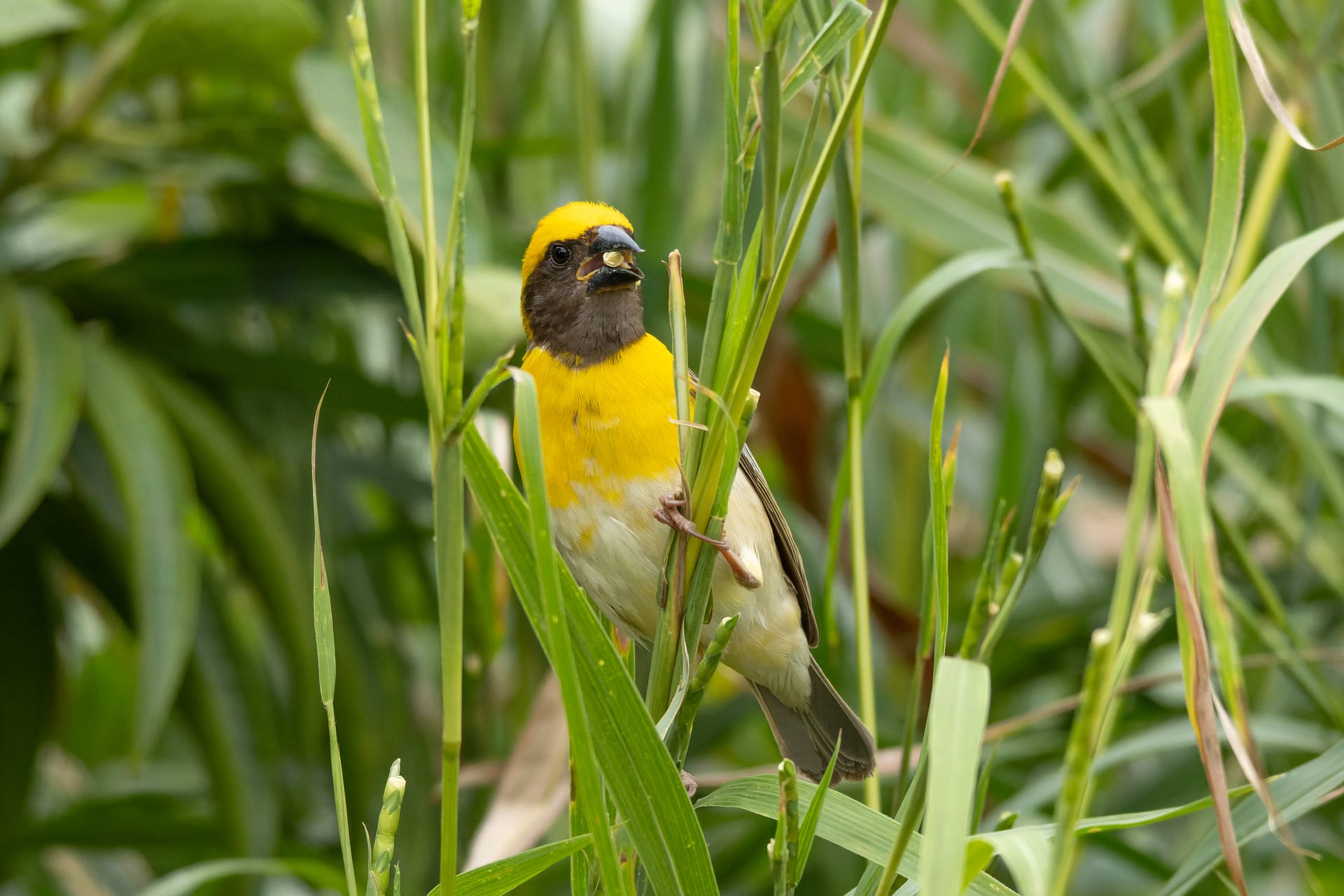
A weaver famous for the retort-shaped hanging nests the male weaves from strips of leaf. The breeding male has a bright yellow crown and a dark brown face mask.
Difficulty
Intermediate
Temperature
15〜30℃
Lifespan
5-8 years
Size
About 15cm
Humidity
40〜60%
Diet
Mixed seed, paddy and other grain, spray millet, greens, and small livefood when breeding
About
The baya weaver (Ploceus philippinus) is a weaver of South and Southeast Asia, sparrow-sized at about 15 cm, with a stout conical bill and a short square tail. In non-breeding plumage both sexes resemble a female house sparrow: dark brown streaked fulvous buff above, plain whitish fulvous below, with a long buff eyebrow, a horn-coloured bill and no mask. The breeding male has a bright yellow crown, a dark brown mask, a blackish brown bill, upper parts dark brown streaked with yellow, a yellow breast and cream buff underparts. It is social and gregarious, foraging in flocks for seed both on plants and on the ground and gleaning paddy in harvested fields. The nest is a hanging retort-shaped structure woven from strips 20 to 60 cm long cut from paddy leaves, rough grasses and palm fronds; colonies typically hold twenty to thirty nests, slung on thorny trees or palm fronds near or over water where predators cannot easily reach. A male may make up to 500 trips to complete one nest. In earlier times street performers in India trained baya weavers to perform tricks.
Source: Wikipedia (CC BY-SA 4.0)
Lifespan of the Baya Weaver
The Baya Weaver lives 5-8 years.
Size of the Baya Weaver
The Baya Weaver grows to About 15cm.
Basic Info
Origin
Grassland, cultivated areas, scrub and secondary growth of South and Southeast Asia, from India to south China, Indochina, the Malay Peninsula, Borneo, Sumatra, Java and Bali
Lifespan
5-8 years
Size
Care Specifications
References & Sources
Edited & verified by: BreederDirect editorial team
The taxonomic, regulatory, and husbandry data on this page are compiled and verified against the authoritative primary sources below.
Taxonomy & Authority
Accepted name: Ploceus philippinus (Linnaeus, 1766)
Synonyms: Loxia philippina
Authority databases: GBIF
Nomenclature follows global taxonomic authority databases.
Regulations & Conservation Status
Not CITES-listedIUCN LC · Least Concern
Ploceus philippinus. The family Ploceidae is not listed in the CITES Appendices, so this species is not covered. The IUCN assesses it as Least Concern.
Sources: CITES Appendices (Ploceidae not listed) / IUCN Red List
Regulations may change. Always verify the latest information with the relevant authorities.
Baya Weaver Listings
Loading latest listingsFind listings for this species